
Israel expands extermination zone in Gaza
Israeli soldiers prevent ambulance carrying pregnant woman in medical emergency from crossing West Bank checkpoint.
Israeli soldiers prevent ambulance carrying pregnant woman in medical emergency from crossing West Bank checkpoint.
One Nation leader’s ‘how can you tell me there are good Muslims?’ remarks were the subject of complaints, but police say the matter has now been finalised
Get our breaking news email, free app or daily news podcast
The Australian federal police has determined One Nation leader Pauline Hanson’s comments about Muslim Australians “do not meet the threshold” of breaching hate laws.
The AFP said it received several complaints about Hanson’s remarks to Sky News on 16 February.
Continue reading...Israel is advancing de facto annexation at an unprecedented pace.
In an age of affirmations and self-help mantras, Islam offers timeless du’as that cultivate happiness, contentment, and trust in Allah.
Happiness and the Source of GoodAs public awareness of mental health issues increased in the 2000s, professionals and influencers have recommended affirmations or mantras to foster a sense of well-being. You wake up in the morning and repeat positive sentences. You ‘manifest’ the best things so you capture energy from the verbalizations.
However, Islam, fourteen hundred years ago, already gave us daily du’as: our morning and evening adhkar. Here are a few of these du’as, and how we can internalize them in our pursuit of happiness.
Happiness has to come from the source of all that is good: Allah. Happiness is also a subjective feeling, and psychologists have even commented on how humans can convince themselves of happiness through things like cognitive reframing. So the combination of these two: a desire to be happy, and seeking happiness from Allah, is built into these daily adkhar. It’s important to remember that the value of these phrases is not from the rote uttering, but from believing them wholeheartedly with every repetition.
Du’a No. 1: “I Am Pleased With My Lord” Our ruh, our soul, was not created for this fleeting world; it was destined to reunite with Allah. In this temporal realm, there will always be a tinge of sorrow, a wave between moments of grief and joy. Because, eternal, pure, unadulterated happiness lies only in our meeting with our Maker.
“There is no Muslim who says, in the morning and evening: ‘Radaytu billahi Rabban wa bil-Islami dinan wa bi Muhammadin nabiyyan’ (I am pleased with Allah as my Lord, Islam as my religion and Muhammad as my Prophet), but that he will have a promise from Allah to make him pleased on the Day of Resurrection.” [Sunan Ibn Majah #3870]
An easy way to make this adkhar a habit is to connect it with a task: I’ll start saying it when I open the ground coffee, or as I make my bed. Repeating this du’a, as we prepare breakfast or commute to work, slowly transforms us. We begin to realize our contentment: we, whom Allah has guided, we, upon whom He has bestowed His mercy, are indeed content with Allah as our Lord, His Messenger as our Prophet, and this religion, in all its beauty and wisdom. We, who may not understand every commandment and every test, but still strive, are content with this world view and content with Allah.
Du’a No. 2: “Allah Is Sufficient”The Prophet ﷺ advised us to seek solace by reciting: “Hasbunallah wa ni’mal-Wakil” (Allah is Sufficient for us, and He is the Best Disposer of affairs).” [Riyaadh as Saliheen 409]
Since the footage of Gaza flooded our phones, we’ve seen first hand how strong this phrase is. We’ve seen it said by the father holding his beheaded child, or the brother carrying his martyred brother, or the mother finding her child’s burnt flesh. We’ve heard it over and over from the strongest of our ummah. So shouldn’t we, with our ordinary daily struggles, say it even more?
When we relinquish the reins of our lives to Allah, acknowledging His supreme control, we experience an unimaginable freedom. We give every moment to Allah, trusting that He is the Best Disposer of our affairs, from the mundane to the monumental. “And Allah is the best of planners.” [Qur’an 8:30]
I used to be afraid of driving, but a Christian woman once told me: “Every time I get in the car, I ask Jesus to take control of the steering wheel, so while I’m driving I know he’s got me.” I never thought of my fear that way, so now I repeat this du’a and have full faith that Allah has it all under His control and I just have to have trust.
Because who can write your story better than Allah, the All-Knowing, the Most Gentle, the Mutakabbir and Al-Musawir? Your story, woven with both joy and sorrow, might at times feel like an arduous journey, marked by trial after trial. But it is not a tragedy, it is a happily ever after, because your story does not end in death. Your story ends in an eternal Paradise where endless conversations await with your Maker and those you cherish. In Jannah, the love of Allah surrounds you, “Indeed, Allah loves those who rely upon Him.” [Qur’an 3:159]
This trust in Allah’s perfect plan is a sweet surrender: He promised you Paradise, and you gave yourself to His plans.
Du’a No. 3: O Changer of HeartsAnas narrated: “The Messenger of Allah ﷺ would often say: Ya Muqallibal-qulub, thabbit qalbi ‘ala dinik‘ (‘O Changer of the Hearts! Strengthen my heart upon Your Religion.)’ So I (Anas) said: ‘O Prophet of Allah! We believe in you and what you have come with, but do you fear for us?’ He said: ‘Yes. Indeed the hearts are between two fingers of Allah’s fingers, He changes them as He wills.'” [Jami` at-Tirmidhi #2140]
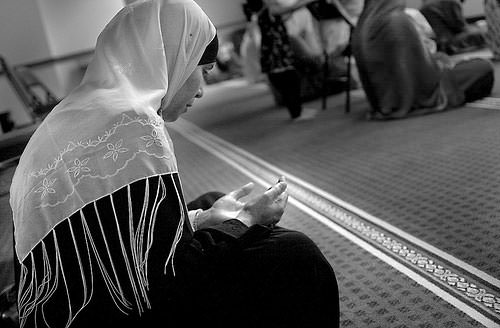 Allah is the maker, molder, and owner of our hearts. Often, sadness is a state we fall into, and we allow ourselves to remain there, sinking deeper until it seems impossible to climb out. We bury and wallow in our sadness. Our bodies then follow suit, lethargically, and getting out of the hole is much harder once we dig into it.
If we remain sure in our faith, the rocky moments in life won’t shake us. You won’t suddenly stop praying. You won’t stop reaching for your Qur’an. You’ll only keep going, keep asking, and keep hoping for an eternal akhira, over a life filled with issues. This happens with a strong heart, and a strong heart is a gift from Allah, if only you ask for it consistently.
So when the bad days happen, and when you can’t seem to get a break, and each test keeps coming: you just tell yourself, this is the life of this world; what would it be, if not filled with hardship? Jannah is coming ~ a better and everlasting life is coming.
ConclusionOnce we get into the habit of daily adkhar, it becomes so natural that even on rushed days, or relaxing days, we feel incomplete without them. We do not need the daily affirmations of the new wave of pseudo science. We already have these du’as in our sunnah, taught by the Messenger ﷺ, and directly given from Allah. Your Creator knows you best, and knows exactly what you need.
Related:
The post Du’as for Happiness: Finding Joy Through Daily Adhkar appeared first on MuslimMatters.org.
Female scholarship is not a relic of the past, but a living tradition that continues to enrich, guide, and strengthen Muslim communities around the world.
Historical FactIn the realm of Islamic scholarship, female scholarship is sometimes defined as Islamic teachings that are transmitted by a woman scholar or female student of knowledge with an unbroken chain stretching all the way back to the Prophet ﷺ. This has always been part of our Islamic heritage. The earliest and most famous female scholar is none other than our Lady Aisha bint Abu Bakr (RA), the youngest wife of the Prophet ﷺ. She narrated over two thousand hadiths over the vast spectrum of sacred law.
A Common MisconceptionThere is a troubling misconception in some circles that female scholarship is now a thing of the past, and no longer what it used to be. There is a claim that there are not many female memorizers of the Qur’an, fiqh teachers, experts on hadith, and so on. Nothing could be further from the truth.
Female scholars exist. Not only do they exist, they are busy teaching. Many female scholars are doing the incredible work of raising their own families throughout their seasons of life, and teaching and learning along the way with the support of their husbands and/or families.
There are also female scholars who are unmarried, divorced, widowed, or don’t have children – what connects all of them is a deep love for Allah, His Prophet ﷺ and a passion for teaching and upholding sacred law. In both the Muslim heartlands all over the world and diaspora Muslim communities in the West, you will find female scholars and their students.
Connecting Women with Scholarship TodayWhat may be harder in this age of so much fragmentation is connecting female students with female scholars in person. However, the beauty of the online world is how much we can access female scholarship online. Rabata has recently launched The Ribāṭ university for women. There are other women-only resources such as Gems of Light, Jannah Institute, Al-Huda Institute in North America. Daar Aisha College is another example of a women’s-only Islamic centre in Australia.
There are also many institutions in North America such as Tayseer Seminary and Qalam Institute which serve both male and female students, and have male and female teachers, as well as Isra Academy in Australia.
 In Malaysia, where I am based, alhamdulilah, female scholarship is very much the norm. Masjids are designed for women in the most thoughtful of ways: there are separate rooms outside of the prayer areas that are available so menstruating women can still attend classes to teach and/or learn, babysitting services during Ramadan during tarawih so mothers can concentrate and beautiful, large masjids with entrances for both men and women, including elevators and ramps for the elderly.
This intentional accessibility for women across all ages is a very strong contributing factor to the following: women’s Islamic education, women’s strong relationship with the masjid as an institution, and a training ground for young children to be accustomed to women’s presence and activity within the masjid.
I have never, ever, been barred from entry in any masjid in Malaysia, alhamdulilah, and I’m so grateful I have never had to enter a creepy back entrance to enter the women’s prayer area.
There are many brilliant asatizah and shaykhaat teaching in Islamic universities, private institutions, and schools. My children attend a local Malaysian government school and amongst their favourite teachers are the kind ustadhs and ustadhas. However, it’s not perfect here either, and there is always room for improvement.
The Reality of Female ScholarshipSome male scholars being unaware of female scholarship does not negate its existence. Many Muslims – both men and women – aren’t aware of the historical and ongoing legacy of female scholarship. It simply isn’t considered a big enough priority. There isn’t enough uplifting of female scholarship in general.
This is directly connected, in my opinion, to the fall of the caliphate and post-colonial brainwashing. Both of these disasters continue to have a direct impact on every single part of the Islamic reality, including awareness of and access to female scholarship. Shaykh Muhammad Akram Nadwi and his groundbreaking book “Al-Muhaddithat” is a must-read for everyone for highlighting the rich history of female Islamic scholarship.
Alhamdulilah, Islamic scholarship that we see today is directly connected to the contributions of past female scholars such as Aisha (may Allah be pleased with her) as well as present day female scholars and students of knowledge. Our deen is a dynamic one which responds to present-day realities e.g. the epidemic of secret second marriages, zakat scandals etc.
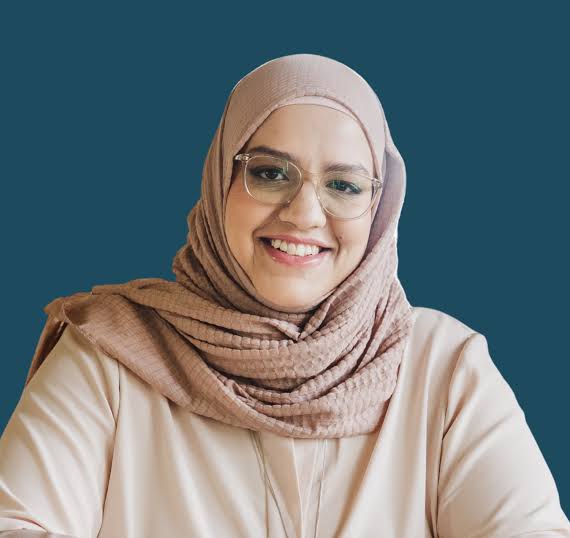
Dr. Mariam Sheibani
Female scholars have answers and invaluable contributions to these deeply problematic issues. Dr Mariam Sheibani has a brilliant research paper on secret second marriages Deceptive Debauchery: Secret Marriage and the Challenge of Legalism in Muslim-Minority Communities and many other brilliant publications.
Dr Deina Abdelkader, Dr Zainab Alwani and Dr Tamara Gray were amongst the female scholars who wrote the extremely important Dissenting Opinion to the Council’s Position on Zakāh.
Many, many female scholars and students of knowledge all around the world signed off on the Statement Against Abuse: The Female Scholars Network. We exist. We are here, and inshaAllah, we are not going away.
The Importance of Lived ExperienceFemale scholars offer something male scholars simply do not: the lived experience of embodying the deen, throughout all our different seasons of life. Female scholars offer girls and women of all ages the gift of understanding the correct application of sacred law in our daily lives. We also model study and career possibilities for our daughters, and normalise the pursuit of Islamic knowledge for our sons.
From the arrival of our menses in our teens, to the fiqh questions that come up when we are newly married or pregnant, to the grief that comes with pregnancy loss – these seasons of life can only be deeply understood by a female scholar who has experienced the same. These are all powerful opportunities to turn to Allah, and what better way than through the guidance of a female scholar who has walked that same path?
Not only do female scholars add to the rich tapestry of what Islam has to offer, but it is often a much safer option for children and women to study with them. We can no longer ignore the tragic realities of so many sexual scandals with male scholars. Only Prophets are protected from sin. The unquestioned power and authority given to male scholars in positions of religious leadership create environments ripe for abuse. Mohammad Saleem’s abuse of children is a horrific example. More recently, an imam in New York was arrested for molesting two young girls on the masjid property.
This is not to say that all male scholars should be treated with suspicion, but it’s important to be aware that abuse exists in our communities too and to put measures in place to prevent this from happening. Shaykh Danish Qasim and Danya Shakfeh, Esq. from In Shaykh’s Clothing have developed a Code of Conduct for Islamic Organisations and a contract to help safeguard Muslim communities from abuse. The use of contract law can hold abusers accountable, and dissuade potential abusers from thinking they can get away with it. These systems can be put in place well ahead of time e.g. doing background checks on every single potential teacher long before any children are harmed.
Although there are a minority of Muslim women who also abuse other women and children and enable male abusers, we have seen far too many reported incidents of male teachers who have grossly abused their power. The reality is that most abuse is not reported, so what we see in the news is actually the tip of the iceberg. Muslim communities worldwide need to continue having discussions and building awareness about abuse so we can protect our most vulnerable.
The Hurma Project is also an incredible resource, driven by God-centered academic research by Dr Ingrid Mattison and Dr Rania Awaad. Maristan also offers resources for mental health care for Muslims affected by abuse.
Real-World ImpactFemale scholars offer compassionate solutions for real-world difficulties that women face – challenging in-laws, inheritance squabbles, infertility struggles and bereavement, to name a few. When handled poorly by well-meaning but clumsy male scholars, so many of these issues can end up driving Muslim women far away from Islam.
This fatwa on whether or not a woman can work, at first glance, looks harmless. But how common is it in the West, especially, to find a women-only work space? What if she does not have male mahrams she can count on to look out for her? Limiting her access to work will not help her. Over, and over again, incorrect interpretations of Islam have led to devastating cruelty to women and children in the name of God.
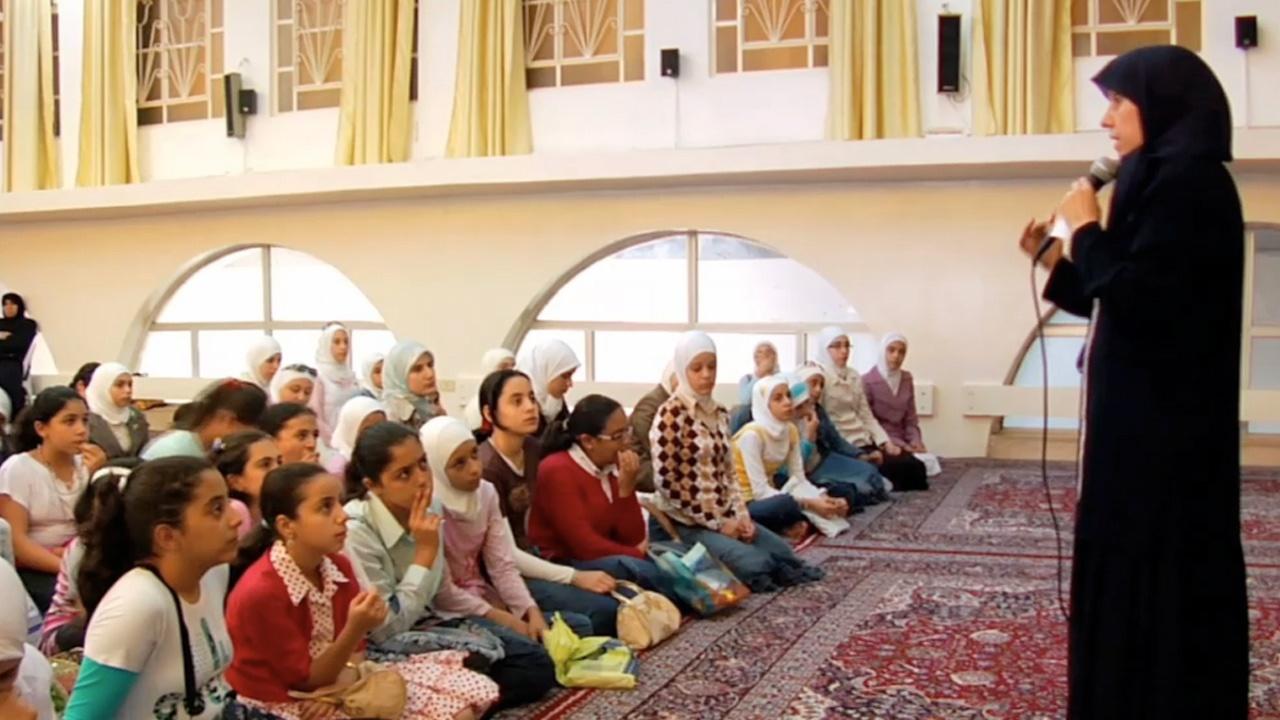 This is why we need thoughtful scholarship that considers women’s realities on the ground within the Shari’ah to help establish a Prophetic society. The Ma’ruf Commons, led by Dr Mariam Sheibani, is a “research and education organization that develops programs and resources for Muslim communities to advance intentional learning, spiritual formation, and ethical practice, integrating religious values into both public and private life.” (Quote from website)
It is a brilliant example of traditional Islamic scholarship meeting contemporary challenges through the lens of deep Prophetic compassion and wisdom. Among the many resources Dr Mariam Sheibani shares include a brilliant paper by PhD candidate Samah Marei titled What Happened to Islamic Family Law in the Modern Era? There is so much nuance when it comes to applying Islamic law in the modern era, especially when Muslim minorities answer to Western secular legal system, or when problematic cultural norms conflict with Islamic law in Muslim-majority contexts.
A Still Valuable PerspectiveHowever, women scholars aren’t infallible and are also impacted by biases, including problematic cultural beliefs about women that have no basis in the Shari’ah. There are unfortunately some who also issue problematic fatwa. Despite this, it’s important to remember that female scholarship offers an alternative perspective that is still valuable and protective, inshaAllah.
Related:The Light of Female Islamic Scholarship: Da’wah, Difficulty, And Determination
The post Female Scholarship In Islam: A Living Legacy [Part 1] appeared first on MuslimMatters.org.
The queer community has lost resources and protection due to decisions made by the people now mouthing solidarity in public
It feels like a well-rehearsed script. First come the flowers, then the pious statements. One after another, mainstream German politicians have lined up to claim that the attack on Berlin Pride last weekend was an attack on “all of us”, “our values” and “our society”.
Except it was not. This atrocity in which a van was rammed into the crowd was, first and foremost, an attack on queer people. A vulnerable community that has been fighting for its rights for many decades; that, in recent years and all over the world, has increasingly been targeted by conservative forces.
Continue reading...Dorotea Gucciardo of GLIA talks about creativity and resilience in Gaza. Ali Abunimah on Zohran Mamdani’s statement about Netanyahu. The war on Iran and more.
The caravan is plagued by thievery, and Darius discovers Arslan’s dark secret.
Read Part 1 | Part 2 | Part 3 | Part 4 | Part 5 | Part 6 | Part 7 | Part 8 | Part 9 | Part 10 | Part 11 | Part 12 | Part 13 | Part 14 | Part 15 | Part 16 | Part 17 | Part 18 | Part 19 | Part 20
* * *
A Hard LandNot every Afghani village welcomed strangers so openly. Some watched from behind shuttered windows. Others gathered silently upon distant ridges, leaning upon spears and old hunting bows. They neither threatened nor greeted us. They simply watched until we disappeared into the next valley.
“The kindest village may hide a thief,” Sergeant Karim reminded us one morning as we resumed our march. “The coldest village may be perfectly honest. Judge no one too quickly.”
I’d imagined our journey from here would be a gradual descent into a Persia that was hot and flat, where masjids towered to the clouds, and where the streets were paved with alabaster and pearls. Well, maybe not exactly, but something like that. Instead we began to climb. As we did, the land grew harder, and the people too.
The fertile valleys of Central Asia gave way to mountains that seemed designed to keep men apart. Villages clung to rocky hillsides like weeds. Fortified towers overlooked narrow passes, and nearly every settlement appeared prepared for war. The roads wound through barren valleys strewn with boulders, while jagged peaks watched from every direction. In some places the mountains rose so high that sunlight reached the valley floor only briefly each day.
The men here wore loose trousers beneath long tunics, with woolen cloaks draped across their shoulders against the cold mountain air. Turbans and pakol-style caps were common. Most of the men carried weapons openly. Even boys scarcely older than Haaris often wore knives at their belts.
Many villages were closed and fortified, with guarded walls. When it was possible, we traded with the locals. We ate flatbreads baked in clay ovens, roasted lamb seasoned with unfamiliar spices, rice studded with raisins and carrots, and thick yogurt. More than once I found myself wishing Lee Ayi could taste some of it. She would have loved to learn the recipes.
The caravan grew tense as we crossed those lands. Extra guards rode the perimeter. Watches were doubled. The merchants spoke in quieter voices. Even the horses seemed nervous. Karim spent much of his time studying maps and questioning locals about conditions ahead.
What Happened to Us?Meanwhile, Weili continued drifting farther away from me.
At first I told myself I was imagining it. Then I told myself it did not matter. Eventually I found myself searching for her without meaning to. I invariably found her beside Arslan. They rode together, practiced together, shared meals, and spent hours struggling through one another’s languages. The more comfortable they became together, the less interested she seemed in having even the shortest conversation with me.
One evening, after watching them laugh together beside a campfire while Arslan mangled Chinese pronunciation for her amusement, I finally reached the end of my patience.
I found her later near the horse lines, checking a bowstring by lantern light. For several moments I simply stood there watching her work. I had rehearsed the conversation in my head dozens of times. Now that the moment had arrived, I had no idea how to begin.
“What happened to us?” I finally asked.
She glanced up, surprised. “Us?”
“You know what I mean.”
“No,” she said. “I really don’t.”
The answer irritated me immediately. Why couldn’t she just be honest? “We used to spend time together.”
“We still do.”
“Maybe you greet me in passing and ask how I’ve been. That’s it.”
She lowered the bow.
“Darius…”
“You spend all your time with him now.”
Understanding flickered across her face. “Oh.”
Something about that response made my temper flare. “That’s all you have to say?”
“What exactly do you want me to say?”
I folded my arms. “We spent months together. We studied together. We talked every day. We shared things about our lives. We meant something to each other. Then this man appears and suddenly I’m invisible. We don’t ride together, you don’t come to study the Quran with me, you don’t ask about me. We’ve barely spoken since I told you about my birthday.”
I wanted to say, I miss you, you hurt me, you abandoned me. But I could not bring myself to say such words aloud.
Her expression shifted from confusion to disbelief. “I can’t believe we’re having this conversation.”
“You can’t?”
“No. It’s outrageous.”
The anger I had been carrying for weeks finally boiled over. “What do you mean, outrageous? You’re the outrageous one. You were supposed to be with me. You were my girl.”
The words escaped before I could stop them. The instant they left my mouth, I knew how they sounded.
Weili’s face hardened. “Darius, I never promised you anything. Absolutely nothing.”
“I know.”
“Do you?” She spat the question like a rock she’d found in her food.
“Yes, but I thought -”
“You thought wrong. I was your friend. That’s all. We traveled together. We studied together. We became friends.”
“Then why did you stop being my friend?”
“Only a child would ask that question.”
That was the moment when I knew there was nothing more to say. On some level I knew that her resorting to diminishing me in that way meant that she had no genuine answer to my question. And anything I said would be devalued as a childish complaint. Still, I couldn’t stop myself from saying softly, “I’m sad. I feel alone.”
I knew these words did in fact sound childish. I didn’t say it to garner sympathy. I said it because it was a deep truth, and I was in pain.
Her face hardened. “I’m sorry. But that’s not my fault. I’m not your wife or your fiance. So don’t try to manipulate me or blackmail me emotionally.”
For several moments neither of us spoke. Then she picked up her bow. “If you misunderstood our friendship, I’m sorry. Truly. But that isn’t my fault. It’s best if we don’t talk anymore.”
With that, she walked away.
A Major SinThe next several days were a bad time for me. Up until that moment, I’d still had hope that Weili would come back to me. I loved her. I had imagined a future with her as my wife. She’d dote on me like Gulnur did on Kuangren. She’d give me many children like Ahmed’s wife had done. We’d have our own home, and Far Away would live with us.
Now that was all shattered.
There were moments, as we rode along narrow trails beside steep cliffs, when I thought about throwing myself over the side. Even with all the hardship I had been through, I had never experienced such thoughts before.
Once I nearly did it. I let myself fall back to the rear of the caravan. When the caravan turned a corner around a mountain ridge, I held back. The path was narrow, with a sheer mountain face on one side, and a vast drop on the other. I dismounted from Belly, and removed his tackle – his saddle, bridle and cinch – so that he would be free to go on his own. Then I stepped to the edge of the cliff. My toes projected over the edge. Far, far below, a raging river was a tiny silver ribbon.
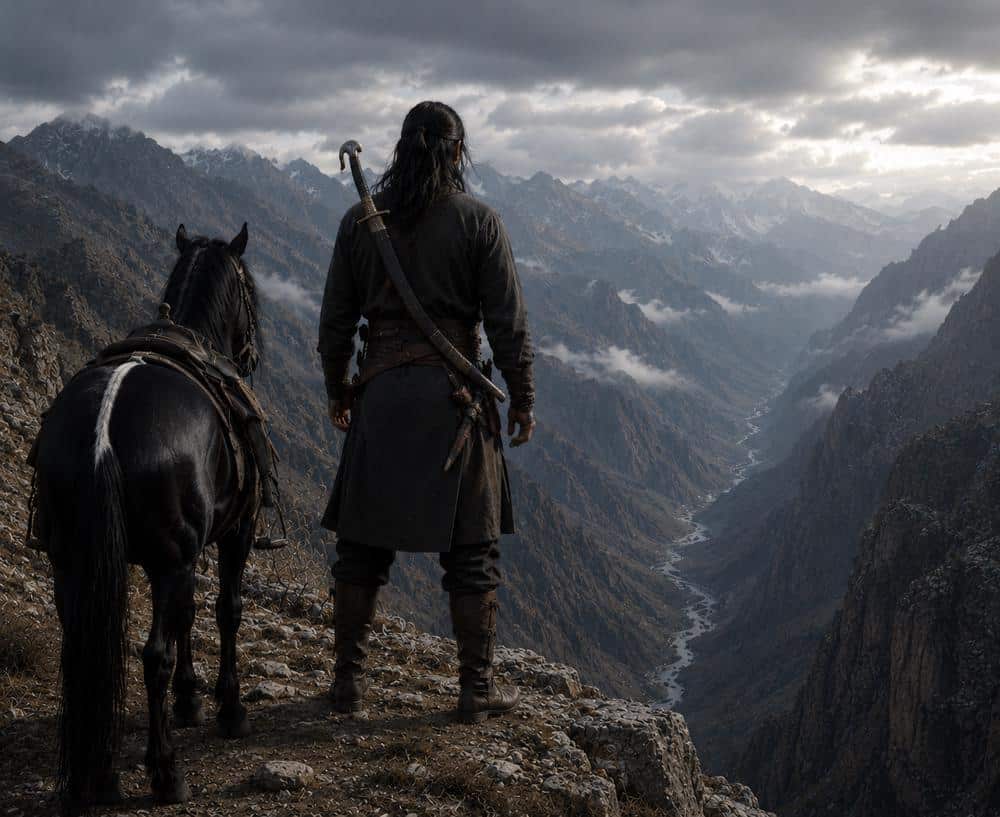
I knew this was a major sin. Suicide was haram in Islam, as it was a rejection of Allah’s plan. I breathed the frigid air, and when I let it out my breath billowed visibly out over the precipice. Perhaps Allah would understand my pain and be merciful with me.
“Belly will miss you,” said a voice from my heart.
“Belly will be fine,” replied my logical mind.
“What about Far Away?” my heart voice said. “No one loves you like he does. He nearly died following you. He’s still waiting for you to come home. If you could soar through the sky back to the farm, you would find him right now, perched on the wall beside the road, watching for you to return.”
My logical mind had no reply to this, and I burst into tears. I could not do this. It wasn’t that I feared death. If it were nothing but an empty void, I would welcome it. But in my heart I trusted Allah. He would make a way forward for me, a way out of my pain. He would bring me back to those who truly loved me, and who I loved.
I was about to step away from the edge when my boot skidded on loose shale. Pebbles rattled away into the abyss. My arms flew out instinctively as I struggled to regain my balance. I teetered over the edge. Vertigo made my head spin. No! I didn’t want to die!
Before I could fall, Belly lunged forward and seized the back of my tunic in his teeth. The sudden jerk pulled me off my feet in the opposite direction. I landed hard on my back in the middle of the road, staring up at the cold blue sky.
For several heartbeats I could only breathe.
Belly stood over me, licking my face until I reached up and laid a trembling hand against his neck.
“Alright,” I whispered. “I’m alright.”
Always DangerousBelly had saved my life, and I’d learned a powerful lesson in that moment. I wanted life, not death. That was unquestionable. Weili had broken my heart, yet she had not broken me as a human being.
Yet the sadness persisted. I distracted myself from thoughts of Weili by reviewing Five Animals forms as I rode, and by reciting Quranic surahs. At night, I practiced my fighting techniques. More than that, I threw myself into training with a kind of desperation.
Whenever the caravan halted for the evening and my duties were complete, I would take up my dao and walk beyond the last wagons where there was room to move. I began with the fundamentals of my family art: tiger, crane, leopard, snake, dragon.
I repeated the forms until my clothes clung with sweat despite the mountain air. When one form ended, another began. I imagined opponents rushing me from every direction. I cut, spun, ducked beneath invisible blades, sprang over imaginary obstacles, and rolled across the rocky ground before coming up with my sword already moving.
Where the forms ended, my imagination began. My movements were acrobatic, perhaps unrealistic, and always dangerous. With a blade as sharp as mine, a wrong move could sever one of my own limbs.
The younger guards began gathering to watch.
“You’re trying to kill yourself,” Brother Ahmed observed one evening.
“It wouldn’t matter,” and I meant it. Suicide was one thing – I’d established that I would not do that – but death in an accident or in battle wouldn’t be my fault.
He looked at me for a moment, then nodded sadly.
A Smart HorseI often talked to Belly as I rode. “I should have kept my mouth shut,” I told him one afternoon.
He flicked an ear.
“I know. You’re right.”
Another flick.
“You always take everyone else’s side.”
One of the merchants riding behind us laughed. “Who are you talking to, Darius?”
“My horse.”
“The horse talks back?”
“Sure, why not?”
“What does he say?”
“That I’m an idiot.” That brought laughter from several riders nearby.
Before long it became a running joke. “If anyone has questions,” Meilin called out one afternoon, “ask Belly. He has all the answers.”
“He talks about you too,” I told her.
“What does he say?”
“That you’re a great fighter but meaner than a bear.”
She snorted. “He’s smart.”
I never told them that Belly had saved my life. Then they’d really think I was cuckoo.
A New Rogue?Kaungren had by now recovered from his lashing. He walked upright again, and resumed his duties, though he and his wife were still granted the luxury of a private wagon. He no longer sneaked into passing towns and returned with locals hot on his heels.
Instead, Arslan seemed to have taken his place as the disobedient rogue. Three times, as we passed villages, I saw the young archer split from the caravan and ride into town on his own. He always made sure to do so when Karim wasn’t watching. Initially I thought nothing of it. I knew he spoke Persian, as did these locals. I thought maybe he was going into town to trade, or buy personal supplies. But I also worried that he might be pulling a Kuangren – going into town to drink, gamble, or steal. This worried and angered me, because he might bring disaster upon us.
Or so I told myself.
I confronted him after one of these unsanctioned side trips. The caravan had stopped to feed and water the horses. These mountains were strange, for the air was cold, and the wind cut through the passes like Karim’s bullwhip, scouring one’s skin; yet the sun had an oddly piercing glare that made you want to seek shelter. But there was work to do, and the best you could do was drape a cloth over your head and stay busy. It was a hard land, and I found myself thinking that I would never want to fight people who had grown up in this land.
I found Arslan sitting in the shade of a wagon, rather than tending to his horse. He claimed he’d gone into town to buy a few arrowheads. His eyes were vacant and his speech slow, and there was a strange scent about him that was familiar, but that I could not identify. Yet he was not drunk, for I knew the signs all too well from my father’s alcoholic binges, and I did not see those signs on Arslan.
I dismounted Belly and stood before him.
“What are you into?” I demanded. “What’s your story?”
“I’m to good thing,” he replied in my language, and his speech was slow and dreamy. Not slurred like when a man was drunk. More like he was sleepwalking.
“Leave Weili alone,” I told him flatly. I had no right to say this, but I said it anyway.
“You think she girl for you?” He smiled faintly, and continued in his own language, saying something that sounded to me like “If she was your girl, she would be your girl.”
I studied him. He was a tall and broad-shouldered young man with a wide face. Muscular and prematurely bald. Handsome. There was something almost beatific about his face, as if he were in perpetual prayer. And he was the best archer I’d ever seen. He could shoot me down from five hundred paces, but in any type of hand to hand combat I would demolish him. Then we’d see who was a child, and who was a man. I wanted to kick him and say, “Get up and fight.” I almost did.
But what was the point? He was right. If Weili loved me, she would be with me. I shook my head and rode away.
I briefly considered telling Karim about Arslan’s unauthorized disappearances. But that wasn’t my way. I wasn’t a tattletale. Such a tactic would for sure not bring Weili back to me. And I still didn’t actually know what Arslan was up to.
Enemy of the StateThat night, the skinny kid with the scraggly beard – Memdooh – was reciting poetry again. I saw a number of faces I recognized around the fire, including Weili’s. Arslan was nowhere to be seen. This cheered me, and I went and sat cross legged next to Weili. She turned and saw me, and to my surprise she gave a rueful smile. “I was too harsh in what I said,” she whispered. “I’m sorry.”
I felt warmth rush through me like a great draught of steaming hot tea. “Forget about it,” I whispered back. We fell silent in order to listen to Memdooh. He swayed back and forth and gesticulated with his arms as he chanted:
My horse is a Mongolian.
He’s small, I can’t control him.
His temper is hot
but he never stops.
I’m no Mongolian,
but I’m red hot.
My arm is lightning,
my sword is faster than thought.
I rolled my eyes at this. Memdooh was a decent fighter, but if his arm was lightning, my farts were thunder.
The proclamation is made
the hour is late
They classify me
with the enemies of the state.
There was some muttering at this. Criticism of the emperor was not permitted in our land.
Demons pour forth
from a crack in the land
None of them guess
what I have in my hand.
I draw my sword
and empty my head
They can’t kill me
if I’m already dead.
This was intriguing. He was talking about River Flow. Yet Memdooh did not fight in River Flow. In battle he shouted in anger, bellowed in triumph and occasionally screamed in fear. Not that there was anything wrong with fear.
We’re far from home –
strange cities and bazaars –
Yet we’re never alone
For we are Five Stars.
Memdooh waved his arm in a flourish and we knew he was done. The audience applauded and broke up. Weili approached the young poet, and I accompanied her.
“That was amazing,” Weili gushed. “So good, so much fun. How did you learn to do that?”
“My grandfather was a poet,” Memdooh boasted. “He studied with the great Wu Weiye.”
“That last stanza was spot on,” I said. “But what was that about being an enemy of the state?”
He looked me up and down. “I am not a rich, comfortable Hui like you, brother Darius. My people are White Mountain Turki Muslims from Altishahr.”
I stared at him blankly.
He sighed. “What the Chinese called Xinjiang. In the far northwest.”
“Oh.” I nodded.
“The Chinese invaded us. So yes, I am an enemy of the state.”
“Yet you work for Five Stars, a company that serves the emperor.”
He glared. “I have my reasons.”
Weili pulled me aside. “Can’t you just enjoy a thing without analyzing it?” she demanded. “You don’t always have to prove how smart you are.”
It felt like I’d been slapped. So much for leaving our fight behind and making up. Still, there was something on my mind and it couldn’t wait.
“I have to tell you something,” I said. “There’s something strange going on with Arslan. He sneaks into local villages sometimes. And there’s something about him, something weird. Like he’s not completely awake. He’s all dreamy and distant. I don’t know what it is. But you need to be careful. There’s something not right about him.”
Something that might have been guilt flickered across her face, but it was so quick I could have imagined it. It was replaced almost immediately by outrage.
“Are you spying on him?” she hissed. “What about me, are you spying on me? You nasty little creep, stay away from us!”
I took a physical step back, as if I’d been hit in the chest with a sledgehammer. My mind went completely blank.
Weili turned and stalked away.
A Thief Among UsOver the next several days, things began disappearing.
At first no one thought much of it. A pair of ivory chopsticks went missing. Then a whetstone. Someone spent an hour searching for his leather belt before finally borrowing another. Brother Ahmed misplaced his prayer beads, only to discover them hanging from his saddle where he himself had left them. A merchant complained that his ink brush had vanished, then sheepishly found it tucked inside a ledger. One of the cooks searched everywhere for a small pouch of cumin before deciding he must have left it behind at the previous campsite.
Longwei loudly declared that old age had finally caught up with the caravan.
“We’ve marched so far,” he announced, “that our memories have refused to come with us.”
That drew some laughs.
Then one of the merchants discovered that six silver coins had disappeared from his purse.
The following day another merchant reported that a small pouch of saffron, worth nearly its weight in silver, had vanished from his wagon. A teamster swore someone had taken his wife’s jade hairpin, which he carried wrapped in cloth as a gift for his return home. Before long, another merchant found that several tiny packets of cinnamon and cloves had disappeared from a locked chest.
No one laughed anymore.
Those were not the sort of things a man misplaced.
Each item was small enough to slip unnoticed into a pocket, valuable enough to exchange in almost any village, and nearly impossible to identify once sold.
From then on, every man counted his belongings before bedding down for the night. Purses were tied beneath tunics instead of left beside bedrolls. Merchants began sleeping with one hand resting on their strongboxes. Conversations grew quieter, and more than once I caught men studying one another with narrowed eyes.
One evening I overheard two merchants speaking in low tones.
“It’s Kuangren,” one said. “It has to be.”
“But,” the other objected, “I heard that his own wife’s ivory comb went missing.”
The first one chuckled. “It takes a cold-hearted man to steal from his own wife. That Kuangren is incorrigible.”
I shook my head. The old Kuangren had been a fool, a gambler, and a womanizer, but he had never stolen from the caravan. And the man who now prayed beside Brother Ahmed every evening scarcely resembled the one who’d been whipped in Kyrgyzstan. To steal from his own wife? Impossible. He doted on her. More than once I had seen him helping Gulnur carry water.
No, it wasn’t Kuangren.
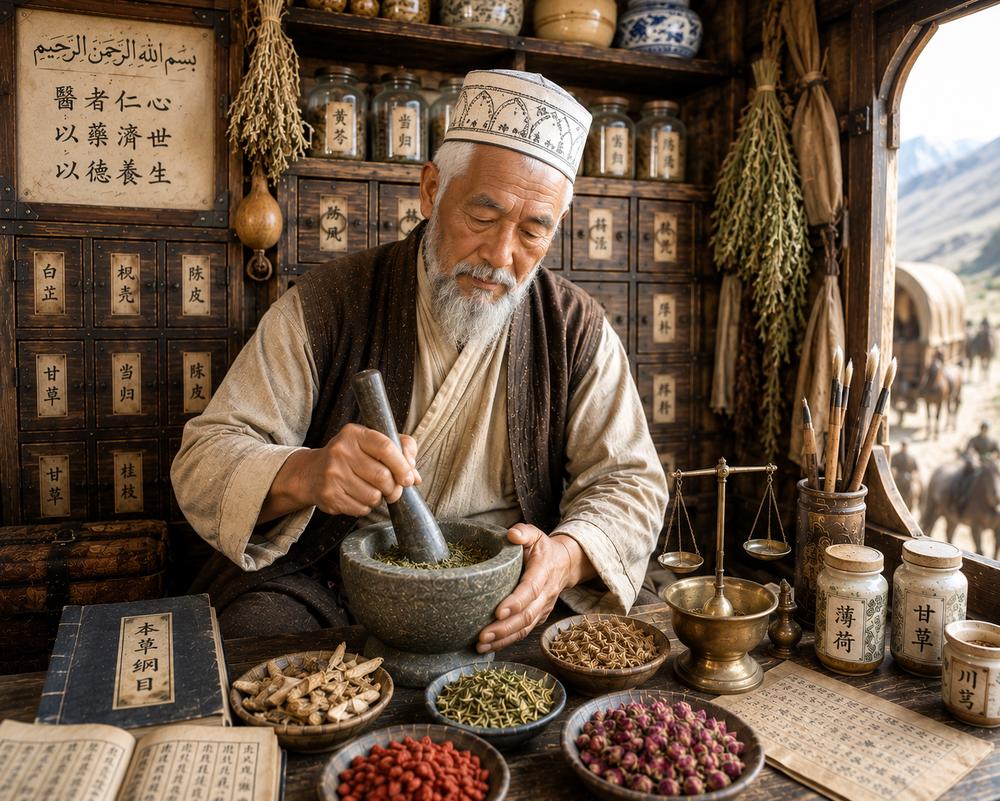
OpiumA thought nagged at me, and eventually I sought out Hakim Yusuf.
I found him trimming dried herbs outside his wagon.
Without looking up he smiled. “Nothing is bent sideways today, I hope.”
“No.”
“Good. Have you come to assist me?”
I smiled ruefully. “Not yet, sorry. I need to ask you about something.” Without naming Arslan, I described the condition in which I had seen him beneath the wagon. His slow speech and distant expression. The strange sweetness in the air around him. The dreamy look in his eyes.
Hakim Yusuf stopped trimming the herbs. “Opium.”
The certainty in his voice startled me. “You know about it?”
He gave a little wave of his hand. “I don’t know who you’re referring to. I know the symptoms.”
“What is it?”
“We physicians use it as a medicine. It’s very useful to dull pain before a difficult procedure. If I have to operate or amputate, for example.”
I snapped my fingers as recognition struck. “That’s how I know the smell!”
Hakim nodded. “Many physicians use preparations derived from opium, but diluted, and only when necessary. No one would use it raw. It’s too powerful.”
“Why would someone take it if he’s not injured?”
Hakim shook his head sadly. “Why do we humans do anything? We are foolish creatures. Allah offered the burden to the heavens and the earth and they refused it, but we took it.”
“I don’t understand.”
“It brings a feeling of peace… even bliss. Particularly the first time. It allows a man to forget his pains and regrets for a while. Don’t we all want that? But it extracts a heavy price.”
“You mean it’s expensive?”
“Yes, it is, but the price I refer to is addiction. A man discovers that yesterday’s dose no longer satisfies. He takes more, then more again. Before long the good feeling is gone, and he is only taking it to avoid the severe pangs of withdrawal. He stops caring about anything but the drug, and to get it he will lie and steal. Eventually it will kill him.”
That sounded like being trapped in a nightmare. For a moment I actually felt sympathy for Arslan. Who wouldn’t want to escape the pain of this life for a while? But…
As if hearing my thoughts, Hakim Yusuf said, “Such a man would be a danger to the caravan.”
I chewed on my lip. “Where would this opium come from? How would a man get his hands on it out here in the middle of nothing?”
Hakim looked toward the dark mountains surrounding us. ““Much of the opium traded across these lands begins right here.”
I followed his gaze. “Afghanistan?”
He nodded. “One would only have to enter a local village to buy some. You know what, that’s a good idea. I’m a bit low, maybe I should stock up. I’ll talk to Karim…” He entered the wagon and started puttering about.
I called out my thanks and left. It all made sense. Arslan was the thief, selling the stolen items to fuel his addiction. But, I realized, there was nothing I could do. First, I had no proof. Second, even if I could prove it, Arslan would be whipped and exiled. I wouldn’t mind seeing that. But Weili – who, I suspected, already knew about Arslan’s problem – would hate me forever. She would never, ever forgive me.
A Flicker of LightThree nights later we camped in a narrow valley where a small cave overlooked the caravan from a low ridge. The mountains pressed close around us, shutting out all but a ribbon of sky overhead. The air carried the bite of approaching winter, and after evening prayer everyone gathered close to the cook fires until the flames burned low. Gradually the laughter faded. One lantern after another winked out until only the sentries remained awake.
Weili had accused me of spying on Arslan. It hadn’t been true then, but it was now, in a way. I made a point out of checking his duty station during the day, and his bedroll at night. Walking past his bedroll now, I found it empty.
It might mean nothing. Men often wandered away from camp for a few moments of privacy. But as I was settling my blanket beside Belly, I noticed a brief flicker of orange light among the rocks above us. It vanished almost immediately, as though someone had cupped a hand over a flame.
I should have called for another guard to accompany me, and maybe even alerted the Sarge. But I did not. Without waking anyone, I climbed the rocky slope. Loose stones shifted beneath my boots. The night was silent except for the whisper of the wind threading through the pass.
The smell reached me before the cave did. It was faint, sweet, and strangely familiar.
When I stepped into the cave, I froze in shock. The cave itself was shallow, scarcely more than a hollow in the mountainside. Its ceiling was blackened by years of smoke. A tiny oil lamp burned, throwing wavering shadows across the stone walls.
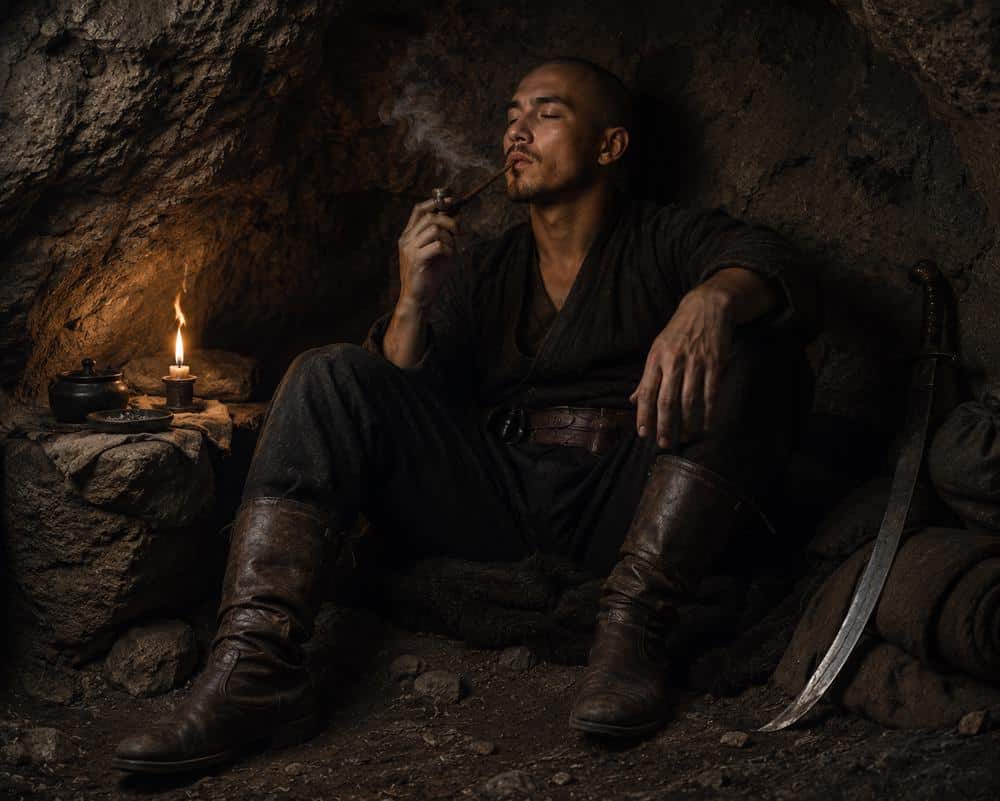
There, in the light of the lamp, with their backs against the rock, sat Arslan and Weili. He sat with one knee raised, head lolling to the side, seemingly asleep. As for Weili, a long pipe resting loosely in her fingers. Wisps of pale smoke drifted lazily upward before disappearing into the darkness. I could hear the tiny hiss of the lamp flame. The sweet smell of the smoke hung heavily in the still air, clinging to my clothes.
Weili smiled as though I were an old friend arriving for tea.
“Darius.” There was love in the way she spoke my name, and it nearly broke my heart.
“Come,” she said, and she lifted the pipe toward me with slow, dreamlike generosity. “You try.”
“Weili,” I said, and my voice broke.
“You are so good,” she said dreamily. “You always loved me. No one…” She inhaled from the pipe, then let the smoke rise slowly from her mouth. “Ever loved me before. I never… deserved you.”
My mouth fell open. What was she saying? Hope surged in me. I reached out a hand.
“Then come with me. Forget Arslan. He’s a thief, he’s rotten. You don’t need him, you don’t need this drug. It’s poison. Hakim Yusuf told me so.”
Her eyes widened and her nostrils flared. “You told Hakim Yusuf about me? You rat!” She tried to stand, but her legs gave out and she slumped back to the ground. “Get out of here. I’m with Arslan now, get it through your brick head.” She picked up a loose stone from the cave floor and flung it at me. I ducked as it flew past.
Arslan roused from his stupor. “What…. going on?”
With her eyes on me, Weili threw her arms around him and kissed his cheek. “Nothing, my love.” She passed him the pipe, and he inhaled.
I wanted to run away. Instead I said, “You’re better than this, Deng Weili.”
She released her hold on Arslan and slumped against the wall of the cave. “No,” she said sadly. “I am exactly this. You loved…” She twirled a finger in the air, trying to think of a word. “A mirage. Go away, Darius.”
I stumbled out of the cave. Tears made icy sideways tracks on my face as the wind hit.
There was nothing I could do. If I went to Sergeant Karim, I knew what would happen. Twenty lashes for Arslan for sure, for the thefts. As for Weili, I did not know. What if she had stolen as well?
An Eerie PassPersonal items continued to go missing. Men cursed under their breath and searched one another’s faces with growing suspicion.
I said nothing.
Each complaint felt like another stone added to the burden I was carrying. And every day that I remained silent, I became a little more ashamed.
The mountains grew higher. The valleys narrowed until the road became little more than a ledge carved into the mountainside. Dark cave mouths peered down from impossible heights, some scarcely larger than doorways, others wide enough to swallow an entire wagon. I found myself studying them more often than the trail beneath Belly’s hooves.
I no longer monitored Arslan’s movements, or tried to talk to Weili. I divorced myself from the entire matter, and tried to pretend it wasn’t happening. But her words haunted me: You always loved me. No one ever loved me before. Those words went around and around in my head like a pair of squirrels chasing each other endlessly. Her little show of affection toward Arslan didn’t bother me at all, but her saying, “I never deserved you” – that was like an arrow in my gut.
We crossed a rocky pass with high mountains on either side. The mountains were riddled with caves. The entire place was blanketed in an eerie silence. Even the birds seemed reluctant to enter that pass.
The attack came without warning.
* * *
Come back next week for Part 22 – The Raid
Reader comments and constructive criticism are important to me, so please comment!
See the Story Index for Wael Abdelgawad’s other stories on this website.

Wael Abdelgawad’s novels – including Pieces of a Dream, The Repeaters and Zaid Karim Private Investigator – are available in ebook and print form on his author page at Amazon.com.
Related:
The post Far Away [Part 21] – Opium appeared first on MuslimMatters.org.
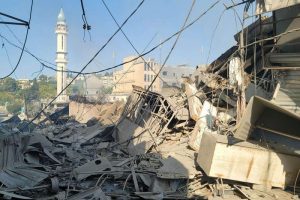
Southern Lebanon has been devastated by the Israeli assault; ruins dot the county of Nabatieh.
A significant aspect in the ongoing war and negotiations between the United States and Iran has been the related Israeli attack on Lebanon, whose Shia community and in particular Hezbollah militia has close religious, historical, and political ties to Iran. As it has done for over fifty years, the Israeli military has intermittently attacked Lebanon since 2024, but this latest round that began in spring 2026 has received proportionately far less attention than earlier attacks despite enormous bloodshed and its direct relevance to both the war in the Persian Gulf and the genocide of Palestine. More than anything, the war and a blatantly lopsided ceasefire that went into effect last month has exposed the limitations and bluster of a Lebanese government that loudly asserts its privileges but chronically fails to meet its responsibility, especially security against a rabidly aggressive neighbor.
The area most obviously abandoned to repeated Israeli attack is the largely Shia south, which has suffered immense damage not simply during the mid-2020s but from Israeli incursions, on and off, for over half a century. The south is often pathologized, certainly by Israel but also by domestic Lebanese critics, as a reckless hotbed whose fealty to Hezbollah will only bring peril to Lebanon at large. Yet Hezbollah, for all its faults, has managed a security and level of services that the Lebanese government has never afforded the region.
Nor are the southern Shias alone as scapegoats for Lebanon’s plight. Historically, one group after another has been blamed whenever Lebanon’s integrity is violated: at the moment it is Hezbollah and Shias in the south; earlier it was Syrian refugees and their largely Sunni supporters in areas such as Arsal and Sidon; earlier it was alleged Sunni “jihadists” in cities such as Tripoli; and earlier, at the outset of the 1975-90 war, it was Palestinians and their Lebanese supporters across a number of the country’s demographic groups, largely Muslims or Druze.
Lebanon was originally set up in the 1920s by France as an enclave for the region’s Christians, especially Maronites who shared the Catholic faith of most Frenchmen. At the time, anti-Muslim sentiments ran deep within French colonial policy, which largely caricatured the Muslim majority of the region as naturally predisposed to violence against minorities. In addition they were inclined to side with Maronites in a long-running feud with Druze, another of Lebanon’s minorities. It was only belatedly and grudgingly that France resorted to a long-outdated formula of splitting power between the elites of various confessional groups. Yet the fact that even in a newly formed Lebanese state Muslims, Sunnis and Shias, soon outnumbered Maronites contributed to the system’s inherent tensions, which were already apparent in the 1950s and resurfaced with major violence in the 1970s.
During this period, conservative and rightwing Lebanese politicians, often but not always Maronites, were inclined to resort to an ossified form of nationalism that exceptionalized Lebanon and pretended that it existed in a regional vacuum. Where links with France were seen as natural in preserving this Lebanese exceptionalism, links with outsiders – whether those of Sunnis with Palestinians or of Shias with Iran – were treated with suspicion. Today, after the 1980s Lebanese war’s resolution contributed to an officially more equitable adjustment in the confessional balance of power, this nationalism manifests itself chiefly in loudly decrying the “foreign links” of Hezbollah with Iran while ignoring those of every other Lebanese actor with other foreign powers.
The lopsided peace deal that Joseph Aoun and Nawaf Salam’s Lebanese government struck with Israel has virtually signed away practical Lebanese independence when it comes to the United States and its approved regional states, while loudly asserting Lebanese sovereignty when it comes to disarming Hezbollah. This rests on the pretence that Hezbollah does not have a major domestic constituency based off years of not only warfare but genuine sociopolitical services. It also rests on ignoring countless Israeli provocations and incursions throughout Lebanese history, since long before Hezbollah was founded.
The irony is that time and again Lebanese ultranationalists, who frequently scapegoat their compatriots for undermining the state, have time and again been the quickest to give way and even collaborate when the country is actually invaded: this was the case throughout Israel’s repeated invasions since the 1970s and largely through the thirty-year Syrian occupation of Lebanon. Both these invasions were directed, principally and initially, at the Palestinians in Lebanon. One reason that many other factions and most of the Lebanese government faded meekly away before these invasions, which came at the cost of not only Palestinians but Lebanese citizens as well, was because Palestinians had been scapegoated for Lebanon’s sociopolitical problems.
When the Syrian occupation of Lebanon ended in 2005, complaints about the occupation, its corruption and abuses, were commonplace among rightwing and conservative Lebanese nationalists: yet it had been the same current who had welcomed and benefited from the original 1976 invasion in order to crush their Palestinian opponents. Many rightwingers, particularly the populist far-right militias of the so-called Lebanese Front and the South Lebanon Army, supported the even more brutal 1982 Israeli invasion, which installed their leader Bashir Gemayel as a shortlived vassal before his assassination. The Palestinians’ removal as a significant factor from Lebanese politics only brought the turn of other Lebanese citizens, ranging from Sunni Islamists in the north and Shia Islamists in the south to Druze leftists in the east, to come under attack by either the Syrian or Israeli armies, or both.
The most significant of these have been the Hezbollah group, which is now some forty years of age. An unusual closeness to Iran, who sent a large number of military “advisors” to train and equip the group in the 1980s, was frequently noted, yet treated as an exception, by rival groups and factions themselves close to one foreign power or other. In its early years Hezbollah fought Israel and, alongside Palestinians and Sunni Lebanese, the Syrian occupation of Hafiz Assad. Eventually and controversially, Iranian brokerage prompted a Hezbollah rapprochement with Syria, to the extent of assisting Assad’s son Bashar during the 2010s war.
Collaboration with the Assads, in which Lebanese nationalists were themselves involved until it fell out of fashion, is not the main criticism of Hezbollah. Rather, like the Palestinians of the 1970s, Hezbollah is blamed for having provoked Israeli “reprisals” in the service of a foreign agenda, thereby weakening the Lebanese state. Yet the record is clear that Israel has repeatedly, deliberately, and systematically attacked Lebanon since long before Hezbollah existed. The Lebanese state itself has little record to which it can point, certainly not in the south, even during peacetime. And as for foreign agendas, the scapegoating of resistance in Lebanon – whether that resistance was by Palestinians in the 1970s or Hezbollah in the 2020s – has long been led by those actors who were most amenable to actual foreign invasions of Lebanon, whether by the Assads’ Syria or by Israel.

Under fire: Lebanese army commander Rodolf Haykal has come under sustained foreign criticism for his reluctance to attack Hezbollah on behalf of Israel.
The year 2026 brings several anniversaries of this record. In summer 1976, Assad dispatched a major invasion to support the Lebanese rightwing against a combination of leftist, Muslim Lebanese, and especially Palestinian opponents: this brought about three decades of occupation where the Assad family famously manipulated and shaped the Lebanese political process. Israel’s role was even worse: having already mounted an invasion all the way to Beirut as well as made repeated raids during the 1980s, in the spring of 1996 and the summer of 2006 Israel again made major, pointedly brutal incursions into southern Lebanon: it was here that the Israeli military gave a moniker to its longstanding tradition of deliberate viciousness, the “Dahiya Doctrine”, named for a town that was flattened over and over as a form of pressure. The Dahiya Doctrine has of course been on full view in other Israeli misadventures, notably Gaza. Yet as in Gaza, it had little demonstrable military effect: instead, particularly in summer 2006, Hezbollah shot to international fame for having outlasted and outfought a more powerful Israeli foe.
Despite the bruising blows that the group has suffered over the Israeli invasion of 2024-26, there is no indication that Hezbollah will fold on this occasion either: indeed, as Lebanese army commander Rodolf Haykal among others has recognized, the group’s prestige has only soared after fighting Israeli invasions. Once more, as in the summer of 2006, it is the Lebanese government that has looked impotent and inept, browbeaten by the United States into accepting a lopsided agreement. Wiser exceptions to this rule, such as Haykal, were subjected to diplomatic snubs and a smear campaign by neoconservatives in Washington, such as Lindsay Graham, and their confederates in Israel: he was accused of having “gone rogue” and defeatism against Hezbollah. Defeatism against Hezbollah, a Lebanese group operating in its homeland, was apparently a bigger crime than defeatism against a pointedly brutal Israeli invasion.
That the country invading Lebanon could accuse the Lebanese army commander of being a “defeatist” against his own compatriots is an indication of the ludicrous expectation that the Lebanese state is meant to act not as a government for its citizens but a check against those same citizens. That is, of course, how Israel and thus, unfortunately, much of Washington see the Muslim and Arab worlds at large: that is to be expected. What is particularly absurd is that Lebanese “nationalists” with a long and almost seamless record of collaborating with foreign invasions should then turn on their own compatriots in the name of strengthening the Lebanese state. Very often, as in the case of the rightwing, this is accompanied by anti-Muslim prejudices that in effect call into the question of Lebanese Muslims, whether it was the Sunnis of the 1970s or Shias since the 1990s.
No state is strengthened or its people served by a hostile foreign invasion. But the pretence that Iran is the only foreign actor involved in Lebanon serves as a method of justifying actual foreign invasions, with undisguised brutality and contempt for Lebanese life, by far worse actors. The Lebanese government and its supposedly nationalist supporters do their country a major disservice with this selective patriotism.
The post Selective Memory undermines Lebanese Patriotism and Populace appeared first on MuslimMatters.org.
Olympian and Labor Friends of Israel patron shared posts about Palestinians that were ‘dehumanising’, Muslim advocacy group alleges
Get our breaking news email, free app or daily news podcast
Former Labor senator Nova Peris has been accused of amplifying anti-Muslim and anti-Palestinian content by sharing posts that claim Gaza is full of “savages” and “fucking monsters”.
The Australian Muslim Advocacy Network (Aman) has identified dozens of what it describes as dehumanising posts seen on Peris’s verified X account between April 2024 and March 2026.
Continue reading...Jalsa Salana in Hampshire has had enhanced support from police, emergency services and local authorities
Security has been increased by several hundred additional staff at the UK’s largest Muslim convention, Jalsa Salana, alongside enhanced coordination with police, emergency services and local authorities, against a backdrop of growing anti-Muslim sentiment.
Last month, another big Islamic gathering was forced to close early after 12 people were arrested, including three on suspicion of conspiracy to murder, over a suspected far-right threat.
Continue reading...Satellite images show the establishment of at least three new Israeli military bases in eastern Gaza.
US sanctions have forced human rights groups to halt evidence-sharing with the ICC as Marco Rubio vows to dismantle the court “brick by brick.”
Progressive Congressman Ro Khanna insists on nonviolence for Palestinians enduring genocide, while justifying the bombing of Gaza.