
Florida lawmaker leads smear campaign against defenders of Palestinian rights
State representative Michael Gottlieb levels bigoted campaign against Congresswoman Rashida Tlaib and has touted Netanyahu’s “meting out terror.”
State representative Michael Gottlieb levels bigoted campaign against Congresswoman Rashida Tlaib and has touted Netanyahu’s “meting out terror.”
When a fire destroys the Silk Store, Darius risks his life to save Weili and Arslan – only to face the consequences of the secret he kept.
Read Part 1 | Part 2 | Part 3 | Part 4 | Part 5 | Part 6 | Part 7 | Part 8 | Part 9 | Part 10 | Part 11 | Part 12 | Part 13 | Part 14 | Part 15 | Part 16 | Part 17 | Part 18 | Part 19 | Part 20 | Part 21 | Part 22 | Part 23
* * *
Fire!The fire raced up the walls of the wagon with terrifying speed, and leaped from one bolt of fabric to the next like a demon thrilling at the prospect of destruction. One moment Arslan was stumbling backward, and the next the air itself seemed to ignite. Flames ran along the canvas roof and leaped from one bundle of cloth to another. I could no longer see the door clearly through the smoke.
Weili screamed. Her hair was on fire, and I saw that a piece of burning silk had attached itself to her cheek.
I seized Weili around the waist and threw her over my shoulder. Every pain in my body vanished. My wounded leg, my fever, the weakness that had kept me confined to Hakim Yusuf’s wagon – all of it ceased to exist. I lowered my head and charged through the flames, then leaped from the wagon and landed on my feet like a leopard.
The cold hit me like a hammer, yet it was welcome. Weili was useless, screaming and batting her hands in the air. I dumped her into the snow and rolled her through it, pushing handfuls of snow onto her clothes and hair. Then I smelled something burning close to my face and realized it was me. Flames danced along my sleeve and the hem of my coat, and my scalp was hot. I threw myself down and rolled wildly through the snow until the flames went out.
I leaped to my feet. “Fire!” I screamed. “Fire! Everyone up! Fire!” My own voice tore at my raw throat. Men shouted. A horse whinnied in alarm. Shadows appeared, and footsteps crunched in the snow. Someone lit a torch a safe distance from the wagons.
“Move the wagons!” I yelled. “Get the wagons away from here! Move the animals!”
Weili caught my arm. “Arslan!”
I jerked away from her.
“Please, Darius! He’s still inside. You have to save him. I can’t live without him.”
For one terrible instant I saw red. After everything she had done, after everything he had done, she was begging me to risk my life for him. She couldn’t live without him? An opium addict who had infiltrated our caravan and put everyone’s lives in danger? I wanted to strike her. I pictured it in my mind, my hand slapping her hard across the face.
Inferno“Damn you,” I said, and I leaped back into the Silk Store.
It had become an inferno. Heat blasted my face and drove me back, and thick black smoke filled the entire space. I dropped onto my hands and knees, inhaled a lungful of thick smoke, then went flat onto my stomach, coughing and retching.
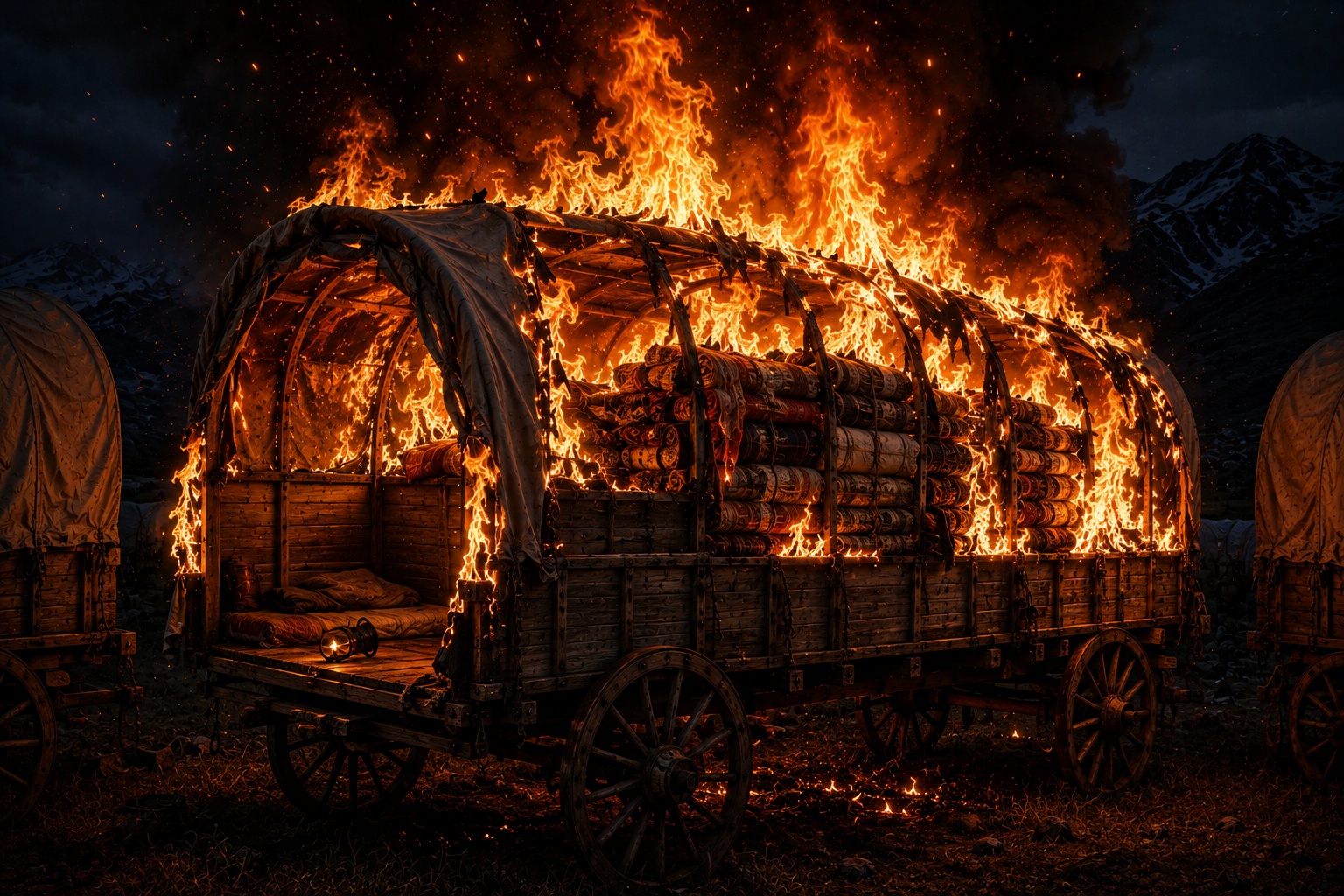
The floor was scalding hot. I crawled inside with my face as close to the boards as I could get it, hacking and squinting through the smoke.
“Arslan!” There was no answer.
Something burning fell onto my back. I rolled across the floor to smother it, then crawled farther.
I found Arslan with my hand before I saw him. My fingers struck a boot. I followed the leg upward and found him sprawled facedown on the floor, motionless. I grabbed his shoulder and shook.
“Wake up!”
Nothing. Whether the opium had overcome him or the fall had knocked him senseless, I didn’t know. Lying on the floor seemed to have saved him from the worst of the flames. I rolled him over, hooked one arm around his chest and dragged him toward the opening, pillowing his head on my chest, almost swimming across the floor with him. He was bigger than me, and my left leg finally remembered that it was wounded. Pain shot through it so violently that my entire body shuddered and I groaned out loud.
A burning strip of canvas dropped onto my hand, and I beat it out violently. I was getting dizzy, and could not see clearly.
“La ilaha il-Allah,” I thought, having no breath to speak. “La ilaha il-Allah.”
I gritted my teeth fiercely, seized Arslan tighter, shouted, “Not now!” at the pain, and dragged him backward in what I hoped was the right direction. Hands reached through the smoke and seized us both. Someone dragged Arslan away while another man pulled me out and down. Hands rolled me in the snow, beating at my clothes. My hair had caught fire, and someone rubbed snow into it.
Containment OperationBy then the camp had exploded into activity. Men ran half-dressed through the snow. Horses reared and screamed as teamsters hurried to lead them away. Guards were converging on the Silk Store from every direction, some carrying shovels, others blankets or buckets.
The cold and snow had revived me somewhat. My leg ached and I had burns in many places, but I staggered to my feet, seized a shovel and began hurling snow onto the blazing Silk Store.
Someone had brought a barrel of water, but I knew immediately that none of it would be enough. There was nothing left to salvage. Flames roared up into the night like a beacon, and sparks flew into the air like burning hummingbirds. The Silk Store was lost.
The two wagons on either side of the Silk Store were still dangerously close. I’d seen a massive fire once in Deep Harbor, in which an entire row of houses went up in flames. The shuihui, the water associations, didn’t even try to stop the fire. Demolition teams destroyed perfectly good houses on either side of the fire.
This seemed mad to me. I grabbed a volunteer and asked what they were doing, and he explained that they had to create a firebreak, to save the rest of the city. So I participated, wielding a massive hammer and splintering walls as the fire roared like a dragon. Meanwhile, the hand-pumped shuilong engines sprayed the houses beyond the break. The entire thing was a containment operation.
So was this. “Forget this wagon!” I shouted, gesturing with the shovel. “Save the others! Make a firebreak! Get them apart!” The act of shouting felt like dragging barbed wire through my throat. I burst into a fit of coughing that bent me over until I finally vomited in the snow.
I stood back up. “Move that one!” I pointed. “You four, get those horses hitched! Push if you have to! Get it away!”
Men obeyed.
“Clear the tents! Get everyone back! Move the mules!”
“Darius!”
Captain Karim came running through the camp, wearing boots and trousers but no coat, his sword belted over his nightshirt. I saw Hakim Yusuf twenty paces behind him, pulling on his coat, his medical bag tucked into the crook of one arm, and his breath steaming into the night.
One look at Captain Karim’s posture and expression told me that he was barely containing his rage. With a glance he took in the situation: the fire, the nearest wagons being moved at my command. He looked at Weili, who sat in the snow weeping, her hair singed and a piece of burnt silk melted into one of her cheeks. Then he looked at Arslan, lying nearby, relatively unharmed, but coughing listlessly.
Finally his eyes returned to me: my clothes scorched and torn, my hair half burned away, my eyebrows gone, my hands and face blistered, and a shovel in my hand.
“The Silk Store,” I said lamely. “Weili and Arslan were inside. I got them out. The wagons on either side -”
He held up a hand. “I can see that. Any casualties?” His voice was terrifyingly calm.
I shook my head. “No, Captain.”
He turned. “Corporal Bao! Take twenty men and move every wagon at least two hundred paces from the fire. I don’t care if you have to drag them by hand. Move them!”
“Yes, Captain!”
“Veteran Guard Wu! Animals! Get every horse and mule upwind and keep them there. Make sure none panic and bolt.”
“Yes, Captain!”
“Everyone else, snow on the fire! Watch the sparks! If another wagon catches, shout immediately!”
Men scattered.
Rays of LightMy body chose that moment to quit. My lungs seized up like a fist. I coughed uncontrollably until I fell to my hands, saliva running from my mouth. I tried to breathe, but every breath triggered another violent spasm. My chest felt scraped raw from the inside. My vision went gray, and I was afraid I was dying.
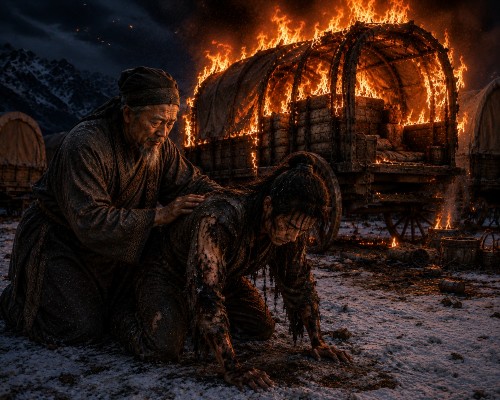 Hakim Yusuf took hold of me. “Sit,” he commanded. He spoke softly into my ear. “I know it hurts. I’ll take care of you, I’m with you. Don’t be afraid.” Yusuf’s words were like rays of light that fell upon my soot-stained heart. Tears came to my eyes.
Yusuf called Memdooh over, and instructed him to gently wipe the soot from my nostrils, and rinse my mouth.
Then he began giving orders. “You two, bring clean water. Not from the fire barrels. Clean water. And six blankets.”
He went first to Weili. Still coughing, I watched through blurry eyes. One of the guards was trying to peel off the piece of silk that had melted into her cheek. Yusuf slapped the man’s hand away. He knelt, examined the burn on her cheek without touching it, then looked into her eyes and mouth. “Don’t touch your face. Leave it alone.”
Memdooh began toweling my nose and face, and gave me a cup of cold water. “Sip, rinse and spit it out,” he said. “Don’t try to talk or shout. When you gonna stop the hero role? One of these days you’ll go in a hole.”
I squinted up at him. “Don’t make me laugh,” I managed to say, then started coughing again.
Someone arrived with blankets, and Yusuf had us strip off our wet tunics and wrap two blankets apiece around ourselves.
Yusuf returned to me. “Open your mouth.”
I did, and he peered inside, then wiped a thumb across the black soot beneath my nose. “Rinse and spit again.”
Memdooh gave me the cup, and I did so. The saliva was streaked gray. Yusuf’s expression darkened. “Do not let him fall asleep,” he instructed Memdooh. “Keep him sitting up. If his breathing becomes worse, notify me immediately.”
The Silk Store chose that moment to collapse inward with a roar, throwing a fountain of sparks into the night. Men shouted and backed away, shielding their faces. The wooden frame followed, cracking and folding as the precious silks, linens, cottons and carpets inside burned together.
But the neighboring wagons were now at a safe distance. Nothing surrounded the doomed Silk Store but a wide circle of half-melted snow.
Three In a RowThrough watering eyes I saw Captain Karim standing before the crumbled, burning remains of the Silk Store, his bare arms folded across his chest. Weili sat twenty paces away. Arslan had begun to stir.
Karim pointed to Shah. “Sit them up. All three. Beside each other.”
Shah lifted me like a child and sat me next to Weili, with Arslan on the other side. I coughed long and hard, and nearly collapsed, but he held me until I could sit on my own. The two blankets should have kept me toasty warm, but I was shivering.
Weili, blankets pulled tightly around her, was still crying. Arslan sat slumped beside her, blinking stupidly and swaying as if the earth were moving beneath him. He hardly seemed aware of where he was, and had stopped coughing.
So there we were, the three of us in a row. It was like a children’s rhyme. Three little guards, sitting in the snow, one looked up and saw a crow…
Where was the crow? There should have been a crow.
What was wrong with me? I tried to clear my head. I knew exactly why I was there, just as I had known for some time that a reckoning must come. The only thing I did not know was what would be done with me.
“Captain,” Hakim Yusuf said. “I want these three in my wagon immediately.”
Karim’s gaze moved from Weili to Arslan and finally to me. “Not yet.”
“They need treatment now.”
Karim fixed an intense stare on Yusuf. “You have already treated them.”
Yusuf’s mouth was a flat line. “Partly, but they need to be inside. I need to dress their burns and remove the burned silk from the girl’s face, for heaven’s sake.”
“No. Don’t ask again.” Karim’s tone was so low, it might have come from a lion’s mouth.
“SubhanAllah! This is not acceptable. My authority supersedes yours in medical matters.”
The captain gestured to Shah. “Grab the Hakim and carry him to his wagon.”
Hakim Yusuf took a shocked step back, then – as Shah walked uncertainly toward him – held up a hand. “I will remain silent.”
Shah looked to Karim, who nodded, and Shah retreated.
I too was shocked. Respect for Hakim Yusuf was ingrained in all of us. He was our elder and father, in a way. Many of us owed him our lives. To threaten to carry him like a sack of grain was outrageous. I lost a little bit of my respect for Captain Karim in that moment. Just a bit.
The captain began pacing before us, boots crunching through the snow, one hand gripping the pommel of his sword. Behind him, the Silk Store had collapsed into a smoldering skeleton. Men continued throwing snow onto the wreckage. Smoke streamed across the night sky, and sparks rose toward the stars.
Karim stopped pacing and surveyed us. I had seen him angry before. I had seen him shout until men twice his size shrank like rolling beetles. This was different. If I had a choice between charging back into the burning Silk Store or facing Karim’s wrath, I would have chosen the fire.
Interrogation“Someone,” Karim said quietly, “is going to tell me what happened.”
He pointed at Arslan. “You. Speak.”
Arslan stared. His mouth opened, but nothing came out. His lips worked silently, and I could almost see his mind stumbling through one lie after another, searching for one that might save him.
“It was Darius,” he finally said. His voice was hoarse. “He knocked me into the lamp.”
“Why was there a lamp in the wagon?”
“I guess Darius brought it to spy on us. He’s jealous.”
“If he brought it, how could he have knocked you into it?”
Arslan made no reply, and Karim snorted. He pointed at Weili. “Speak, Guard Weili.”
Weili held the blanket tightly around herself and shook her head. “I’m in pain,” she sobbed. “I don’t know. I didn’t do anything.”
Karim stared at her for a moment, then resumed pacing.
I sat between them, wet, burned and shivering. My lungs still spasmed every few breaths, and each cough was a spear in my chest. I could not understand what Karim was doing. Why was he asking them? Why not ask me? I was the Veteran Guard. Surely my word carried more weight than theirs.
Karim stopped and turned to me. “Veteran Guard Lee.”
Something in the way he said my rank made me straighten despite the pain.
“I don’t care what your feelings are. I don’t care who you love, or who loves you.” He took one step toward me. “You will tell me what happened, and you will speak truthfully, or as Allah is my witness, I will have you whipped from here to Persia.”
I stared at him, and found myself nodding slowly as realization dawned. Karim already knew. Maybe not what had happened in the wagon, but he knew enough. He knew how I felt about Weili. Perhaps he had seen me arguing with her after she left me for Arslan. All these months on the road, he’d noticed more than I had guessed. And he was warning me that whatever I felt for her had no place here.
I swallowed hard, then began. “I woke up and needed to pee. It was very dark outside. I saw a faint light coming from one of the wagons and went to investigate. When I looked into the Silk Store, I saw Arslan cooking opium over an open flame, and Weili smoking it.”
Karim held up one hand, and studied me intently. “You don’t sound surprised.”
“Sir?”
“You say you found Arslan cooking opium over an open flame, and you say it without surprise, as if you expected it.”
My eyes widened. I was cooked.
“Have you seen this before?”
I looked down and chewed on my lip.
“Veteran Guard Lee?”
“Yes,” I admitted.
“How many times?”
“Twice.”
Get My WhipKarim stared at me. His expression did not change, but something in his eyes hardened. He looked over his shoulder. “Shah. Go get my bullwhip.”
Shah’s face blanched. For a moment he stood frozen, as if hoping he had misunderstood. Then he hurried away.
I glanced around at the guards assembled in the snow. No one looked sleepy anymore. Their faces were hard in the firelight. Some stared at Arslan and Weili. Others stared at me.
Only a few days ago, we had lost ten men trying to protect a single wagon. Ten graves stood in a mountain meadow behind us. Men had been shot, stabbed and poisoned to prevent thieves from taking what belonged to Five Stars.
And tonight we had lost another wagon for nothing.
My gaze moved among the guards until it found Longwei. He was watching me, and there was the faintest trace of a smile on his face.
“Go on with your story,” Karim said.
I looked back at him. “I moved to extinguish the flame. Arslan tried to block my way and tripped over his own feet. He fell and knocked the lamp over. The fabrics ignited instantly. I carried Weili out and went back for Arslan.” I swallowed. I’d stopped coughing, but my throat felt like raw ground beef. “That’s it.”
Shah returned carrying the bullwhip. He held it carefully, the long leather lash coiled in his hands. Karim took it from him without a word. He uncoiled part of it and let the end fall into the snow.
“All guards, form a circle.”
The men moved at once, surrounding Weili, Arslan and me. I looked from face to face. Men I had eaten with, ridden beside and fought alongside stood shoulder to shoulder around us. No one spoke.
Unrequited LoveKarim pointed at Arslan, who had fallen asleep. “Wake him up.”
A guard fetched a bucket and threw the water full into Arslan’s face. Arslan gasped and jerked upright, sputtering. Water streamed from his scalp and beard, soaking his clothes. He stared wildly around the circle, then at the whip in Karim’s hand. Whatever remained of his opium stupor seemed to disappear.
Karim’s gaze settled first on Arslan, then Weili, then me.
“I find all three of you culpable.”
My stomach dropped.
“Arslan, you brought corruption into my camp. You endangered this caravan and the lives of those who work to guard it. Then you sat here and lied to me about what happened.”
Arslan opened his mouth.
“Do not speak.” Karim turned to Weili. “Deng Weili, you were a willing accomplice. I expected better from you.”
She bowed her head, weeping silently.
Then he looked at me. “Darius. You knew.”
I met his eyes.
“You knew, and you said nothing. Now I know why these two could not stop the fleeing raiders. Directly or indirectly, these two are connected to the loss of two wagons full of goods. Do you have any idea how much this costs us?”
His voice rose. “If you worked as a guard for the rest of your life, it would not pay for the loss.”
Karim’s hand twitched, and the whip brushed back and forth across the snow with a mesmerizing, serpentine motion.
“The future of the Five Star Trading Company rests upon this venture. Perhaps the future of the emperor himself, for seven of these wagons belong to him personally. Our nation is at war. This caravan is vital.”
He stepped closer to me. The whip cut a line through the snow.
“Yet you allowed it to be endangered because of your juvenile feelings of unrequited love.”
The words struck like a slap. A few of the men shifted uncomfortably, but no one looked away.
“You displayed extraordinarily poor judgment. I am tempted to strip you of the rank I gave you and return you to Guard.”
He paused.
“But I will not. You paid for that promotion in blood, both yours and that of the enemy.”
For some reason, that hurt even more.
The Choice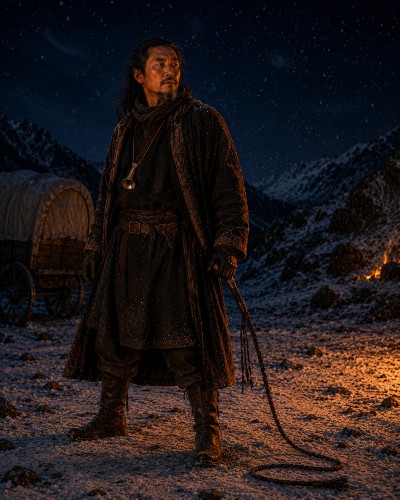
Karim stepped back to take in all three of us.
“I offer each of you the same choice.”
He lifted the bullwhip.
“Exile, or twenty lashes.”
A murmur went through the circle and died almost immediately.
“Choose whichever you wish. But understand me clearly. There will be no discussion, no bargaining and no delay.”
His gaze passed slowly over us.
“Whichever punishment you choose will be carried out right now.” He pointed at Arslan. “You first. Choose.”
Arslan shrugged. “That’s easy. I choose exile. Just give me my mule, pack and bow.”
Weili, in her shock, stopped weeping and stared at Arslan. “You’re leaving me?”
He shrugged. “I told you from the start I’m traveling to see the world. This was always a one-way trip for me.”
Weili looked to Captain Karim. “Exile for me too, then. I’m going with Arslan.”
Arslan shook his head. “No, babe. Life on the road is hard enough. I can’t be burdened with you.”
“But I love you!”
Arslan shook his head and snorted. “Be real. This was only ever a bit of fun for both of us. Besides, you don’t love me. You love the kid.” He gestured toward me. “You think I don’t know it?”
Weili gaped at him. Her nostrils flared, then she turned to Karim. “Give me the lashes, then. I don’t care.”
Karim looked unsettled. “Are you sure you -”
“The lashes!” Weili screamed. She kicked her feet in the snow. “The lashes! Do it hard! Kill me!”
Hakim Yusuf stepped forward, but before he could speak, Karim cut him off with a slashing motion of his hand. “No, Hakim. Discipline is my area of authority.”
The captain turned to me. “Darius?”
“The lashes, of course,” I said. “And give me Weili’s twenty lashes as well. I will take her punishment.” There was no doubt in my heart that this was what I must do. Never in my worst nightmares could I imagine seeing Weili whipped. After all was said and done, I still loved her. Perhaps it was stupid and childish, just as Karim had said. Perhaps it had led to this very moment of humiliation and loss. But it was true.
I saw a fleeting look of relief pass across Karim’s face. To tie a burnt, weeping, heartbroken woman to a wagon wheel and whip her? The idea was outrageous, and he knew it.
“No!” Weili shouted. “He can’t do that! It’s my punishment, I deserve it, I want it, you can’t -”
The Decision“Quiet,” Karim said firmly. He resumed pacing back and forth, the whip slithering along in the snow behind him. We watched him, our heads turning one way and the other like cats watching a bird, except we were the birds and he was the hunter.
He stopped before me. “Stand up.”
I struggled to my feet. It wasn’t easy, as my legs had fallen asleep in the cold snow.
“Darius,” Karim said, and his tone was almost conversational. “You put me in an impossible position. You’re the least culpable of the three, yet now I’m supposed to whip you alone and let the others off? Even I know injustice when I see it. Yet discipline must be enforced. There must be consequences. What am I supposed to do with you?”
“Give me the lashes, Captain. Mine and hers.”
Karim exhaled noisily, stepped back and raised his voice. “Deng Weili will be stripped of half of her pay for the remainder of the journey. Arslan is exiled.” He gestured to Corporal Bao. “Take a few men and accompany him as he gathers his things and leaves. If he returns, shoot him on sight. Take him.”
As men led Arslan away, Weili wailed, “No! I need him!”
That was a dagger in my chest. What was it about this bald, drug-smoking liar that Weili loved so much? I couldn’t fathom it, but something flipped inside me. Some second heart that had beaten only for Weili gave up the ghost and died. I promised myself at that moment that I would never speak to Deng Weili again.
“Veteran Guard Darius Lee,” Karim went on, “will receive his own twenty lashes, plus Deng Weili’s twenty, per his request. Forty lashes in all.”
“Captain!” Hakim Yusuf shouted.
Karim held up his hand in a gesture that said, “Wait.”
“There are mitigating factors. Darius saved two lives with no thought to his own safety. Because of this, his punishment is reduced to ten lashes.”
“Wonderful,” Meilin muttered. “Exactly what the Hero of the Pass needs. He’s been shot and burned, so let’s whip him. Why not cut off his foot as well, just because?”
“I heard that, Veteran Guard Meilin,” Karim growled.
“Sorry, Captain.”
Hakim Yusuf held out his hands, pleading. “Captain, the boy is burned. He’s still coughing up smoke. His leg wound has not fully healed. Even ten lashes could kill him.”
“I said ten lashes!” Karim bellowed, his rage coming through. “Shah, tie him to a wagon wheel.”
“No need,” I said. I let the blankets drop from my shoulders, walked to the nearest wagon wheel, turned my bare back to the assembled group, and gripped the cold, hard wheel with both hands.
“Captain,” Meilin said.
He turned to face her. “Yes?” His demeanor was calm, but that one word was colder than all the snow around us.
“Give me five of his lashes. I mean it.”
He regarded her, and his visage softened. “I know you do. But no.”
The WhippingI glanced back to see him standing ten paces behind me, the whip hanging loose at his side. For a moment he said nothing.
Then he spoke. “Veteran Guard Lee, listen carefully. You will remain on your feet until the punishment is complete. If you fall, I will have you stood up and tied to that wheel. Do you understand?”
“Yes, Captain.” I tightened my hands around the wheel.
I would not scream. That much I decided. With Shah at my side, I had fought raiders that outnumbered me. I had buried friends. Poisoned arrows had not killed me. I had crawled into a burning wagon and dragged a man bigger than myself through the flames. I could endure ten strokes of a whip. Kuangren had done it, and so could I.
I heard Karim step away. The murmuring among the guards ceased. For a few seconds there was only the crackle of the dying fire and the hiss of snow still being thrown onto embers. I gripped the wheel harder and stared at the wagon in front of me. This wagon was the Spice Market. Any guard would know it in their sleep, for it carried with it the aromas of star anise, cloves, Sichuan pepper, ginger, nutmeg, camphor, and most of all cassia.
The scent of cassia came to me now, and I inhaled deeply, which caused me to cough hard, like a dog trying to throw up a bone stuck in his throat. Still, the scent was sweet, and made me smile. Maybe this whipping wouldn’t be so bad. Maybe I –
Karim shouted, “One!”
The whip cracked, and pain exploded across my back.
I screamed. There was no decision involved. The sound tore itself out of me, raw and high, and my body arched away from the wheel. My hands nearly came loose, and I gasped for breath. That single lash was equal to being shot in the leg with the poisoned arrow. It was a line of fire across my back. I’d escaped a burning wagon, only to be burned a different way.
“Two!”
The whip cracked again, and I screamed again. So much for my manly resolve. I was now unsure I could make it through. A feeling of dread grew inside me.
“Three!”
My knees buckled. I caught myself against the wheel and forced my legs straight. Someone among the guards murmured something. Another voice answered. I couldn’t understand the words.
“Four!”
When the fourth lash struck, I cried out and pressed my forehead against the wheel. Tears ran down my face. I heard Weili shouting, but couldn’t make out her words. Desperately I inhaled, taking in the scent of cassia.
You’re not here, I told myself. You’re a little boy, and your mother is making a cassia cupcake for your birthday. You take a bite, and it’s the best thing you ever tasted. Your mother smiles, but her smile fades as your father walks into the house.
“Five!”
I felt number five, but unlike the others, the pain was distant. Nevertheless, my fingers slipped. My fingers clutched desperately at the spokes and I somehow remained standing. I heard Hakim Yusuf’s voice, sharp and angry.
I tried to get back to that moment with my mother, but it was gone, faded like a dream after waking. The world had contracted to the cold wagon wheel beneath my hands and the cruel whip behind me.
“Six!” And a vicious crack.
My legs gave way. For a moment I hung from the wheel by my arms, my knees in the snow.
Karim had warned me. If you fall, I will have you stood up and tied to the wheel.
The thought of being tied to the wheel was unbearable. I would never live down the humiliation. Kuangren survived this, so could I! Of course Kuangren had been tied to the wheel. Still, I dragged myself upright, wrapped both arms around the wheel and held on. I could no longer hear anyone around me. My ears were filled with a roaring sound that blocked everything else out.
“Seven!”
The whip came down again. Something inside me broke loose. My hands released the wheel, and the snow rushed upward, though I never felt myself strike it. Then there was nothing.
* * *
Come back next week for Part 25 – To Save A Prince
Reader comments and constructive criticism are important to me, so please comment!
See the Story Index for Wael Abdelgawad’s other stories on this website.

Wael Abdelgawad’s novels – including Pieces of a Dream, The Repeaters and Zaid Karim Private Investigator – are available in ebook and print form on his author page at Amazon.com.
Related:
The post Far Away [Part 24] – The Whipping appeared first on MuslimMatters.org.
The Documenting Oppression against Muslims (DOAM) organization has charted a series of anti-Muslim hate crimes, harassment, and assaults over the summer of 2026 in the United States, Britain, Canada, Ireland, Italy, and Belgium. The ten weeks since the end of May have seen almost thirty attacks, many of them focused at Muslim women and with the footage often publicly posted online by either the perpetrators or victims
There are several probable contributing factors to this phenomena: anti-Muslim violence has ebbed and flowed throughout the past twenty-five years, but the 2020s have seen a particular sharpening of the phenomenon. A number of usually far-right provocateurs, ranging from the world’s richest man Elon Musk to politicians as senior as the American ruler Donald Trump have repeatedly trafficked in anti-Muslim bait. Foreign governments such as India and the United Arab Emirates, and particularly an Israel that sees Islamophobic incitement as key to undermining criticism of its genocidal assault on Palestine, have also trafficked heavily in Islamophobic discourse and misinformation.
In particular political pressure has been brought to bear on Britain, which boasts a large, vocal, and largely socioeconomically deprived Muslim population. It has been repeatedly singled out for alleged Islamophilia even as its political elite across parties has strained to restrict Muslim organizations in response to often Israel-backed pressure groups. One particularly common canard has been the claim, based on an infamous grooming gang case from the mid-2010s, that accuses Muslims of trying to rape young women: though the vast majority of such gangs have been non-Muslim, the myth has taken on a life of its own. Israeli prime minister Benjamin Netanyahu-Mileikowsky, the incendiary ideologue whose genocide of Palestine comes on the back of over forty years of incitement against a freely expansive definition of “radical Islam”, for instance sneered at the “Islamic Republic of Britain”, a claim also repeatedly regurgitated by Musk in conjunction with long-discarded propaganda about Muslim criminality.
Musk, who has compared Britain to an island of guileless hobbits being overrun by foreign criminals, falsely linked rape to Muslims: this of course is part of a longstanding pattern of racist and particularly Islamophobic behavior. There is no doubt that this incitement by wealthy, powerful individuals inside and outside positions of power places Muslims at risk. The British Muslim Trust reported as many as 70 attacks on mosque in the country within a year, a rate of roughly one attack every five days.

Heirling and renowned blowhard Elon Musk has played a major role in spreading hatred against Muslims.
Summer of Hate
This article will give a summary of the attacks that the watchdog organization has recorded since the start of summer 2026:
(1) On 5 June 2026, a woman screaming profanities attacked a Somali woman in Dublin, Ireland, and tore off her hijab before slashing her face in a street in Dublin, Ireland. A passerby helped drive off the attacker, who was soon arrested, but the victim had to be treated for severe lacerations to her face.
(2) On 11 June 2026, a balaclava-clad man attacked and set fire to an imam’s home, with his family inside, at Bolton, Britain. Fortunately nobody was harmed as the man fled.
(3) On the same day, a man wielding a sledgehammer attacked his Muslim neighbour’s home in London, Britain, threatening to kill her children, before he realized that her husband was at home and fled.
(4) On 20 June 2026, a man with bared chest and carrying a large weapon went on a spree of attacks in the streets of Scottish city Edinburgh. He began the assaults near a mosque, before moving onto a petrol station and then a pizzeria. In total he injured five people before police could intercept him. After his arrest, he echoed the abovementioned far-right propaganda point by accusing Muslims of raping his countrywomen.
(5) On 28 June 2026, a man at a park in Dublin, Ireland, accused Muslims of smiling at children and attacked them, only to be beaten off. The incident was caught on camera with no appearance of untoward behaviour by the Muslims.
(6) On 30 June 2026, a man set fire to a mosque in Dublin, Ireland, and then trumpeted his crime in the street before he was arrested.
(7) On 1 July 2026, a Muslim family’s front door was smashed in in Walsall, Britain, while the children were inside.
(8) On 3 July 2026, American Muslims intercepted an armed attacker at the Jummah prayer at a mosque in New York.
(9, 10) On 7 July 2026, British Muslims tackled an attacker at a prominent mosque in London. He was arrested on accusation of inflicting grievous bodily harm to a man. Three days later a Muslim worshipper tackled another man who was threatening and abusing worshippers at the same mosque.
(11) On 9 July 2026, an effigy of a mosque was placed on a bonfire amid a number of Islamophobic slogans at the Northern Irish town of Moygashel before police removed it and arrested a man for incitement of hatred.
(12) A teenage boy was arrested for allegedly plotting to attack two mosques in London, Britain, in connection with “extreme right-wing terrorism”. He had originally been arrested under suspicion of criminal damage to a vehicle before police found a number of alleged plans for attacking mosques.
(13) On 12 July 2026, a yearly event, which hosted thousands of Muslims, by the Tablighi Jamaat organization at Barham was shut down by British police after it faced a serious threat of a terrorist attack. Twelve suspects were arrested in connection with the threat.
(14) On 13 July 2026, a Muslim worker at a mall in the American town West Valley City was stabbed over fifteen times, explicitly over his Muslim faith, before bystanders forced the attacker off. The assailant has since been indicted with a hate crime causing bodily injury: the United States Attorney’s Office of Utah reported that he “purchased a knife from a store inside the mall and went around asking mall employees if they were Muslim. When the victim responded that he was, the defendant began stabbing him.”
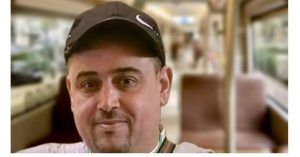
Moroccan-Belgian shopkeeper Driss Atouane gave his life defending a Muslim woman from abuse in Belgium.
(15) On 15 July 2026, an Islamic school in Birmingham, Britain, had to be evacuated after a bomb threat.
(16) A Moroccan man, Abderrahim Fakir, was suffocated to death by Italian policemen in a Bologna street. Footage showed him pleading for help for minutes before he expired.
(17) Islamophobic graffiti calling for the ouster of Muslims was found at a cemetery in Huddersfield, Britain.
(18) On 22 July 2026, a gang of attackers were filmed assailing a Scottish Muslim woman at Glasgow. A bystander reported that four men approached the woman, shouting insults and telling her to remove her headscarf, before one struck her over the head with a glass bottle.
(19) On 23 July 2026, a Muslim woman walking with her child was assailed by a crowd at Moncton, Canada, in front of a car parade. Footage was captured of the attack, where the crowd beat the woman while shouting a stream of racist and Islamophobic slurs. She was left hospitalized.
(20) A man attacked and struck a Muslim outside an Islamic Centre at Dublin, Ireland.
(21) A far-right mob embarked on a spree of attacks against immigrant-owned shops in Liverpool, Britain. They shouted a stream of slurs, both racist and anti-Islam. The latter included insults against Allah that have already been chanted at far-right rallies organized by pro-Israel rightwingers in other parts of Britain over the past year. Because of these insults against Allah, Who is Praised and Glorified above such self-defeating slurs, we have not linked the video.
(22) A far-right provocateur, Kellie-Jay Keen-Minshull, publicly lashed out at Muslim men praying at the well-known speaking site Speakers’ Corner in London, Britain. Describing herself as an Islamophobe but not a racist, the double-double-barrelled troublemaker’s argument with Muslims was widely circulated online by both her followers and critics.
(23) On 29 July 2026, purported well-wishers of questionable merit were filmed harassing Muslim women outside the parliament in Ottawa, Canada. “Go back to your country. You came here for a better life, not to wear those rags,” they offered in the particularly aggressive sort of advice whose tone seems only to be directed at unaccompanied women.
(24) On 30 July 2026, a Muslim man lost his life protecting a woman from an Islamophobic attack in Brussels, Belgium. Driss Atouane, a shopkeeper of Moroccan heritage, confronted a man harassing a Muslim woman on the train, but was attacked from behind and beaten to death. He displayed the sort of initiative, courage, and good intent that has become necessary for many Muslims in the west. May Allah have mercy on him.
(25) On the same day, a cyclist stopped to dispense threats and racist abuse at a Muslim couple in Sunderland, Britain.
(26) A man wielding a decidedly non-native weapon of choice in a baseball bat pursued a Muslim man in Birmingham, Britain. When he attacked his quarry, the Muslim seized a stick and beat him off, before posting footage of the attacker’s undignified retreat online.
(27) On 10 August 2026, a man in the United States filmed himself aggressively directing taunts clearly intended to be more incisive than they proved at a pair of Muslim women passing by in headscarves and a veil, who ignored him. “You’re in America,” he began, displaying his awareness of their surroundings; “you shouldn’t be wearing that **** around your head. You’re so [very] weird walking in America like that.” Then, in an observation as observant of the sunny conditions as it was ignorant of the headscarves’ purpose: “There’s no sandstorms around here.” And finally, saving the oddest remark for his parting shot: “Go to Mexico like that, see what they do to you.”
(28) A Muslim woman in the Welsh capital Cardiff at Britain was assaulted by a man and woman. The pair had pursued her in their car, shouting abuse; when she responded by taking a photograph of the car, they emerged and beat her to the ground, punching her repeatedly in the face, before tearing off her headscarf. Her husband later posted the video of the assault and explained the background, which he reported had taken place in front of children.
You can follow DOAM on Twitter and Facebook as well as their Instagram page.
The post Unquiet on the Western Front: Watchdog documents hate crime spree in North America and Western Europe appeared first on MuslimMatters.org.
Trump administration lawsuit recycled debunked 7 October atrocity stories and twisted Palestine solidarity slogans into calls to kill Jews.
Israel lobby demands Simon & Schuster stop publishing her novels.
Israeli PM criticised by political rival for attacking an international ally and overseeing ‘horrific diplomatic failure’
The Israeli prime minister, Benjamin Netanyahu, called the UK “the Islamic republic of Britain” in a podcast interview, where he also described the country as the “first Islamic republic to get a nuclear weapon”.
His comments, made during an interview for Israel’s army radio, played into a common far-right Islamophobic trope about Britain’s small Muslim population.
Continue reading...How are Muslims handling money? This new mini-series from the MuslimMatters podcast is all about Muslims, money, and how on earth we’re managing it all (or aren’t!). From learning about credit card debt the hard way, to uncomfortable conversations with your spouse, to teaching kids financial responsibility… you won’t want to miss this series!
In this introductory episode, Siraaj, Irtiza, and Zainab share their own experiences of (not) learning how to handle finances the right way, the challenge of maintaining an Islamically-oriented way of money management, and unique challenges they’ve experienced in their lives.
Related:
[Podcast] A Riba-Free Future With A Continuous Charity | Faizan Syed
[Podcast] A Riba-Free Future With A Continuous Charity | Faizan Syed
The post [Podcast] Will Your Credit Card Send You To Hell? | New Series appeared first on MuslimMatters.org.
Recovering from the raid, Darius hallucinates his way through a promotion ceremony, only to stumble into a new disaster.
Read Part 1 | Part 2 | Part 3 | Part 4 | Part 5 | Part 6 | Part 7 | Part 8 | Part 9 | Part 10 | Part 11 | Part 12 | Part 13 | Part 14 | Part 15 | Part 16 | Part 17 | Part 18 | Part 19 | Part 20 | Part 21 | Part 22
* * *
Moving BackwardThe caravan moved backward as I stood helplessly watching. The world was white with snow, and the wind snatched at my clothing like a pickpocket. Horses and mules stepped backward, guards on foot walked backward without looking. Memdooh recited poetry backward. Sergeant Karim rode at the head of the column, facing forward but somehow drifting away in reverse. My feet were frozen in place, yet my left leg was huge and hot, like the trunk of a burning tree. I should blow Corporal Jian’s horn, but what was the signal for “caravan moving backward?”
“Where even is that horn?” I searched my pockets. Not finding it, I searched Belly’s saddlebags, for he stood patiently by my side.
“I have it,” Longwei replied, and I looked to the other side to see him standing there, one half of his face as purple as an eggplant, and his head and shoulders white with snow.
“Where is it then?”
“Under my belly fat.”
My leg burned from the inside out, as if the bones were a blacksmith’s heated rods.
Ode to the DeadI woke with a gasp, my hands going to my chest for the horn, and finding nothing but a blanket covering my own bare skin. There was something on my face, and I touched it: a bandage. Breathing hard, I lifted my head and looked around. Above me, bunches of drying herbs swayed from the ceiling, casting strange shadows against the canvas walls. I lay on a bedroll on the floor of a moving covered wagon.
The small space reeked of sweat, blood, urine, vinegar, and something rotten. Men lay squeezed in shoulder to shoulder around me beneath wool blankets, their faces pale and shining with fever. Someone coughed wetly in the darkness. Someone else muttered in a language I couldn’t understand.
For a few moments, I had no idea where I was.
Then I heard Ahmed’s voice outside, reciting the Quran loudly as he rode, his voice waxing and waning with the wind, and everything came back to me at once: the mountain pass. The raid. Corporal Jian’s horn, the blue-eyed Afghan, Gulnur lying in Kuangren’s arms, the Afghans escaping with a wagon.
The pain hit me, and I groaned out loud. My leg was on fire. I struggled to sit up, to get a look at the leg, and regretted it. My head spun. Across from me, Memdooh was staring at the roof of the wagon with glassy eyes, his lips moving silently. He looked terrible. His cheeks were flushed, and sweat plastered his hair to his forehead.
“Memdooh?”
He turned his head toward me. For a moment, his expression brightened. “Darius.” His voice was barely a whisper. “Listen to this one:
This is an ode to the dead.
You’re in our hearts, you’re in our heads.
We leave you in the care of the One,
for still you run,
but in a better place,
beneath a better sun.”
I swallowed, my pain forgotten for a moment. “It’s lovely. How many did we lose?”
But Memdooh had fallen asleep, and did not reply.
Critical ConditionI studied the faces around me. What I noticed was who was missing: Gulnur. I knew she had been badly wounded. For an instant, panic seized me. We could not lose her. She and Kuangren, and their at times happy, at times quarrelsome marriage, was one of the bright spots of this entire journey. We all lived vicariously through them.
I forced myself to think. Of course she wouldn’t be here. Hakim Yusuf wasn’t going to pack a wounded woman into a wagon full of half-naked, feverish men.
Ya Allah, I prayed silently, please let Gulnur live. Kuangren loves her.
A shadow fell over me. Hakim Yusuf knelt beside me, pressing the back of his hand against my forehead.
“Ah,” he said, “the hero awakens.”
“How many did we lose? And what about Gulnur?”
“Eight dead. Four in the battle, four by toxin. Gulnur is alive but critical.”
“My leg is killing me. It feels like a burning tree trunk.”
He nodded seriously. “That’s what I’m saying. The Afghans’ arrowheads were poisoned. Some kind of plant toxin. And some appear to have been simply tainted with animal fat or dung, to make the wounds fester. Nasty stuff.”
Dizziness washed over me, and my head fell back to the floor. “Where’s Belly?”
“Who?”
“My horse.”
“Ah.” He chuckled. “I’m sure he’s fine.”
I moaned in pain. “Will I live?”
“Probably.”
I opened my mouth to protest – probably was not reassuring – but weariness and sleep fell upon me like a moonless night.
An Imaginary FishWith the advent of spring rains, water was running in the gully behind Zihan Ma’s farm. The scent of safflower filled the air. Haaris and I sat on the bank of the stream, skipping stones across the shallow water. Far Away and Bao-Bao crouched beside us, studying the stream as if it were a slithering snake. One of my stones failed to skip and instead splashed. A drop of water hit Far Away and he flicked his tail in annoyance.
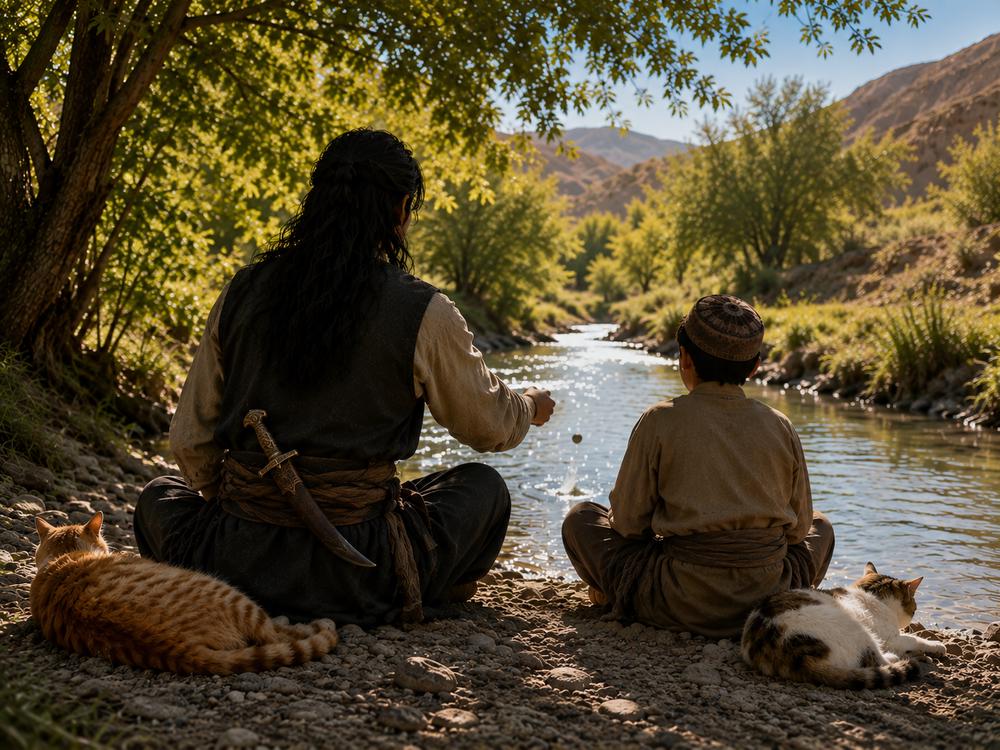
“Your throw is terrible,” Haaris declared.
“It’s not terrible. I’m practicing hitting targets.”
“What’s your target, an imaginary fish?”
Bao-Bao stood, stretched lazily, and walked straight into the stream.
“Haaris!” I shouted. “Your cat will drown!”
Haaris looked at me as if I were an idiot. “Cats can swim, Darius.”
Don’t TellThe wagon hit a rut, and I woke with a gasp. I noticed immediately that while my leg hurt, it was not nearly as bad as before. But I still felt hot, dizzy and weak.
Then I realized that Weili was sitting beside me, and for a moment I forgot my physical pain. She wasn’t looking at me, and sat with her shoulders slightly rounded, and a shawl pulled around her shoulders. I studied the curves of her face. Her strong jaw line. The sadness that had always hidden behind her eyes now seemed deeper. I detected the faint, sweet smell of opium smoke on her clothing, and it revolted me. Others might think it was a perfume, but I knew better.
She noticed I was awake and smiled. “Hey. Half the caravan is talking about you.”
I tried to speak, but my throat was too dry. Weili went to the front of the wagon and came back with a tin cup filled with cold water. I drank deeply, then said, “What are they saying?”
“Depends. Shah says you killed ten men by yourself. Memdooh says Corporal Jian gave you his horn with his dying breath. Longwei says you’re an upstart. Meilin says you’re a tactical genius. Sarge says you may have saved the entire rear third of the caravan.”
“None of that is true.”
“No?”
“And you? What do you say?”
I saw the muscles in her jaw tense, then relax, then tense again, but she said nothing. The wagon creaked around us. There were only four patients in the wagon now. The others had either died or recovered, I did not know which. Memdooh too was gone. Hakim Yusuf bent over a wounded merchant, changing the bandage on a shoulder wound.
“There’s something I need from you,” Weili said at last.
“What?”
She glanced toward Hakim Yusuf, then bent low over me and whispered in my ear. “Please don’t tell anyone what you saw. About me and Arslan. I’ll be so grateful to you.”
For a moment, I simply stared at her. Then my face flushed red. She hadn’t come here to check on my wellbeing at all. She was here to ask me to protect her secret. I remembered the Afghans fleeing toward the cave with our wagon, and Weili and Arslan trying to shoot the driver and failing, again and again. How much of the loss of the wagon was my fault? I had known that our two best archers were addicted to opium, and I’d said nothing. And people called me a hero. What a joke.
“Get out,” I said.
“Okay, but -”
“Get out, Deng Weili!” I sat up and tried to push her, but the world spun. I heaved as if I might throw up, but managed to keep it down. I fell back onto the bed roll, curled up with my knees to my elbows, and closed my eyes against the hard, cold world.
Too Weak to WalkSunlight streamed in through a gap in the canvas flaps. The wagon was not moving. From outside came the sounds of men talking, making repairs, and eating. Yet the sounds were subdued, as if the entire caravan was covered with a gigantic blanket.
Shah and Ahmed were sitting cross-legged, watching me. Ahmed had my travel pack and dao.
Shah’s enormous body seemed to fill the wagon. “There he is!” he boomed. “The commander awakens!”
I groaned. “Don’t call me that.”
He grinned. “Too late. Half the caravan already does.”
“You have to get up,” Ahmed said. “Sergeant Karim has called a caravan-wide meeting. All must attend.”
“He is not ready.” This was Hakim Yusuf, who sat on a stool beside his prep table. “And he needs to stay warm.”
“We’ll carry him,” Ahmed said. “Why do you think I brought the giant?”
Hakim Yusuf fetched a towel and a pail of cold water, and grumbled as he toweled me down, removing layers of sweat and grime. “Hold still, boy. You fought fifty Afghans, but a wet rag is too much?”
“I didn’t fight fifty Afghans.”
“We did, actually,” Shah said. “I still can’t believe it.”
When he was done, Ahmed helped me dress in a clean tunic, trousers and boots, then strapped my dao onto my back. My leg ached, but the real problem was that I was as weak as a baby goose. By the time I was dressed I was breathing as though I had run a mile.
They wouldn’t let me walk. Shah wrapped a blanket around my shoulders, slid one enormous arm beneath my knees and the other behind my back, and lifted me as if I weighed no more than a sack of rice.
“Put me down.”
“No.”
Ahmed laughed, and I covered my face as Shah hauled me out into the sunlight. I squinted against the brightness and peered through my fingers to take in the surroundings.
Beautiful FoolThe narrow mountain pass was gone. Instead we stood in a broad mountain meadow surrounded by towering peaks, their upper slopes white with snow. Wildflowers dotted the grass in splashes of yellow and blue, bending in the wind like worshipers making ruku’. The caravan wagons had been drawn into a great circle, forty-nine wooden giants standing wheel to wheel. Smoke rose from cookfires. Teamsters repaired broken axles and harnesses, and tended to the animals. Merchants sat beneath blankets, drinking tea in the sunlight.
Outside the circle of wagons, the horses and mules, all on long tethers, grazed contentedly on the long grass, guarded by a dozen teamsters, surprisingly. Where were the guards?
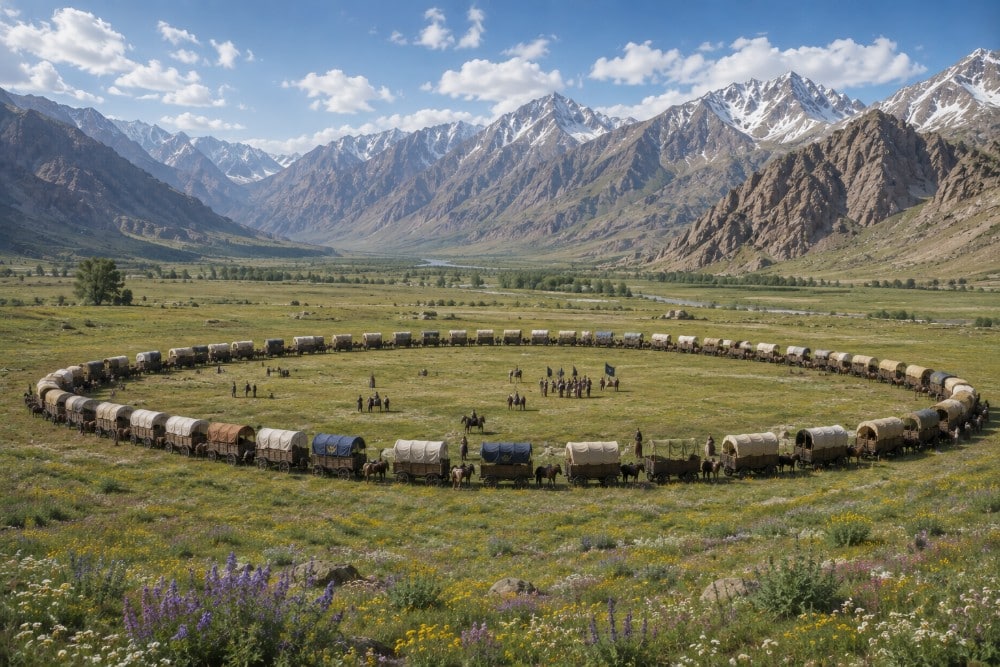
For a moment, the scene was so peaceful and lovely that I forgot everything. At that very instant, somewhere beyond the wagons, a horse let out a loud, excited neigh, then another. I recognized that voice instantly.
Ahmed shaded his eyes and looked toward the remount line. “Let him go!” he shouted to one of the teamsters. “It’s Darius’s horse!”
A moment later, Belly burst around the side of a wagon at a gallop, sending two cooks leaping out of his way. Laughter rippled through the camp as my horse raced straight toward us, black mane flying in the mountain wind.
“Slow down, you beautiful fool,” I whispered.
Belly skidded to a halt beside Shah, snorting and stamping his feet, then shoved his enormous head against my shoulder so hard that I nearly tumbled from Shah’s arms. I stroked his neck, and laughed when he nuzzled my pockets.
“I don’t have any apples.”
“I have a carrot I snagged from the cooks,” Ahmed said, and he handed it to me. “I thought Belly might make an appearance.”
I could have sworn that Belly grinned as he devoured the carrot, chewing happily. He trotted at Shah’s side as we moved farther into the camp, occasionally nudging my blanket with his nose as if to reassure himself that I was truly there.
Then I saw the graves. Ten mounds of fresh earth stood outside the circled wagons, near the western edge of the meadow. A large stone marked each one. The dirt was dark and wet, and a small flock of white birds hunted for insects in the upturned earth.
“We buried them this morning,” Shah said.
I stared. Somewhere beneath them lay Corporal Jian, and other men whose faces I had known for months, and whose voices I had heard every night around the campfires.
Ahead of us, every guard in the caravan stood assembled in the center of the field, talking quietly among themselves. As Shah carried me forward, heads turned. I saw Longwei and Meilin standing together. Her arm was in a sling, but they both seemed fine. Weili, standing next to Arslan as usual, shot me a worried look.
I felt ridiculous, being carried into this group.
“This is embarrassing,” I muttered. “You guys are killing me here.”
“Choose your words wisely,” Ahmed said.
My eyes shot to the fresh graves, and my face paled. “Sorry.”
I saw Kuangren, and called him over. He was thin and pale, and his eyes were puffy and red.
“How is she?”
“Alive but struggling.” His lower lip trembled. “This is the first time I’ve been away from her since it happened.”
I reached out to him, and, to my surprise, he took my hand and kissed it.
The conversation faded as Sergeant Karim stepped into the center of the meadow. He had removed his helmet and tucked it beneath one arm. The wind tugged at his gray hair and beard.
“Five Star guards!” he called.
Men straightened instinctively.
“Fall in!”
The familiar command echoed across the meadow. Conversations ceased. Men hurried into their places. Swords were adjusted, belts tightened, helmets straightened. Within moments, four neat rows stretched across the center of the field.
TimurShah lowered me onto a thick section of fallen log someone had dragged into place at the front. I nearly cried out as my left leg brushed the wood. The muscles had stiffened during my time in the wagon, and I could not bend the leg at all, so I sat with it stretched awkwardly in front of me beneath the blanket. Belly, who had not left my side, lowered his head onto my shoulder.
For a few moments, the only sounds were the wind moving through the meadow and the distant clatter of wagon repairs. Karim looked slowly across the ranks, then raised his voice.
“Brother Ahmed. Front and center.”
Ahmed stepped out of formation and walked to Karim’s side. He folded his hands on his chest, and began to speak.
“Bismillahir-Rahmanir-Rahim,” he began. “All praise belongs to Allah, Lord of the worlds. We praise Him, we seek His forgiveness, and we repent to Him.”
He paused, looking past us toward the graves.
“Three days ago, ten men stood among us. Today they stand before Allah.”
The wind carried his words across the meadow. No one turned to look at the graves. We all knew they were there.
“In an authentic hadith,” Ahmed went on, “the Messenger of Allah ﷺ said:
‘Whoever is killed defending his wealth is a shaheed. Whoever is killed defending his family is a shaheed. Whoever is killed defending his life is a shaheed. Whoever is killed defending his religion is a shaheed.’
“The men who died protecting the caravan and their fellow men are shuhadaa. We ask Allah, the Most Generous, to admit them into gardens beneath which rivers flow.”
A chorus of “Ameen,” rose from the assembly.
“There is something else,” Ahmed said. “Many of you are Muslims. Yet the men who attacked us were also Muslim. Some carried the name of Allah on their lips. That is disturbing.”
A murmur of assent passed through the ranks.
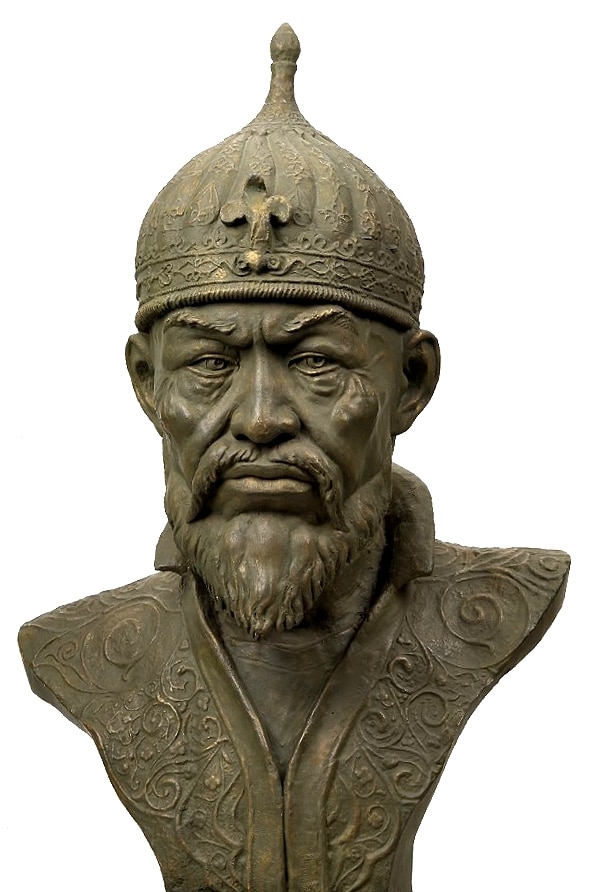 “Centuries ago, there arose a Muslim conqueror named Timur. Driven by ego, he dreamed of possessing the largest Mongol empire in history. He was famous for building masjids and employing scholars. Again, he was Muslim. Yet he marched against Muslim lands from India to Anatolia and Persia, leaving burned cities and mountains of skulls in his wake. Millions perished.
“Were the people of those lands wrong to defend themselves? No. They did what any honorable people must do. They fought because tyranny must be opposed, even when it comes dressed in turbans and robes.”
As he spoke these words, his gaze drifted across the assembled men and settled, for a long moment, on me.
“Allah Himself tells us in the Quran:
‘And if Allah had not checked one people by means of another, the earth would surely have been corrupted; but Allah is full of bounty to the worlds.’”
He swept his unwavering gaze across the assembled group.
“We stood against corruption, though it came wearing turbans and speaking the name of Allah. I would do it again.”
* * *
The meadow was silent save for the distant creaking of wagon wheels and the soft rustle of grass in the wind.
Ahmed raised his hands and began an eloquent dua for the dead. We raised our hands with his, murmuring Ameen. When the supplication ended, Ahmed returned to his place in the ranks.
Belly spotted a patch of long grass and wandered away to graze. I stared at the mountains, nodding slowly. Ahmed’s words had struck home. I thought I understood now.
Captain of GuardsKarim tucked his helmet beneath one arm and surveyed the assembled guards. The lines around his eyes seemed deeper than they had only a week before.
“Before we continue,” he said, “I want to thank every man and woman who stood and fought in that mountain pass. Many of you have ridden beside me for years, since the days when I was Sergeant Karim. Many of you still call me sergeant, and I do not mind. I take it as a term of affection. But for the benefit of our younger recruits, let me remind you that I am, in fact, a Captain of Guards in the service of Five Star. As such, I possess the authority to promote, demote, enforce discipline, and grant rewards.”
I had not known this, and was embarrassed that I’d been calling him Sarge this whole time, even if he didn’t mind it.
Shah was called forward. He blinked in surprise, then stepped forward. His gait was surprisingly graceful for such a large man.
“With only Darius Lee at your side,” Karim said, “you plunged directly into an advancing group of at least fifty raiders and shattered the spine of their attack. For bravery and loyalty, I hereby promote you to Senior Guard.”
The meadow erupted in applause. Shah bowed awkwardly and returned to his place.
I was surprised that Shah was not already more highly ranked. He must have been new to the company. The lowest rank, I knew, was Guard, which was me. Above that was Senior Guard – Shah’s new rank – then Veteran Guard – like Longwei – then Corporal, Sergeant, Master Sergeant, Lieutenant, Captain, and other more senior ranks held by company officers and members of my mother’s family back home.
Karim promoted several others whose names I scarcely heard. The fever had returned, and it settled behind my eyes like smoldering coals. The mountains beyond the meadow shimmered strangely in the sunlight, and the yellow flowers seemed brighter than before, almost painfully so. I thought they might be made of fresh butter. I licked my lips.
Meilin, her arm in a sling, was promoted to Veteran Guard.
Longwei stood very straight, his hands clasped behind his back. There was a hopeful look in his eyes that I had never seen before. A promotion would make him a Corporal – the first true command rank. For a moment, I was certain Karim would call his name.
He did not. The captain fell silent.
Longwei’s smile faltered. Watching his aging face, I saw disappointment. Not anger. Just the weary disappointment of a man who had expected something and received nothing. I felt bad for him.
Weili’s name was not called either, I noted. Nor mine. Which was fine.
Front and CenterThe log I sat on seemed to roll beneath me and I shot my hands out for balance. I blinked hard and found myself staring at Corporal Jian. He stood at the edge of the field behind Karim, horn around his neck and an arrow still in his chest. He studied me intently, as if trying to discern the true grit of the boy who had taken his horn.
Sergeant Karim’s – no, Captain Karim’s – voice boomed across the meadow.
“Darius Lee. Front and center.”
Lost in my fever dream, I did not move. Shah seized my arm and tugged. I tried to stand and collapsed. He caught me before I could fall. “Easy, commander.”
“Stop calling me that.”
No one laughed as Shah supported me with one arm as he helped me to stand beside Karim. My injured leg hung uselessly. Every face in the caravan seemed to be watching.
Karim stepped toward me holding Corporal Jian’s horn. “On the battlefield, age is irrelevant. Only performance matters. When Corporal Jian fell, many distinguished themselves. But one person rallied the men, and brought order to chaos.”
He paused, looking directly into my eyes.
“Darius Lee, you killed nine of the enemy that day. That is astonishing. But it is not for that reason that I promote you. Rather, your courage and judgment saved lives. Never forget that.”
He lifted the leather cord and slipped the horn over my head. It settled against my chest, surprisingly heavy.
“I promote you to Veteran Guard.”
The applause washed over me like a wave. Somewhere nearby, Belly raised his head from the grass and said, “Make sure the job comes with free apples, Boss.”
I swayed where I stood. The meadow was losing its shape. The mountains looked soft around the edges, like giant sesame buns. I wondered how they tasted. My skin felt cold, yet sweat trickled down my back beneath the blanket. Far Away slept in a mini sling that hung around my neck. How nice that he was here.
“Veteran Guard Darius Lee, would you care to say a few words?”
I looked out at the rows of guards, at the graves beyond them, and at the endless mountains beyond. The graves were open. The dead had walked away. I wished them safe travels.
My throat was dry. I swallowed, petted Far Away, and began to speak.
“Memdooh made up a poem. It goes like this:
This is an ode to the dead.
You’re in our hearts, you’re in our heads.
We leave you in the care of the One,
for still you run,
but in a better place,
beneath a better sun.
I think he should be promoted to veteran poet.”
I was serious about this, and was surprised when men laughed. Once again I saw Corporal Jian standing off to the side. He nodded his head at me, pleased, and I felt relieved.
“Corporal Jian was dead when I found him,” I said. “I closed his eyes. His hand was reaching for the horn, trying to do…” I shivered. “His duty… Even with an arrow in his chest.” My eyes drifted to Jian’s ghost. “He’s here with us. His eyes are bright. I think… He’s proud of everyone.”
Men nodded solemnly at this, not realizing that I could literally see him.
“There was a blue-eyed young Afghan. I didn’t want to kill him, but he would not stop. He was no Timur, but… I had no choice. We had no choice.”
I lifted a trembling arm and pointed. “Memdooh is a hero. He was wounded, but he stood and fired, even though he was scared. What a lion.”
I looked for Longwei, found him. “Longwei didn’t like my orders but he did well. He and Meilin killed the commander…”
My eyes searched out Weili and found her. She clasped her hands together and silently mouthed the word, “Please.” I almost said out loud, “Don’t worry, I won’t tell,” but instead I merely winked.
“A man tried to pull me down,” I continued, “And Belly gave him a Belly bite…” I laughed at that, remembering, and men laughed with me. “What a good horse,” I mumbled. “The best horse.” Then dizziness and exhaustion overtook me, and I fell into Shah’s powerful arms.
Holding BackA few hours later, in the medical wagon, Captain Karim came to see me. I lay on my bedroll on the floor. Hakim Yusuf had fed and watered me, cooled my forehead and given me foul tasting medicine, and I was somewhat recovered.
“It was meant for you to blow Corporal Jian’s horn,” Karim said, sitting cross-legged beside me. “Some things are destined. I would have promoted you to corporal, but I have to consider the morale of the men.”
“What about Longwei?”
He nodded. “He’s a good fighter and an experienced guard. He knows the terrain, languages and local customs. A valuable man to have. But command is not right for him.” He produced a small leather purse, put it in my hand, and curled my fingers around it. “A bonus for you. We give out bonuses privately. No need to invite envy, or tempt otherwise honest men.”
I loosened the drawstring and looked in the purse. It was filled with gold coins. “SubhanAllah! This is a fortune.”
“Not really. You saved me far more.” He tapped my chest with one finger. “I’ll tell you something though. It sounds strange to say this, but you’re holding back. Your feet are in two different worlds.”
I remembered Meilin telling me something similar after our duel.
“Is that a bad thing?”
Karim looked up at the roof of the wagon, thinking. “I don’t know.”
With a pat on my shoulder, he departed.
A Night Like Deep RiverThat night, I woke with a desperate need to urinate.
For a moment I lay still, staring up at the canvas roof of Hakim Yusuf’s wagon, listening to the sounds of sleeping men. Someone nearby snored softly. One of the patients coughed in his sleep and turned over. Hakim Yusuf himself lay on his cot in the corner, wrapped in blankets and breathing heavily.
The bucket sat beside my bedroll.
I glared at it. I was sick of buckets. I tested my leg: it was stiff, and still sore, but far improved. I’d go do my business outside.
Very carefully, trying not to wake anyone, I pushed aside my blanket and sat up. My head still swam, though not as badly as before. My leg ached fiercely, but the fire had diminished to a dull, throbbing pain. I reached for my trousers and boots, wincing as I dressed. Then, by force of habit, I strapped my dao to my back, and finally took a little tin cup of water to wash up afterward.
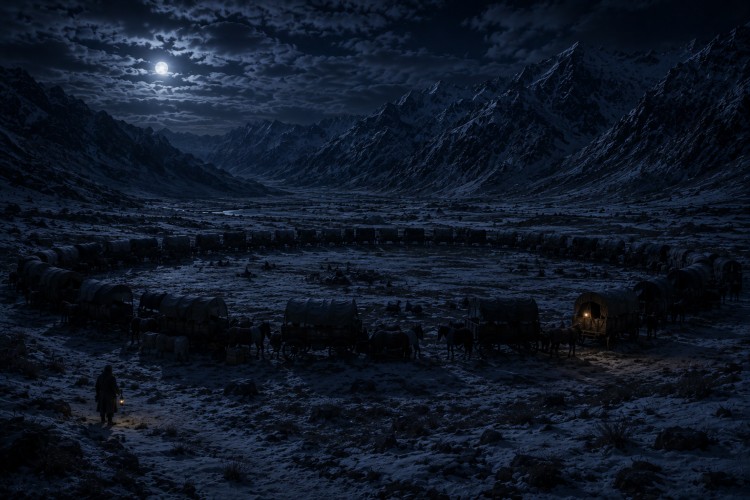
Outside, the night air struck me like a slap. The mountain meadow was gone. So were the towering white peaks. The caravan had moved on while I drifted in and out of fever dreams. We now camped among rolling, windswept hills. Snow covered the ground in patches, shining silver beneath a half moon. The wind hissed through the grass and carried with it the smell of horses and manure.
The camp was silent.
Somehow this place, and this night, reminded me of Deep River. Not in appearance, but in its impersonal frigidity. Deep River, for all its business, had felt barren at times. And the wind here was like the water of the river itself, freezing and unceasing.
The wagons stood in a circle, black shapes against the snow. Here and there, small tents had been pitched between them. The horses and mules slept standing, their backs covered with heavy wool blankets. Only the night guards remained awake, pacing the perimeter with spears and lanterns.
I raised a hand to one of them. He nodded in return, then resumed his patrol.
A stand of dark trees stood perhaps fifty paces from the camp. Relieved to be outside at last, I limped in that direction.
A Flicker of LightI had not gone ten steps when something caught my eye.
A flicker of orange light, so faint that for a moment I thought it was just a patch of snow reflecting the moonlight. I stopped and searched. There it was again. The light came from one of the wagons.
That was impossible. Open flame inside a wagon was absolutely forbidden. Fire was one of the caravan’s greatest fears. One spark in the wrong place could destroy fifty wagons, hundreds of animals, and everyone sleeping beside them.
 My stomach tightened.
I knew that wagon: it was the Silk Store, as we called it. Bolts of cloth filled its interior from floor to ceiling: silk, hemp, linen, rolls of compressed cotton, and embroidered carpets wrapped in oilcloth. I recognized it by the wheels. The Silk Store had shattered a wheel in Samarkand, and the smiths had fashioned two new matching wheels from walnut wood. They were darker and smoother than any of the other wheels. I heard they provided excellent stability and shock resistance as well.
I approached quietly, limping and gritting my teeth from the pain. The merchants responsible for the Silk Store had pitched two small tents nearby, and from inside came the unmistakable sounds of snoring.
I lifted the canvas flap at the wagon’s entrance.
My jaw dropped.
Permission to BurnWhat in the name of Allah… Weili and Arslan were squeezed into a tiny space between carpets, bolts of fabric and tight rolls of compressed cotton. She sat slumped against one wall, her eyes half closed, an opium pipe dangling from her fingers. Beside her, Arslan crouched over a tiny oil lamp whose flame was turned almost completely down, no larger than a candle wick. Above the flame, he held a small metal spoon blackened with soot. A dark lump of opium hissed and bubbled inside it. Smoke curled lazily toward the roof.
For several seconds, I simply stared.
“Are you insane?” I hissed, climbing into the wagon. “Put out the flame. You can’t be in here.”
Weili blinked up at me, confused. “Darius?”
Arslan grinned stupidly. “We’re being careful.”
I looked around at the mountain of cloth surrounding us.
“Careful?” I whispered fiercely. “You’re cooking opium in a wagon full of flammable fabrics.”
Weili rubbed her eyes. “The flame is tiny. Nobody will notice.”
“That’s not the point. And I noticed.”
Arslan shrugged. “That’s because you sniffed out Weili like a fox after a rabbit.”
Resolution coalesced in my chest like a block of ice. I’d let this corruption continue for far too long. I was a Veteran Guard now. Enough was enough.
“No more of this, Weili. I can’t cover for you anymore, I can’t allow this.” I stepped past them and reached for the lamp to extinguish it.
Arslan lurched to his feet, intending to block my way, but in his drugged stupor he stumbled. His foot caught on a rolled carpet and he fell. His outflung arm struck the lamp, and it overturned and shattered, spilling burning oil across a bundle of compressed cotton.
The cotton ignited instantly, flaring up and burning brightly. For one frozen heartbeat, all three of us stared at the flames. Then the wagon exploded into chaos.
Fire leaped from one bolt of fabric to the next. It raced up the walls, and ignited the canvas cover of the wagon. It was as if the entire wagon had only been waiting for permission to burn. Flames surrounded us. My jacket was on fire, and smoke filled my lungs. Arslan cursed, while Weili screamed.
Around us, the wagon turned into a whirlwind of flame.
* * *
Come back next week for Part 24 – The Whipping
Reader comments and constructive criticism are important to me, so please comment!
See the Story Index for Wael Abdelgawad’s other stories on this website.
Wael Abdelgawad’s novels – including Pieces of a Dream, The Repeaters and Zaid Karim Private Investigator – are available in ebook and print form on his author page at Amazon.com.
Related:
The post Far Away [Part 23] – Delirium appeared first on MuslimMatters.org.
My colleague and friend Sadru Visram, who has died aged 81, was a pioneering figure in social housing, a devoted family man and a pillar of his Ismaili Muslim community. His compassionate nature meant he gave generously of his time. He was a school governor, a treasurer of Age Concern Newham and a member of the Aga Khan Economic Planning Board. His faith remained central to his life.
Born in Zanzibar, east Africa, Sadru was the eldest of three brothers. His father, Habib Lalji Visram, repaired radios from the family shop, while his mother, Nurbanu (nee Sivji), was a strong believer in the importance of education; she used to wake her sons up at 4am to study as she sold tobacco and drinks to patrons of the bus station next door. Sadru went to King George VI school, now the Lumumba secondary school.
Continue reading...Journalist Rania Khalek says BreakThrough News won’t be forced to soften its reporting on Palestine.
In today’s newsletter: Jerusalem’s most volatile site has again become a flashpoint, with Arab states and former Israeli officials sounding the alarm over Benjamin Netanyahu’s complicity
Good morning. In late July, Itamar Ben-Gvir, West Bank settler and far-right extremist minister of security in Benjamin Netanyahu’s government, joined a group of more than 2,000 Jewish extremists to storm al-Aqsa mosque compound, Jerusalem’s most sensitive holy site. The far-right group has been doing this for years. Ben-Gvir has made series of visits to the site over the last three years, eroding norms and inflaming tensions. Jordanian officials have recently warned that it could be at risk of an “imminent” Israeli takeover.
With national elections scheduled in October, and many eyes still firmly on Gaza (this weekend, Netanyahu rejected a US-backed 15 point plan for peace), the Israeli government appears to be racing to expand Israeli settlements and accelerate ethnic cleansing of Palestinians in the West Bank and East Jerusalem before its mandate expires.
UK politics | Sadiq Khan has called on the government to commit to revamped climate action and to reduce the UK’s reliance on oil and gas, as the UK endures a summer of drought, wildfires and heatwaves.
US politics | The US Senate voted to confirm Todd Blanche as attorney general in a win for Donald Trump, who will now have his one-time personal attorney sitting atop the nation’s law enforcement apparatus.
US-Israel war on Iran | Iran has issued tough new demands for reopening the strait of Hormuz, as a deal to open the strategic waterway remained out of reach on Saturday.
Russia-Ukraine | Up to 50,000 North Korean soldiers will be deployed in Russia, Volodymyr Zelenskyy has said. On Saturday, Turkey called for a “moratorium” on attacks by Russia and Ukraine in the Black Sea after a series of strikes on civilian ships there
World news | The alleged leader of the Kinahan organised crime group was extradited from Dubai on Sunday and met by a huge security operation in Dublin, marking the end of a global game of cat and mouse with European, US and Gulf authorities.
Wednesday | A partial solar eclipse will be visible across the whole of the UK, with the south-west of England getting the best of British views. Parts of Greenland, Iceland and Spain will experience a total eclipse.
Thursday | Clacton-on-sea residents will vote in the byelection Nigel Farage triggered last month, with the Reform leader taking on 33 mostly novelty candidates. Results are expected early Friday.
Thursday | The Office for National Statistics will publish UK GDP figures for the second quarter of 2026.
Continue reading...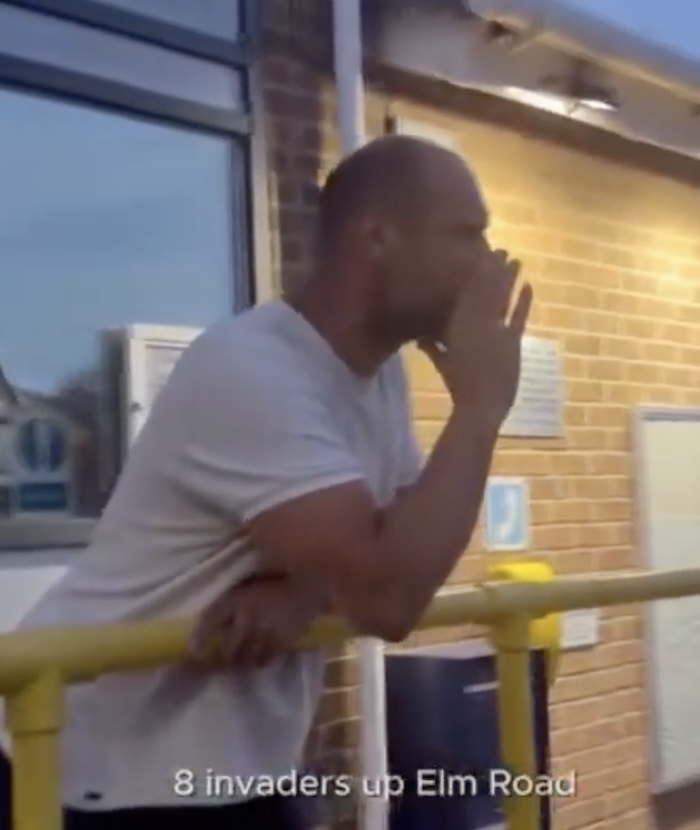 A man directs a racist crowd to the home of ‘invaders’ in Thetford.
 Rod Liddle, former editor of the BBC’s Today programme and then columnist first for the Guardian, then the Spectator, the Sunday Times and men’s magazines GQ and Arena, died last Sunday aged 66. Rod Liddle as a columnist was a dreadful bigot who took a sneering tone towards a standard set of right-wing hate targets: Muslims of course, transgender people, ethnic minorities generally, the chronically ill. When I could still be bothered to read his poison, I responded to some of his writings targeted at both Muslims and people with ME, the neurological disease that leaves sufferers housebound and, at worst, bedridden and paralysed and in severe pain over years. When his death was announced, it prompted gushing tributes from the expected right-wing media figures (Boris Johnson, Fraser Nelson) but also from feminists whose disdain for transgender people he shared (Julie Bindel, Kathleen Stock, Rosie Duffield). Katharine Birbalsingh, who styles herself Britain’s strictest headmistress, posted a tribute tweet featuring Liddle sticking two fingers up to someone or other, something children got punished for when I was one. Zoe Williams, a Guardian columnist who knew Liddle in the 1990s, noted that back then, his columns mostly poked fun at himself and others like him; by the end of his life he was “an attack dog for the race-baiting right”. Peter Oborne wrote about Liddle’s racist “true legacy” at Middle East Eye.
A lot of the people who turned out to celebrate his passing and ridicule those paying tribute rehashed the same one or two facts about him; the conviction for beating a girlfriend and a Guardian piece saying he could never be trusted to be a teacher because he could not stop himself getting sexually involved with teenaged pupils. Both these things are from 20 years ago. The unremitting racism and contempt hurled at other right-wing hate targets continued for long after. Amid a tribute by Kemi Badenoch, the current Tory leader, the Spectator reprints a poem from 2012 called “A Poem for the Met”, on “some of the people enriching our lives”, the poem being a litany of negative stereotypes of every known ethnic minority (except the Jews, of course) and none of the good stuff. This is the essence of what makes someone a racist: being quick to see people of other ‘races’ (in as much as there is such a thing as a race) through negative stereotypes or the few negative news stories you’ve heard about them, without considering that most are just decent ordinary people living decent ordinary lives; it doesn’t require blind hatred or the use of derogatory racial slurs. Robert Jenrick, former Tory cabinet minister and now Reform MP, claimed he “said the unsayable truth years before anyone else would come close”; in Boris Johnson’s tribute, he praises Liddle for his “genius, week after week, for finding the point that was obviously true but notionally unsayable, and then saying it with such zing as to cause maximum offence – and to all the right people”. In fact, he punched down, week after week, attacking powerless ordinary people rather than the wealthy and powerful, and did so in very much mainstream magazines and newspapers. Typical of the modern Right: always complaining of persecution, of being ‘cancelled’, while enjoying ample media exposure and no consequences.
Media personalities have a history of excusing or at least being silent on the misdeeds of others in their profession. When the matter of Roman Polanski’s flight from justice having been charged with rape in 1977 was in the news after he was arrested in Switzerland, Whoopi Goldberg famously opined that his actions were not “rape rape” (according to his victim’s testimony to the grand jury, it actually was). The R&B scene was noticeably quiet when two of its leading lights, Chris Brown and Robert Kelly, were charged with violent offences against women; many of them knew they would rely on the two men’s production skills or connections in future records. Many of those paying tribute said that, despite having been the focus of his contempt, found him to be kind to those he actually worked with; this fits the pattern of media types clubbing together despite disagreements over not only politics but behaviour as well, but they fail to understand that what someone writes is part of their behaviour, and part of their character. Whether they really believe it or think they are cocking a snook at someone or other or just doing it for the LOLs, as suggested of Liddle (and his racist writings under a false name on a Millwall FC fan forum suggest otherwise), it has an effect on other people’s lives if hatred is being peddled on the pages of political magazines or newspapers on a daily or weekly basis. When hate goes mainstream, it means people’s lives get difficult, people get beaten up, their houses and businesses vandalised or burned, or they are murdered. The Right understands this when people call racists racist and a politician is murdered; do they really not understand it when they portray every minority as gangsters, terrorists or drug smugglers week after week and mobs of men show up to burn people out of their houses?
Two particular tropes of the right-wing response to Liddle’s death were that “the be-kind mob” (or a name to that effect) was being the vilest and most unkind after someone had died (this was repeated in a number of tweets and articles by various people including a few big names [1], [2]), and that the Left as usual was incapable of seeing anyone other than in Manichean terms of pure good or evil; for example, see this barrage of silly straw man arguments by Andrew Doyle:
When a famous right-wing, straight white male dies, if your first instinct isn’t to gloat and trash his reputation then you clearly have no idea what it takes to be a progressive.
The death of Rod Liddle is currently being celebrated by all of us on the right side of history. And because we announce our pronouns and wear keffiyehs, we can refer to him as a scumbag who deserves to burn in Hell and everyone will know that we’re actually incredibly compassionate.
It’s a matter of simple mathematics. The population is divided into two factions: those who are good and those who are evil. Every time an evil person dies, the proportion of good people increases. Ergo, by dying, Liddle has made the world a gooder place.
To be fair, I’ve come across a certain type of activist that will not tolerate any disagreement with their particular ideology and will write you off as some kind of bad person, but for the most part people are capable of working with and getting on with those with differing opinions, for the most part. It’s a right-wing stereotype that “conservatives only think socialists are wrong, while socialists think conservatives are evil”; this does not play out in everyday life (and the observation about the Right simply does not apply to many calling themselves conservatives in this day and age, especially in the US). In my campaigning life over the past twenty or so years, I’ve made common cause with people who don’t share my opinions on a lot of other things: Muslims belonging to different schools of thought, some of them very hostile to each other, communists, pacifists and others in the anti-war movement, people who share none of these views in ME and anti-austerity campaigns, old Thatcherites in the anti-Brexit campaign and yes, conservatives and supporters of unsavoury Middle Eastern and Asian regimes in the pro-Palestine and anti-genocide campaigns of the past few years. People often show one side of their character to some people and a completely different side to others (ask anyone who worked with Dennis Nilsen or Antoni Imiela); the reason many of us thought Rod Liddle was a nasty piece of work was because of what he wrote. We did not need to deal with him personally to know that. Writing like his makes the world a generally nastier place; it makes people meaner, more suspicious of and less tolerant to each other.
Open racism used to be a career ender, even in the Tory party. Britain has become a more racist place over the past 15 years or so. British Twitter in particular has become an open sewer of racism — people calling for ‘remigration’, using ‘diversity’ or ‘enrichment’ as terms of contempt, constant examples of the misdeeds of non-whites but none of white people’s, constant complaints about pretty much any sign that non-white people exist or what they are ‘getting’ — and the mainstream media increasingly follows suit. Over the past two years, violent racist mobs have descended on towns on many occasions, causing riots in response to real or rumoured misdeeds by real or supposed immigrants (or their mere presence, as seen most recently in Thetford) while politicians tell us they have “legitimate concerns” even if they are going about it the wrong way. It has become safe and fashionable to be racist, and increasingly dangerous to be anti-racist — at best silly and naive, at worst dangerous and radical, and to call someone racist results in accusations of ‘hate’ and of inciting a “pile-on”.
Rod Liddle was not a genocidaire. He was a racist, however nice he was to his colleagues at the magazines he worked for. When any famous person dies, there will always be aspects of his or her behaviour exposed that they had tried to keep hidden or which could not be talked about when they could still sue for libel and had deep pockets: the crimes of Jimmy Savile, for example, while an open secret during his lifetime, were only openly talked about when he was dead. Sometimes the revelations are positive: after the death of George Michael, tales of his generosity surfaced, such as paying off a total stranger’s debts. It’s only to be expected that when someone who made the world a worse place, a more hostile and even violent place with his bigoted writings dies and is the focus of gushing tributes from people who should know better, there will be pushback and people will talk openly of his true legacy.
“Truly catastrophic loss for the geniuses at AIPAC” also hits Democratic establishment.
Trapped in a deadly mountain pass, the caravan fights for survival as Darius faces his greatest test yet.
Read Part 1 | Part 2 | Part 3 | Part 4 | Part 5 | Part 6 | Part 7 | Part 8 | Part 9 | Part 10 | Part 11 | Part 12 | Part 13 | Part 14 | Part 15 | Part 16 | Part 17 | Part 18 | Part 19 | Part 20 | Part 21
* * *
Empty EyesThe pass had narrowed until our caravan stretched into a long column that wound like a great river snake along the curving mountain road. The air was thin and bitingly cold. Longwei, Meilin and I were stationed near the rear of the caravan, beside wagon forty out of fifty. Longwei rode ahead of me, his weathered face grim beneath his fur cap. Meilin was behind, one hand resting near the hilt of her dao, her eyes roaming constantly over the cliffs above.
The front of the caravan was completely out of sight, far ahead and around a bend. Jagged cliffs hemmed us in on both sides, their gray faces pocked with caves and dark fissures that seemed to watch us like empty eyes. We carried our own scents with us: mule sweat, leather, and horse dung.
There was no calling of crows or hawks, no bleating of mountain goats, no adhaan or cooking smoke echoing up the mountainside from a distant village. The world was silent but for the hoofbeats and creaking wagon wheels of our caravan.
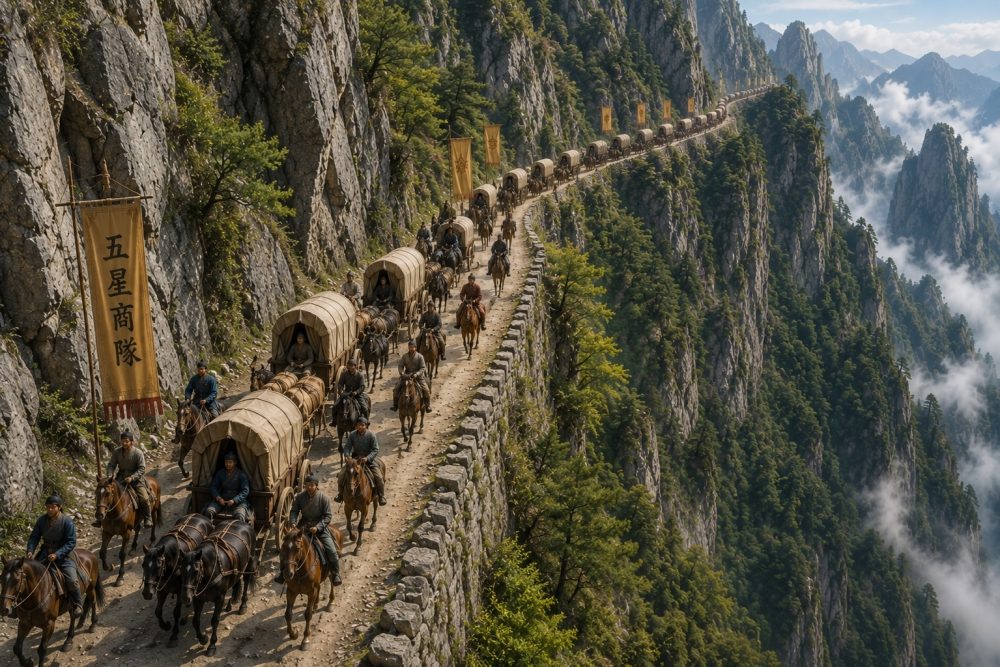
It wasn’t only me who was unsettled. Conversations had lapsed. No laughter sounded. Everyone had their eyes fixed on the caves, as if hordes of demons might pour forth at any moment. Riding easily on Belly’s back – he and I were like one creature at this point, we knew each other so well – I rubbed my hands together vigorously to warm them.
To break the tension, I quietly recited my favorite of Memdooh’s stanzas:
I ride from a northern land
curved sword in my hand.
I’m young but I’m hard
for I’m a caravan guard!
Belly flicked his ears, appreciating the enthusiasm in my voice. Heck, he probably knew the stanza himself by now.
“Boy,” Meilin hissed, “if you recite that poem one more time, you and I will duel again. And I won’t go easy this time.”
I chuckled at this. She’d dislocated my finger and bruised me from head to toe last time, and that was going easy?
Sergeant Karim came toward us, riding slowly along the length of the caravan, studying the heights instead of the road ahead. A brass signal horn hung around his neck, and his face was grim. Every so often he would point with two fingers.
“You. Tighten your helmet.”
“You, fasten that chin strap.”
“Shield on your arm, not your saddle.”
The guards obeyed without question. Men checked sword belts, adjusted bowstrings and settled helmets more firmly upon their heads. One teamster began humming nervously to himself until Karim silenced him with a glance.
“Keep your eyes open,” Karim called. “No one wanders. Stay with your wagons. If the horn sounds, you know your positions.” He continued toward the rear of the caravan.
The merchants instinctively drew closer to their teams. Guards loosened swords in their scabbards and rested their hands upon bow grips. Even the horses seemed to sense the tension. Ears flicked back and forth, nostrils flared, and more than one animal tossed its head uneasily.
Belly gave a low nicker. I reached forward and rubbed his neck. “I know, buddy. We’ll keep each other safe, like we always do.”
“Belly talking to you again?” Meilin asked. “Maybe you can get a bird to scout for us, like Prophet Sulaiman.”
A little later Karim returned from the rear.
The Tea House“Care for a cup of tea, Sarge?” Meilin joked. This was a reference to the wagon we were guarding, which we colloquially called the Tea House, because it carried a small quantity of jade, several chests of silk and paper, and a great many crates of tea. Riding alongside, the scent of the tea drifted toward me, sweet and pleasant, strangely comforting amid so much unease.
He grinned, knowing that Meilin’s joke did not take away from her attention to her duty. “I’m holding out for Persian chai,” he replied softly. “They make it with saffron, rose and cardamom. No more talking. Listen for my horn.” A moment later, he was gone, moving forward.
The Tea House was pulled by four mules in tandem, two lead mules and two wheel mules nearest the wagon. The wheel pair supplied most of the braking and steering, while the lead pair provided the extra pulling power needed on steep grades. I had learned all of this on the journey, mostly from Longwei, who seemed to know something about almost everything.
I rode up beside the driver’s bench.
“Cover yourselves with the heavy blankets,” I told the driver and his young apprentice. “And keep a firm hold on the reins. Something’s coming.” I couldn’t have said how I knew this, but I was sure of it. I was discovering that I had good instincts for this kind of thing. My father’s training, perhaps.
The drivers glanced uneasily at the cliffs, then reached beneath the bench and spread thick wool blankets across their shoulders.
As for the two merchants responsible for the Tea House goods, they sometimes rode on horseback alongside their wagon, but today they had chosen to remain inside. Hearing my warning, they hurriedly pulled heavy quilts over themselves and crouched low among the cargo.
I fell back into position. I pushed my helmet more firmly onto my head, tightened the chin strap, and rested one hand on the hilt of my dao. My eyes searched the caves above while my other hand absently rubbed Belly’s neck.
“Steady, boy,” I murmured, and he flicked an ear in acknowledgment.
Cattle HornFrom somewhere far forward and above us came a high-pitched trumpeting sound. It was definitely not Sergeant Karim’s brass horn.
“What is that?” I called out to Longwei.
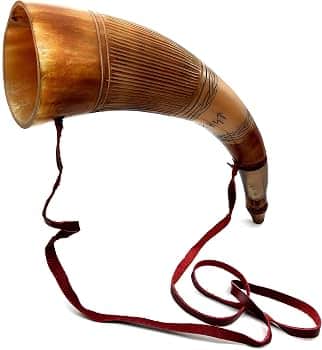 He glanced back at me. “Cattle horn. Not ours. Something’s happening.”
From the front of the caravan, a horse screamed. The sound was faint but unmistakable.
Now Karim’s horn did sound. One long blast, and one short. The signal for “attack at the front of the caravan.” From behind and around me, guards spurred their horses into a gallop, surging forward. I gave Belly a little kick with my heels as well, but instead of quickening the pace, he stopped dead.
I groaned. “Not now, Belly, please.”
“Darius,” Meilin snapped. “What are you doing? Let’s go.”
I knew that kicking Belly harder would not produce results. Instead I leaned forward to whisper in his ear. Then I froze and cocked my head.
“Wait!” I called out to Longwei and Meilin. Memdooh was riding past, and he paused as well. They circled back to me. Meilin’s face was flushed with excitement, Memdooh’s with what was likely fear, and Longwei looked entirely unfazed.
“What is it?” Longwei demanded. “You heard the signal. Get your damn horse to move.”
“It’s not that. I heard something from the rear. I think they might hit us there.”
Longwei glanced to the rear. There were no guards remaining back there except the six who formed a permanent rear guard, headed by Corporal Jian.
“I see nothing,” he said, but his tone held a note of doubt. “Jian carries a horn as well, he can signal if anything happens.”
I looked up sharply toward the caves at the rear of the caravan. “There it is again.” A cold knot formed in my stomach.
“What?”
“A rock falling.”
Longwei glanced irritably at the cliffs. “We’re in a mountain pass, Darius. Rocks fall. And I didn’t hear anything.”
“Neither did I,” Meilin admitted.
“My hearing is better than yours,” I said quietly.
The sound of fierce fighting drifted to us from the front of the caravan.
“It sounds bad up there!” Memdooh exclaimed. His voice held a note of panic. “We have to get up there or we’ll be whipped for dereliction.”
“I’m telling you,” I said, “an attack is coming at the rear. Those six men will be overrun. And what about the Happy Wagon? Gulnur is alone and defenseless.”
The third wagon from the rear was Kuangren and Gulnur’s matrimonial wagon. Some of the guards had painted flowers on it, and we had come to call it the Happy Wagon. Gulnur had fallen ill to some kind of flu, and was asleep back there. I knew these things because it was my job to know. All of us knew the status and contents of every wagon in our sector.
“How can you know that?” Longwei’s tone was irritated and angry.
“My gut.”
Meilin studied the cliffs above the rear of the caravan. The wind tugged at her hair. Somewhere up front, another scream echoed off the mountains. Finally, she nodded. “I trust the kid. Besides, there are plenty of guards up front. What if something does kick off back here?”
Longwei stared at her for a moment, then muttered a curse beneath his breath. “Wonderful,” he said. “We’ll all be whipped together.”
Rear AttackWithout another word, the four of us turned our horses and started toward the rear. We had not gone fifty paces when another cow horn bellowed from behind the caravan, loud and terrible, echoing through the pass.
Longwei stopped so abruptly that his horse reared. “Damn,” he growled. “The kid was right.”
“Heaven preserve us,” Meilin whispered.
The attack came all at once. Volleys of arrows poured forth from the small caves in the cliff. Corporal Jian toppled from his saddle without a sound. A mule shrieked and collapsed in the road, shafts protruding from its neck.
“Darius,” Longwei said softly, “remind me never to doubt your ears again.”
Men boiled out of the caves like soldier ants. They came on foot with wild cries, bounding like goats down the steep slope, wielding either short lances, or short, curved swords that looked much like my dao.
The four of us charged into the storm.
Three of the rear guards were down now. One of the surviving guards was struggling to free his leg from beneath his fallen mount while the other two fought desperately beside the last wagons.
The attackers numbered at least fifty. They scrambled down the slope in loose groups, shouting in a language I did not understand. Even in the midst of battle, I found myself struck by their appearance. The Afghan men were handsome – tall and lean, with high cheekbones and fierce eyes of blue, green, and amber. Their clothes were patched and faded, their boots worn nearly through. There was something hard and weathered about them, as if the mountains themselves had carved them into what they were.
At the rear of the attackers stood a middle-aged man with streaks of gray in his beard, shouting orders and pointing with his sword. Beside him loomed two enormous bodyguards carrying axes.
As we passed the Happy Wagon, Kuangren and Gulnur both stepped out. I’d thought Kuangren was on duty, but he must have been looking after his wife. He looked ridiculous in a nightshirt with no trousers and leather slippers, yet carried his bow and a fat quiver of arrows. His wife wore a long robe, and despite her pale, sweaty face, she too carried her bow.
From somewhere, Shah appeared. He was a big guard, tall and powerful, with bulging, muscular arms that threatened to tear his sleeves open. He carried a giant broadsword and could bash a man’s skull in even with the flat of the blade. I was happy to see him.
OrdersLongwei took one look at the battlefield. “Wedge formation!” he roared. “Straight through the center! Break them apart!”
My eyes roamed quickly over the battlefield, and I shouted, “No!”
Longwei wheeled toward me, astonished.
“What?”
“Kuangren! Gulnur!” I pointed at the gray-haired elder at the back. “Target the leader! Longwei, Meilin, flank them! Longwei, go right, Meilin, left. Kill the bodyguards, then attack from the rear. Memdooh, find high ground and empty your quiver. Check your lines of sight, don’t hit our men. Shah, you’re with me. We’re going up the middle. I need to get to Jian’s horn.”
For a moment, no one moved.
Longwei stared as if I had lost my mind. “Boy, know your place,” he growled.
Meilin looked from me to the Afghan commander and then back again. “Do as Darius commands!” she shouted. “You have your orders!”
Longwei looked like he’d been stabbed in the back. His eyes darted from Meilin to me, and I saw rage there. But he did not argue. He and Meilin rode in opposite directions, evading the oncoming force, and moving fast.
Trusting the men to do as I’d ordered, I plunged into the battle with Shah at my side. We had a huge advantage because we were mounted and the Afghans were not. Belly was steadfast, obeying the slightest pressure from my knees, and sometimes moving exactly where he needed to without prompting. We were surrounded by the deafening tumult of battle, but for all Belly cared, the noise might as well have been the sighing of the wind through a stand of eucalyptus trees.
Beside me, Shah cut men down as easily as a gardener might prune a thorny tree. He wasn’t even breathing hard, and I heard him chanting, “SubhanAllah wa bihamdihi, SubhanAllah wa bihamdihi, SubhanAllah wa bihamdihi.”
Two Shorts and One LongA burly, middle-aged Afghan with a tangled beard like a juniper bush swung an axe at my midsection. Axes were much harder to block or parry than swords, and I didn’t try. I pulled Belly back just enough to let the axe swing by, missing me by the width of a pinky finger, then leaned forward and put my dao into his throat. I kicked him off the weapon, slipped an upward jab by a gangly youth of twenty or so, and lopped off his arm.
Corporal Jian lay before me. An arrow had pierced his chest. His black eyes stared blankly upward. He’d dropped the brass horn, and his outflung hand stretched toward it, as if he had been about to blow it when he fell, and had been reaching for it until the moment of his death.
I dismounted and closed Jian’s eyes. Then I lifted the horn, raised it to my lips and blew two short blasts and one long. The signal for “attack at the rear of the caravan.”
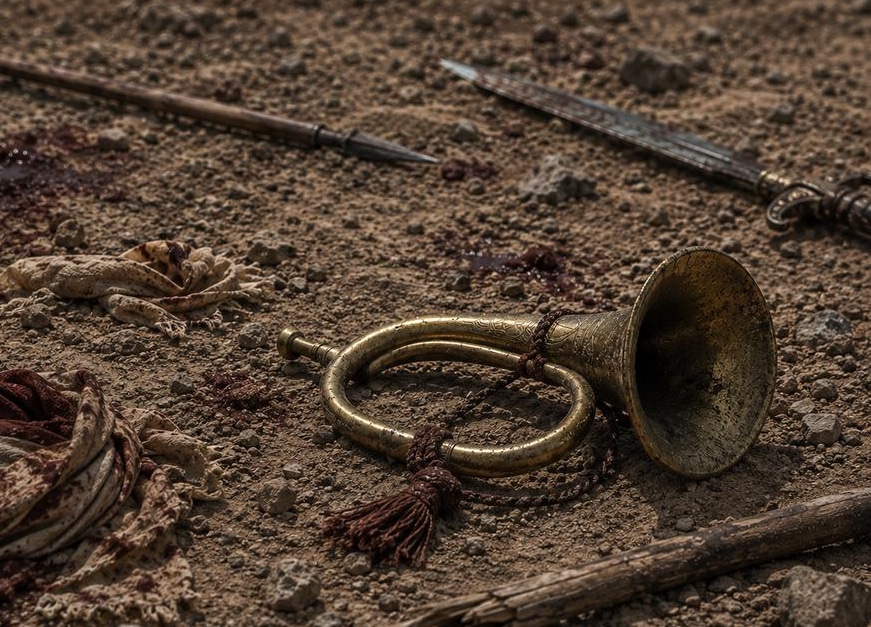
For just an instant, the fighting seemed to pause all around me, like a dragon taking in a deep breath before blowing fire. Some of the Afghans uttered what could only have been curses. Then the dragon blew, and the fighting resumed.
Unfortunately I’d drawn attention to myself. A half dozen arrows winged my way. I dropped to the ground, snatched up a fallen shield and covered my head and neck. Most of the arrows missed. One bounced off the shield. But one pierced my left calf. I cried out in pain but there was no time to worry about it. A shadow loomed behind me and I turned a split second too late as a big Afghan came charging at me with a lance in one hand and a sword in the other. An instant before he reached me, an arrow entered his neck, and he crashed to the ground beside me. I looked around and saw Memdooh, standing atop a boulder, another arrow already nocked into his bow. He was pale and clearly terrified, but he grinned at me, and I grinned back. He’d saved my life.
Again, just to be sure, I raised the horn. This time I took a deep breath and blew as hard as I could. Two short, one long. Then I hung the horn around my neck, leaped back onto Belly’s back, lifted my dao and plunged into the fight.
A Belly BiteA hand seized my boot and yanked.
I pitched sideways in the saddle, suddenly looking down into the furious face of a blue-eyed Afghan who was trying to drag me to the ground. I twisted, bringing my dao around, but before I could strike, Belly wheeled sharply and sank his teeth into the man’s shoulder.
The Afghan screamed. Belly shook him once, violently, like a dog worrying a rat, then flung him backward.
“Good boy!” I shouted. “You gave him a Belly bite!”
Belly pinned his ears and surged forward, apparently outraged that anyone had tried to steal his rider.
Men came at me from every direction. I did not kill everyone I faced. A man thrust a lance at me, and I parried the lance and slid my dao up the shaft to his hand, slicing his hand neatly in two. He screamed and dropped the lance as blood fountained from the hand. But he would live. I parried a sword stroke, slashed the attacker across the chest, then ducked as a lance passed over my head. An arrow whispered past my face, and I felt a hot sting along my cheek, followed by sudden wetness. When I touched my face, my fingers came away bloody. The arrow had only grazed me. But there was no time to be relieved.
My Muslim BrotherA young Afghan came through the press directly toward me. He was perhaps twenty years old, tall and lean, with fierce hazel eyes beneath a dark turban. His cheeks were sharp, his beard only beginning to fill in. He raised his curved sword to strike and shouted, “Allahu Akbar!”
Simultaneously, I lifted my dao to block and cried the same words: “Allahu Akbar!”
I froze.
Of course I knew the Afghans were Muslims. I had heard the adhaan in their villages. I had prayed beside them, eaten their bread and listened to their imams recite Quran. Yet until that moment, the men attacking us had existed in my mind only as raiders.
This man is my brother, I thought. My Muslim brother. The thought hit me like a stone from a catapult. He was a young man who performed his salat just as I did. Who bowed toward the same qiblah. Who perhaps had a mother waiting for him in one of these mountain villages, or a wife who had packed food into his satchel before he left.
Panic rose in my throat like bile. How could I kill him? A hadith of the Prophet, one I had learned from Ahmed, rang in my mind: “Insulting a Muslim is wickedness, and fighting him is kufr.”
Kufr! I could not fight this man. I could not kill these people. The young man lunged at my midsection. I barely twisted aside in time. His blade passed so close that it scraped the leather of my belt.
“Wait!” I shouted, but he paid no attention. “As-salamu alaykum!” I tried. Yet the man brought his sword down toward my head. I raised my dao into an umbrella block. Steel crashed against steel above my head, the impact jolting through my shoulders.
I did not counter. I could not bring myself to. My eyes darted from side to side, searching for some route of escape. Men fought all around us. Horses screamed. Dust filled the air. There was nowhere to go.
Was there a chance the man spoke Uzbek? “Aka!” I cried. The Uzbek word for brother. Yet the Afghan attacked again, anger and confusion in his hazel eyes. Perhaps he could not understand why I refused to strike. His sword swept toward my ribs.
I leaned away and parried late. The edge sliced through my coat without touching flesh.
He recovered instantly and raised the weapon for another blow.
I had no choice. Sooner or later one of his blows would get through. I feinted toward his head. When he lifted his sword to meet the false attack, I changed direction and drove the point of my dao into his chest.
His eyes widened.
For one terrible moment we stared at each other. The man’s mouth opened, but only a wet breath escaped. Then his sword fell from his hand, and he collapsed beneath Belly’s hooves.
Tears spilled from my eyes. If the man did indeed have a wife waiting for him back home, she would find only bitterness returning. Why had he made me do that? I wanted to climb down, kneel beside him and somehow undo what I had done. But even at my young age I knew that death is the one thing that cannot be undone. You can apologize to a man for insulting him. You can make restitution for hurting him. But death is a road that enters a dark cave and disappears from view. When you kill a man, you take away everything he will ever have.
The RetreatLife, on the other hand, is a sea that at times lifts you up, and at other times crashes down upon you, and you either swim or drown. Another Afghan rushed me, and I cut his belly open. He might survive with help. A second came from my left, and I struck him across the temple with the guard of my dao, knocking him out. A third threw his axe at me, and I ducked it. It was as if half of the attacking force had suddenly decided that I was the main obstacle between them and success. Another man swung a sword at my leg. I blocked it and sliced upward. He leaned back but the tip of my sword caught his chin, cleaving it in two.
As quickly as the wave slammed into me, it receded. The fighting had become scattered. The Afghans were no longer advancing. A few continued to press, while others glanced behind them or began backing toward the caves.
“The commander is dead!” Longwei shouted. “Their commander is dead!”
I looked toward the rear of their force. Longwei and Meilin stood near the gray-bearded leader’s body. One of the hulking guards lay facedown nearby, an axe still gripped in one hand. The other was sprawled on his back with Meilin’s dao buried in his chest. As I watched, she put a foot on his chest and pulled it out.
A shudder seemed to pass through the attackers. Then they broke and ran.
Some fled up the slope toward the caves. Others ran down the road or leaped among the boulders, abandoning weapons and wounded comrades. The surviving guards cried out in triumph and started after them.
A Wagon“They have a wagon!” someone shouted.
I turned.
A narrow trail branched from the main road behind the last wagon, descending steeply between two walls of stone. I had not noticed it before. Four horses were pulling one of our covered wagons down the trail at a reckless pace, the wheels bucking and bouncing over the uneven ground. Afghan men ran beside it, perhaps twenty of them, pushing at the rear and clinging to its sides.
The trail led directly toward the mouth of a great cave.
For a heartbeat I could only stare.
Then I looked around me, trying to understand what remained of the battle.
Perhaps thirty Afghans lay dead or wounded along the road and among the rocks. I was personally responsible for maybe ten of them. Several of our own guards were down as well. Longwei and Meilin – both breathing heavily, their clothing streaked with blood – stood over the bodies of the commander and his bodyguards. One side of Longwei’s face was purple with bruises. Meilin’s hair had come loose, one sleeve had been torn away, and one arm hung uselessly at her side, probably broken.
Memdooh lay curled beside the boulder from which he had been shooting. He clutched one leg while moaning through gritted teeth. A short sword lay near his hand, its blade red. He had fought even after he ran out of arrows. He had held his ground.
Gulnur lay on the ground beside the Happy Wagon.
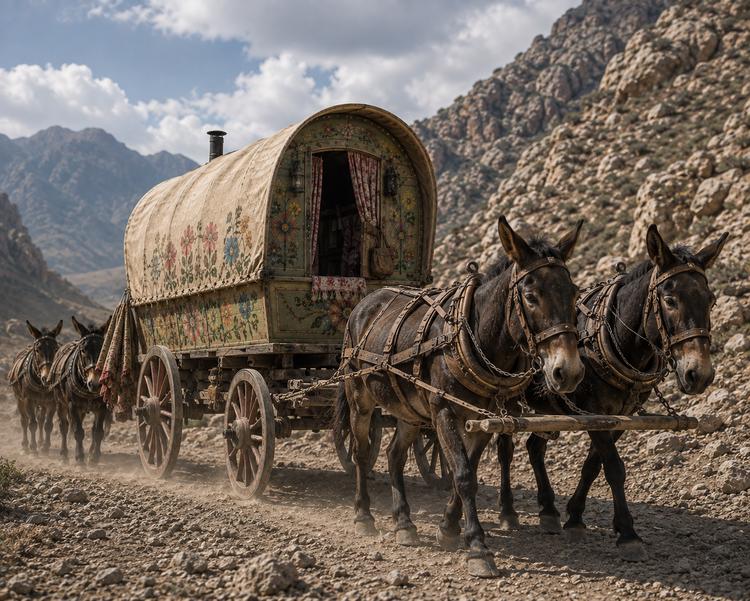
Kuangren knelt over his wife in his nightshirt and slippers, his bow forgotten in the dust. He had gathered her into his arms and was rocking her, pressing his face against her hair. I could not tell whether she was conscious. Her robe was stained with blood.
Shah alone appeared untouched. The giant stood amid the bodies with his enormous sword resting against one shoulder, breathing as calmly as if he had merely finished chopping wood.
What to Do?Men were looking at me. I still wore Corporal Jian’s horn around my neck. I had given the orders. Now the rear guards, the merchants, even some of the teamsters watched me, waiting to be told what to do next.
I had no idea.
Should we pursue the wagon? Tend the wounded? Secure the remaining wagons? Send men into the caves? The enemy was fleeing, but they might be drawing us into another ambush. Memdooh needed help. Gulnur might be dying. The surviving Afghans could regroup at any moment.
My thoughts collided uselessly in my head.
Then hoofbeats thundered up the pass. Sergeant Karim came charging around the bend at the head of a mass of mounted guards. Among them was Weili, her bow at the ready. Dust rolled behind them like smoke. Karim’s sword was red with blood, his armor dented, and the brass horn bounced against his chest as he rode.
Relief flooded through me so strongly that my knees nearly gave way.
River FlowThe sergeant reined in so hard that his horse skidded sideways in the dust. He took in the scene in a single sweep: the dead Afghans scattered across the road, Longwei and Meilin standing over the bodies of the commander and his guards, the wagon careening toward the cave, the horn hanging from my neck, and the men looking to me for orders.
His gaze settled on me.
“Recommendation?”
For a moment, I simply stared at him. My left calf felt as though someone had thrust a hot poker into it and left it there. Blood soaked my boot. My cheek burned where the arrow had grazed me. The world tilted strangely, and I swayed in the saddle.
Recommendation? Was he insane? I was sixteen years old. Half the men around us had gray in their beards. Sergeant Karim himself had fought in a dozen battles before I’d ever picked up a sword. Why was he asking me?
Then something happened inside me. The panic and pain vanished, and everything slowed. The screams, the dust, the clashing steel, the cries of the wounded – all of it receded into the distance. My mind became perfectly still, as clear as a summer sky. For the first time that day, I fell into River Flow.
From my perch atop Belly’s back, I pointed with my dao.
“Archers! Target the men running beside the wagon, not the horses! Weili, take the driver! Someone find Arslan! Get him here now!” Yes, I knew Arslan was a man with a problem. And he’d seduced Weili away from me. But he was the only man capable of bringing the wagon driver down at long range, and that was all that mattered.
“Shah and I will pursue the wagon,” Longwei called.
I turned to Karim. “I don’t know if you want that.”
“Do you want that?”
Entrusting me with such decisions was ridiculous, but – still in River Flow – I went with it.
“No pursuit!” I shouted. “Archers only. No one leaves the road.”
Karim nodded once, as if everything I had said were entirely reasonable. “Move!” he roared.
The surviving archers hurried into position. Memdooh, still lying beside the boulder, struggled upright and reached for his bow with trembling hands. I grinned fiercely at that. Courage was not a battle-hardened warrior who killed without emotion. Courage was this wounded young man, climbing to his feet to carry out his commander’s wishes. He might not be much of a poet, but he had the heart of a lion. Allah protect and preserve him.
Weili vaulted onto a rock overlooking the trail and drew an arrow from her quiver.
The wagon was perhaps two hundred paces from the cave.
Their Dirty Secret“Loose!” Karim shouted.
Arrows hissed through the air. One of the Afghans running beside the wagon spun and collapsed. Another pitched forward beneath the wheels. A third cried out and clutched his thigh. But the others kept running, pushing at the wagon and shouting to one another. Weili, tasked with shooting the driver, missed, her shot going wide. It should have been an easy shot. I’d seen her shoot better on her worst day.
“Again!” I shouted. “Fire at will!”
A second volley flew, and a third. Another three men fell. The driver still sat hunched on the bench, lashing the horses onward.
Weili drew, exhaled, and released. Her arrow sailed wide, striking the rocks behind the wagon. She nocked another arrow, drew farther this time, and released. Again she missed. The wagon pulled farther away every second. It would soon be out of range.
“Where is Arslan?” Karim bellowed.
“I’m here!” Arslan arrived disheveled and panting, his hair plastered to his forehead with sweat. He looked as if he had run half the length of the caravan. He carried his massive bow in one hand.
Karim pointed furiously at the fleeing wagon. “The driver! Bring him down!”
Arslan lifted his huge bow and pulled, but I saw that his arm trembled, and he was not able to draw the arrow all the way back to his cheek. He loosed, and the arrow fell short. He cursed, grabbed another arrow and shot again. This one fell short as well.
The wagon was almost at the cave now.
Longwei spurred his horse forward. “Sarge, let me pursue. We can still catch them!”
“No!” Karim roared.
Longwei wheeled back in disbelief. “Why?”
Karim pointed toward the yawning cave. “There could be a hundred men in there. We will not risk any more guards for one wagon. Darius already gave a command on this.”
“Darius,” Longwei muttered, and spit. No one else argued, and we watched helplessly as the last of the Afghans disappeared into the darkness. The wagon vanished after them, swallowed whole by the mountain.
For a long moment, no one spoke. Karim’s eyes moved from Weili to Arslan, then to me.
I knew why they had failed. I knew their dirty secret. But I said nothing about that. Instead I said, “If anyone is to be whipped for disobeying orders it should be me. It was my call to move to the rear.”
This Is War“We’ll talk about that later,” Karim said. “What’s next?”
I swallowed, then called out. “Medics! See to the wounded. Our wounded first, then the Afghans.”
“Almost right,” Karim said. He called the chief medic over. “Our wounded only. Do not touch the Afghans.”
“But they’re Muslims,” I said.
He studied me. There was a newfound respect in his gaze. He didn’t seem angry about the loss of the wagon. Some part of me realized that none of this was new to him. He’d done all this many times.
“I’m no religious expert,” Karim said, “but being Muslim doesn’t mean we sacrifice our lives to their greed. We have limited medical supplies, and a caravan to protect. We will be on the move very soon. The Afghans can return for their own dead and wounded. This is war.”
He began to give orders to load our dead onto the wagons. I realized that by “very soon” he meant right now. He meant to get the caravan moving again immediately.
It was becoming harder to think. The crystal clarity of River Flow faded, and the pain rushed back into my body. My calf felt as though it were on fire, and my cheek too felt hot, as if I’d been slapped very hard.
Someone was saying my name. I looked down. At some point the shaft of the arrow had broken off – I hadn’t even noticed – but the arrowhead was still in my leg. Blood streamed from the wound and ran down Belly’s side. The mountains spun around me, and I swayed in the saddle. The dao slipped from my fingers, and I felt myself falling.
* * *
Come back next week for Part 23 – Delirium
Reader comments and constructive criticism are important to me, so please comment!
See the Story Index for Wael Abdelgawad’s other stories on this website.
Wael Abdelgawad’s novels – including Pieces of a Dream, The Repeaters and Zaid Karim Private Investigator – are available in ebook and print form on his author page at Amazon.com.
Related:
The post Far Away [Part 22] – The Raid appeared first on MuslimMatters.org.