Muslim Matters

Subscribe to Muslim Matters feed Muslim Matters
Discourses in the Intellectual Traditions, Political Situation, and Social Ethics of Muslim Life
Updated: 11 hours 17 min ago

Arafah: The Door That Opens Once a Year

26 May, 2026 - 06:29

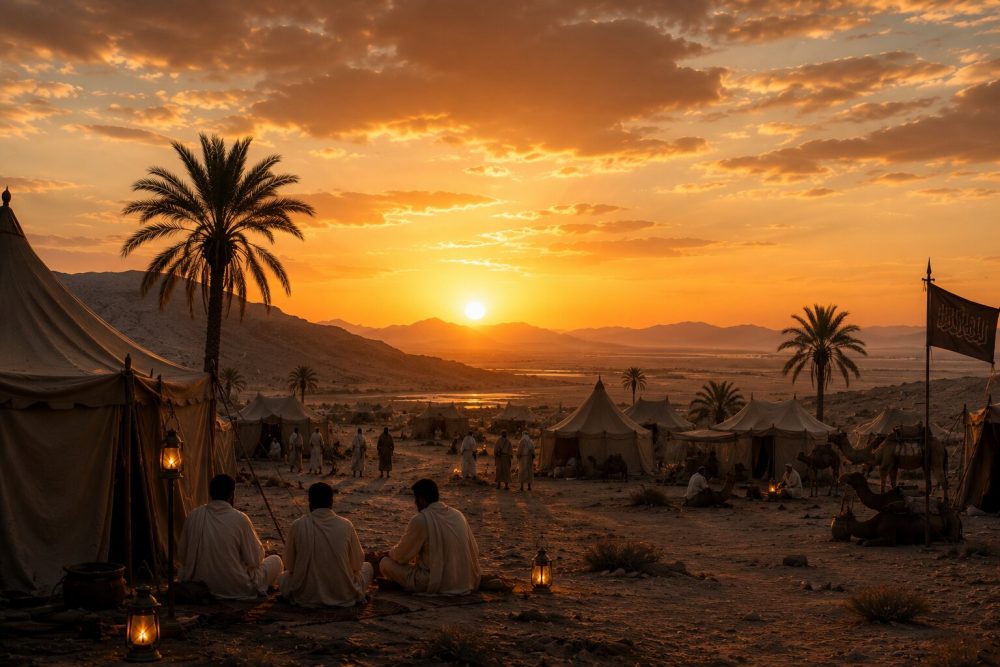
Allah will look at His creation and boast of them to the angels. He will ask: What do these servants of mine want? And then, before they finish asking, He will answer their dua. This happens on the day of Arafah, and you can be among those He is talking about. If the first days slipped by unnoticed and for many of us they did, Arafah is Allah’s final and greatest offer of this season. Do not miss it.

When Allah swears an oath in His Book, it signals immense significance. In Surah al-Fajr, Allah swears by the dawn and by the ten nights. The majority of the mufassireen including Ibn Abbas, Ibn Kathir, and Ibn Taymiyyah identified these ten nights specifically as the first ten days of Dhul Hijjah, not the last ten nights of Ramadan. Ibn Hajar al-‘Asqalani in Fath al-Bari (the commentary on Sahih al-Bukhari) noted that what makes these days uniquely precious is that no other time of year brings together all the great acts of worship simultaneously: prayer, fasting, charity and Hajj converge in these ten days alone, and that convergence is what elevates them above everything else, including Ramadan.

Reflect on the Past Year

There is something else about these days that we rarely pause to acknowledge. Dhul Hijjah is the final month of the Islamic calendar. The year is closing. Before the rush of these blessed days pulls you forward, let them also turn you inward, toward an honest account of how the year was spent, which sins have accumulated, which obligations were neglected, which relationships were damaged. The best deeds in the best days of the year deserve to be paired with a sincere intention to enter the next year differently.

Many Muslims become busy with celebrations, gatherings, and preparing the feast for Eid, but the righteous predecessors viewed the end of the year very differently. They saw it as the closing of a personal record, a chapter of deeds that would never return until the Day of Judgment. Our most powerful reflection should be: Who have I become this year? Not what was earned, posted, achieved, or purchased, but what changed within the soul. Did the prayers become stronger or weaker? Did the Qur’an become more beloved or more neglected to us? Did sins quietly become habits? The scholars often said that one of the clearest signs of Allah wanting good for a person is steady growth in obedience and a heart that begins to feel uneasy with sin. Ibn al-Qayyim wrote extensively in Al-Jawab al-Kafi that sins darken the heart slowly until a person no longer feels their weight. The end of the Islamic year is therefore a crucial time to sit alone and honestly audit the state of one’s heart before Allah.

And alongside repentance, bring gratitude. How many unseen disasters did Allah shield you from this year? How many duas were quietly answered? How many times did He conceal your faults while still holding the door open? Ibn Rajab in Lataif al-Ma’arif warned that the greatest loss is reaching a sacred season without internal transformation. Gratitude softens what guilt alone cannot. Enter Arafah with both the humility of someone who knows what they’ve done, and the hope of someone who knows Who they’re standing before.

Gear up for the best day of your life

The Prophet ﷺ testified that these are the best days of this world. Ibn Abbas narrated: ‘There are no days in which righteous deeds are more beloved to Allah than these ten days’. The companions asked, ‘Not even jihad, ya Rasulullah?’ He ﷺ replied: ‘Not even jihad, except for a man who goes out risking his life and wealth and returns with nothing.'” (Bukhari)

‘Whoever cannot perform Hajj should magnify these ten days and fill them with good deeds at home, for they are more beloved to Allah than even the days of Ramadan.’ (Ibn Rajab)

Among the deeds we should prioritise are:

  1. Fasting: It is Sunnah to fast the ninth day of Dhul Hijjah. Fasting is one of the best of deeds, and these are the best of days.
  2. Raise your voice with dhikr: The Prophet ﷺ said: ‘There are no days greater in the sight of Allah than these ten days, so increase in them the Tahleel, the Takbeer, and the Tahmeed.” (Ahmad)

    Ibn ‘Umar and Abu Hurayrah would go out to the marketplace during these ten days reciting Takbir aloud, and the people would follow their practice.

  3. Give Sadaqah: The Prophet ﷺ said: ‘Charity extinguishes sinful deeds just as water extinguishes fire.’ (Ibn Majah) And if charity extinguishes sins, then these are the days to pour the most water because sins in sacred seasons carry heavier weight, and they deprive the heart of the very forgiveness it came here to receive.
The Day of Arafah

The day the entire season builds toward is the Day of Arafah. It was the day Allah bestowed upon this Ummah its greatest gift: He perfected the religion of Islam and completed His favour upon us.

When the verse ‘This day I have perfected your religion for you” (Surah Ma’idah, verse 3) was revealed, a Jewish man said to Umar ibn al-Khattab: ‘If this verse had been revealed to us, we would have taken that day as a festival.’ Umar responded, ‘We know exactly which day it was revealed, and we honour it every year. It was Arafah and for those standing before Allah on that plain, it already carries the joy of Eid.’

The Prophet ﷺ said: There is no day in which Allah sets free more slaves from the Hellfire than the Day of Arafah (Muslim). The Prophet ﷺ told us the best supplication is the supplication of Arafah. And the best thing ever said on that day by him ﷺ and all the Prophets before him (Tirmidhi):

ا إِلَهَ إِلَّا اللهُ ، وَحْدَهُ لَا شَرِيكَ لَهُ ، لَهُ الْمُلْكُ وَلَهُ الْحَمْدُ ، وهُوَ عَلَى كُلِّ شَيْءٍ قَدِيرٌ

Abdullah ibn al-Mubarak came to Sufyan al-Thawri on the eve of Arafah and found him weeping on his knees. He asked: ‘Who is in the worst condition among this gathering?’ Sufyan replied ‘The one who thinks Allah will not forgive him’. That is the only barrier. Allah already knows your sins. He already promised forgiveness. ‘O My servants who have transgressed against their own souls, do not despair of the mercy of Allah. Indeed, Allah forgives all sins. Truly, He is the All-Forgiving, the Most Merciful.’

The Day That Makes the Year

The year is almost over. The days you were given, the ones spent well and the ones that slipped through your fingers and the ones you would rather forget are drawing close. And in His mercy, Allah did not end your year in silence. He ended it with Arafah. With a day on which He draws near, boasts of His servants to the angels, and forgives before they finish asking. You may have entered this year with intentions that never became actions, with sins that became habits, with a heart that drifted further than you meant it to. Bring all of it to this day. The repentance, the gratitude, the grief over what was lost, and the hope of what can still be written. Arafah is not a reward for those who had a good year rather It is a mercy for everyone. Do not let it pass while you are distracted. Stand before Allah wherever you are, with your hands raised and your heart honest. He is already listening. He was always listening. And today, of all the days of the year, He is closest.

Related:

Hajj Reflections: In Arafah with Allah

Yaser Birjas | The Days of Hajj Series | The 9th of Dhul Hijjah

The post Arafah: The Door That Opens Once a Year appeared first on MuslimMatters.org.

The Muslim Soldier From Ellis Boulevard Who Never Came Home

25 May, 2026 - 17:00

Remembering a Muslim American soldier who fought Nazi Germany in World War II and never came home.

An “M” for Muslim

At most army induction stations during World War II, soldiers could choose one of three religious identifications for their dog tags: Catholic, Protestant, or Jew. For Muslims entering military service, there was often no place for their faith at all.

One member of the small Muslim community in Cedar Rapids, Iowa, Hassein Sheronick, reportedly spent half a day persuading army officials to stamp a single letter on his identification tag: “M” for Muslim. Another veteran from the same congregation, Abdullah Igram, never succeeded. Years later, the *Des Moines Register* quoted him recalling what he told an officer who denied the request that: “in fighting for democracy it would seem a soldier should have the right to die identified with his own faith.”

The men making those arguments were part of a small but well-established Muslim community in Cedar Rapids whose members often operated neighborhood grocery stores across the city. In 1950, the *Des Moines Register* described how the community gathered every Friday for prayer in what it called a “small building.” The mosque, founded by immigrants and their families, still stands today.

Mother Mosque of America, in Cedar Rapids, Iowa. The first purpose-built masjid in America.

Among those worshippers was Sgt. Edward Sheronick.

Edward Sheronick’s father, Sam Sheronick, immigrated from Joub Jannine, Lebanon, and came to the United States in 1907. While it is not known exactly when he moved to Cedar Rapids, the family is remembered as among the first Muslim families to live in the city, and they were certainly established by 1930. Sam and his wife Sada Sheronick lived at 325 E Avenue NW.

Their son Edward Sheronick was born in Fayette, Iowa, on July 23, 1917, and grew up in Cedar Rapids as part of that Muslim community. Like many members of the congregation, the family was involved in the grocery business. Edward worked at Sheronick and Sons grocery on Ellis Boulevard, a neighborhood store that served local residents in the years before the Second World War.

The surviving newspaper records preserve only fragments of his life, but they offer glimpses of an ordinary young man building a future for himself in Iowa. In August 1938, local papers reported that Edward had received a Class C beer permit connected to the family grocery business. At some point he met a woman named Mary, and the two married. One imagines that, like countless young couples of the era, they expected a long life together: children, grandchildren, years spent in the same community where both families were already rooted.

History intervened.

Edward enlisted in Cedar Rapids in July 1941, months before the attack on Pearl Harbor brought the United States formally into the war. He trained at Fort Eustis, Virginia, where he rose through the ranks. In May 1942, the *Cedar Rapids Gazette* reported that he had been promoted from technical corporal to technical sergeant. The paper noted that word of the promotion had been received by his parents back home in Cedar Rapids.

In the summer of 1944, Edward was sent overseas to Europe.

The Telegram from Germany

A few months later, in December 1944, a telegram arrived at 803 Ellis Boulevard NW. Mary Sheronick was informed by the War Department that her husband, Technician Fourth Grade Edward Sheronick, had been reported missing in action in Germany since Nov. 16.

Across the United States, thousands of families received similar telegrams during the war years. Many names faded from public memory as decades passed. Edward Sheronick’s story survives today only in scattered newspaper reports, military notices, and the memories preserved by his community.

Eventually the truth became known. Edward Sheronick had been killed in Germany during the brutal fighting surrounding the Battle of the Bulge. He never returned home to Cedar Rapids.

Nearly five years later, in May 1949, his body was returned from Europe alongside the remains of 104 other Iowans killed during the war.

Funeral services for Technician Fourth Grade Edward Sheronick were held at the “Moslem temple” in Cedar Rapids. The service was conducted by Imam Hussein Karoub of Detroit, and burial followed at Cedar Memorial Cemetery.

His obituary listed the organizations to which he belonged: the Veterans of Foreign Wars, the Moslem temple, and the Rose of Fraternity lodge. It named the surviving members of his family. But like most wartime obituaries, it left many things unsaid. We do not know what Edward hoped to do after the war. We do not know what dreams he shared with Mary, or what his family endured during the years between the missing-in-action telegram and the return of his body.

Still, enough remains to remember him.

The surviving records show a Muslim family running a grocery store in Cedar Rapids before World War II. They show a local Muslim congregation sending 18 young men into military service during the war years. They show Muslim soldiers insisting that their faith be recognized even on their identification tags. And they show a funeral held in an Iowa mosque for a man killed fighting Nazi Germany.

On Memorial Day, we remember Edward Sheronick, a Muslim American from Cedar Rapids who prayed in Iowa, served overseas, fought Nazi Germany, and never came home. His story reminds us that Muslims have long been part of the American story, including its sacrifices in war.

Related:

When Azara Long Found Islam In A San Francisco Linen Shop : A Story From America’s Muslim History

The post The Muslim Soldier From Ellis Boulevard Who Never Came Home appeared first on MuslimMatters.org.

The Best Actions for Eid al-Adh’ha [Imam Dawud Walid]

25 May, 2026 - 12:00

Imam Dawud provides a summary of the virtues of Dhul Hijjah, the importance of ‘Arafah, and the significance of the Udh’hiyah. This brief overview reminds us all of the necessity of observing these 10 Days of Dhul Hijjah with presence and intentionality. May Allah accept from us all!

Transcript:

I seek refuge in Allah from the accursed Satan. In the Name of Allah, the Most Gracious, the Most Merciful.

All praise is due to Allah, Lord of the worlds. To Him we turn, and to Him we submit. We send peace and blessings upon our master, our Prophet, and our beloved, Muhammad al-Amin, the Trustworthy; and upon his pure family, his blessed companions, and all those who follow them with goodness until the Day of Judgment.

O Most Merciful of the Merciful, envelop us in Your mercy. Ya Arham ar-Rahimeen, Ya Arham ar-Rahimeen.

Beloved brothers and sisters in Islam, as we experience these blessed days of Dhul Hijjah—the twelfth month of the Islamic calendar and one of the four sacred months—we should reflect upon the virtues of the tenth of Dhul Hijjah, the Day of Eid al-Adha, also known as Yawm al-Nahr, the Day of Sacrifice.

Allah says in the Qur’an:

“Indeed, We have granted you abundance. So pray to your Lord and sacrifice. Surely, those who hate you will be cut off.”

Many scholars of tafsir explain that the command to “pray and sacrifice” refers to the Eid prayer and the sacrifice offered on the Day of Adha. The order is significant: first comes the prayer, then the sacrifice, which takes place after the prayer and khutbah.

For those of us who are not performing Hajj, it is highly recommended to offer a sacrifice during Eid al-Adha or during the Days of Tashriq that follow. Just as sacrifice is required of the pilgrims, it is a strongly encouraged sunnah for those not on Hajj to participate in this sacred act as well.

The symbolism of the sacrifice goes back to our father Ibrahim عليه السلام and his son Isma‘il عليه السلام. Allah tested Ibrahim with the command to sacrifice his son, and both father and son demonstrated complete submission—taslim—to the command of Allah سبحانه وتعالى. In the end, Allah replaced Isma‘il with a ram, affirming that Ibrahim had fulfilled the vision and proven his faith.

Allah also says in the Qur’an:

“Say: Indeed, my prayer, my sacrifice, my living, and my dying are all for Allah, Lord of the worlds.”

Mujahid ibn Jabr رحمه الله تعالى, one of the great students of Sayyidina Abdullah ibn Abbas رضي الله عنهما, explained that “my sacrifice” in this verse refers specifically to the sacrifice of Eid al-Adha.

So, my brothers and sisters, those who are able should try to perform the sacrifice themselves. If that is not possible, then one may appoint a charitable organization to perform it on their behalf and distribute the meat to those in need. However, it is beautiful to revive this sunnah personally whenever possible.

Traditionally, the meat is divided into thirds: one third for ourselves and our families, one third for relatives and friends, and one third for the poor. If desired, a larger portion may be given to those in need, but it is recommended that we keep some for ourselves—to cook, share, and enjoy while thanking Allah سبحانه وتعالى for His many blessings.

It is also mentioned that the night before Eid al-Adha is among the blessed nights. In *Kitab al-Umm*, Imam al-Shafi‘i رحمه الله تعالى mentions that there are certain nights during which du‘a is especially likely to be accepted. Among them are the night before Eid al-Fitr and the night before Eid al-Adha.

Likewise, Amir al-Mu’minin ‘Ali ibn Abi Talib رضي الله عنه was known to give life to the night of Eid al-Adha through prayer, dhikr, qiyam al-layl, and heartfelt du‘a.

We should take this opportunity to follow the practice of the righteous salaf by spending the night in worship—making du‘a for ourselves, our families, our teachers and mashayikh, our loved ones and friends, and for the entire Ummah and humanity at large to be guided.

May Allah سبحانه وتعالى bless us during these days of Dhul Hijjah and grant us all a joyous and blessed Eid al-Adha.

Wa sallallahu ‘ala nabiyyina Muhammad wa ‘ala alihi wa sallam. Walhamdulillahi rabbil ‘alamin.

Related:

The Inner Dimensions of the Udhiyah

From The MuslimMatters Bookshelf: Hajj And Eid Al-Adha Reads

The post The Best Actions for Eid al-Adh’ha [Imam Dawud Walid] appeared first on MuslimMatters.org.

Far Away [Part 14] – The Tournament

24 May, 2026 - 20:34

At a brutal martial arts tournament, Darius struggles with the intoxicating glory and the dangerous darkness of violence.

Read Part 1 | Part 2 | Part 3 | Part 4 | Part 5 | Part 6 | Part 7 | Part 8 | Part 9 | Part 10 | Part 11 | Part 12 | Part 13

* * *

Halfway Civilized

The morning of the tournament I woke before dawn in my corner beneath the bridge, my body wrapped in two wool blankets, my back pressed against the cold stones of the ancient bridge. As always, my hand went to my back, confirming that my dao was still there. As for my belongings, everything I owned was in my travel pack, which was under the blanket with me, tucked against my belly like a cat.

Not ten paces away, a cargo ship slipped by in the darkness. Two silhouetted men stood silently in the pilot house, then were gone, passing out of my view. Lives that I would never know about. Only Allah knew them all, subhanahu. Waves lapped against the river’s stone embankment. A family of rats scurried past, seeking their morning meal, and a cat came out of the darkness as quietly as a fish, stalking the rodents. One of them would be his breakfast.

Today mattered. I did not fully understand why, only that it did.

Among the bridge dwellers was a young woman named Teardrop who watched people’s belongings for a small fee. I left my pack and blankets with her and went to Salat al-Fajr, and after that to a barber for the first time in my life. The old barber clucked disapprovingly at the state of my hair before taking shears to it. Long black strands fell around me in heaps while customers drank tea and argued about politics and grain prices. When he finished, my hair no longer hung down my back but rested near my ears, neat and light.

“You look halfway civilized,” the barber declared.

I walked to the tournament grounds. Along the way I stopped at a general store and bought a pair of black cloth shoes with padded soles that gripped the ground silently.

Archery and Comedy

The city square had been transformed overnight. Great red banners fluttered from poles surrounding a massive raised platform built of dark wood. Musicians played drums and flutes while vendors shouted over one another, selling roasted chestnuts, noodles, sweet buns and tea. Thousands of spectators crowded the square and surrounding rooftops, packed shoulder to shoulder beneath colorful awnings.

I had never seen so many people gathered in one place.

They began with the archery competition, which proved surprisingly entertaining. Targets were set at varying distances, some stationary and others swinging from ropes in the breeze. Most competitors were men, but women participated as well, drawing loud cheers whenever they struck the bullseye. One elderly archer split his own arrow cleanly in half, eliciting gasps from the audience. Another competitor attempted a flashy trick shot while spinning and accidentally loosed his arrow into a cabbage vendor’s stall, causing a riot of laughter and furious shouting.

The clear favorite, however, was a teenage girl named Deng Weili. Calm and expressionless, she struck the center of the target again and again with almost eerie precision, as though the arrows were simply returning home.

When it came to the open sparring event, there were many more competitors than I expected, most of them older than me. Many clearly belonged to established schools. Some wore matching uniforms with embroidered symbols on the chest. Others carried expensive training weapons polished to mirror brightness. Some eyed me curiously. Others ignored me entirely.

I knew I would not win. I was here for the experience, and perhaps to sharpen my skills for next time.

One man laughed openly when he saw my plain tunic and dockworker’s trousers. “Which school are you from?” he asked mockingly.

“The school of the docks,” I replied.

Shah Suliman was there as a judge, but the tournament manager was a thick-bodied, ruddy faced man they called Sergeant Karim, who looked like he could lift a young bull. I left my dao with him for safekeeping.

Bridge Boy!

The sparring contests were simple. Victory came by rendering the opponent unconscious or forcing him to submit, whether by strikes, throws or chokes. Strikes to the eyes, throat, groin and back of head were forbidden. One loss, and you were out. Because of the multitude of competitors, a participant would have to fight and win multiple rounds to win the competition. At least six, maybe more. Six fights in a single day. That was crazy.

When my turn came, I removed my boots and slipped on the cotton kung fu shoes. My first opponent was broad shouldered and aggressive. He rushed me recklessly the instant the signal drum sounded. He snarled as if he genuinely wanted to kill me, and indeed his first blow was a massive overhand punch thrown with everything he had. If it connected, it might kill me. This was street fighting, not martial arts. Luckily for me, I was skilled at both. I ducked under the punch, seized his sleeve and belt, and threw him cleanly off his feet. He struck the platform hard enough to shake the stage, and my own palm strike was an instant behind, driving into his chin and knocking him out cold. The match had lasted perhaps three heartbeats.

I stood back, thinking, “What was that about?” The man had seemed to genuinely hate me.

The crowd fell silent for a moment, then roared. I heard some chanting, “Bridge Boy!” I rolled my eyes. That was not really how I wanted to be known.

I dismounted the stage as others took their turns. This would take all day, but I didn’t mind. I watched the other matches with great interest. There were so many different styles of fighting. The one common factor was that they fought ferociously. No one ever submitted, even when being choked, or when a limb was about to break.

I turned to a man beside me, an elderly fellow munching a corn on the cob. “Why do they fight so hard?”

He eyed me incredulously. “Aren’t you a competitor? Silly boy, you don’t know what you got yourself into. Five Star guards are exempt from military service. They are fighting for their lives.”

Sifu Lu

One fighter impressed me deeply. He was older, perhaps in his thirties, with powerful shoulders and calm eyes. His braided queue hung nearly to his waist, and unlike the others he showed his opponent respect immediately, bowing deeply before the match began. When the fight began his hands and feet flashed. He had his opponent on the ground in almost no time. He was clearly a martial arts master. He cranked the opponent’s meaty arm behind his back, threatening to tear the shoulder. When the man did not submit, however, the master switched to an arm triangle choke, and rendered the man unconscious in seconds.

I understood. He hadn’t wanted to break the man’s arm, even though it would have won him the match; so he’d switched to a less damaging option. It was an expression of weakness, but at the same time a sign of great confidence and compassion. I was moved by that. But I could not force the thought to coalesce into anything more concrete.

People chanted the master’s name: “Sifu Lu! Sifu Lu!” I realized I had heard his name before, in the form of comments like, “Don’t mess with Sifu Lu’s students, they’ll wreck you.” And, “I wish I could afford to study with Sifu Lu.”

My second opponent threw a high kick to my head, slipped on a splash of blood left behind by previous fighters, and struck the back of his head on the stage, knocking himself out. The crowd laughed uproariously. After that, the tournament organizers sent cleaners up to mop the stage regularly.

My third and fourth opponents were inconsequential youths hardly older than me. They wore black sashes from a local school, indicating mastery, but I finished them quickly. One wept afterward, saying that he didn’t want to go to the army. I thought I should feel sympathy, but my heart plodded along undisturbed. No one wanted to go to the army, but my own father had volunteered and died. Such is life.

I didn’t feel good about these fights. These competitors were not at my level. The violence felt pointless.

Emotional Exhaustion

Chewing on my upper life, I watched the others. Sifu Lu defeated his opponents as quickly as I had mine, and with more finesse. With his physique, focus and powerful movement, he reminded me of a lion. Actually, he reminded me of my father. I stayed close to the stage, because people pressed forward, wanting to talk to me. Many women seemed to want simply to touch me. But the event had guards around the stage, and they held the crowd back.

The crowd chanted the names of the top fighters. Sifu Lu! Rhino! Thunderfoot! Bridge Boy!

Many fighters were carried out on stretchers. Even some winners were unable to continue to the next round. Occasionally I found myself diagnosing their injuries, and thinking of what balms I would use to treat them, and how I would splint their limbs. Whenever I caught myself doing that I clucked my tongue in annoyance.

My fifth opponent was Thunderfoot. He was in his mid twenties and flexible, and from the start he nailed me with a whiplike kick to my chest that lifted me off my feet. Rather than pouncing, he waited for me to stand. His feet darted and flew. I tried slipping into River Flow, but it eluded me. My mind was foggy, my emotions turbulent. Maybe I didn’t know for sure why I was doing this. Maybe, even with all these people cheering for me, I was lonely. A moment of emotional exhaustion hit, and I dropped my arms. I stood straight, with my hands at my sides. Thunderfoot thought I was taunting him. His eyes blazed, and he leaped into a flying kick. Idly, I caught the kicking leg under my arm and threw him down hard. He rolled to his knees and elbows, winded. I slipped an arm under his neck and lazily choked him out.

“Bridge Boy!” they chanted. I waved a hand for them to stop that nonsense, but they thought I was asking for more, and chanted louder. I shook my head and exited the stage.


I realized that I was desperately hungry. I had not eaten anything all day. I bought a steamed bun and a bag of popcorn, drank coconut water, and waited for my next match. The food revived me physically, but emotionally I still felt disconnected from all this.

Eight men remained. My sixth opponent was Rhino. He was short and bulging with muscle, with a neck like a chimney. He was apparently the Deep Harbor grappling champion. When he saw an opening he dove for my legs. I sidestepped, but he caught my ankle and took me down. He sat atop me and drove his shoulder into my jaw, pinning me. The pain was intense. Yet I just lay there. I did not struggle. He drove a punch into my spleen, then gave me a blow to the top of the skull that made my ears ring. Stars swam before my eyes.

“Fight, damn you!” Rhino snarled. “Useless bridge trash.”

Rage rose inside me. No one treated me this way! I had grappling skills but it was not my area of expertise. I could not play Rhino’s game. I struck both his temples simultaneously, then clapped his ears. When he reared up in shock I bridged my hips, threw him off me, and followed with a massive knee strike to his liver. He groaned and rolled into a ball. The match was over.

What Your Father Taught You

Descending from the stage, I marched to the judging table and confronted Sergeant Karim. “Give me back my dao,” I said. “I quit.”

He stood, his black eyes concerned. “Are you injured?”

I looked away. “It’s not that. I just feel that this is pointless.”

“The prize is three gold coins. People are chanting your name.”

“No, they’re chanting nonsense. My name is Darius Lee.”

“Let me talk to him,” Shah Suliman said. He took my elbow, and pulled me aside. “What’s wrong? Are you scared?”

I snorted. The only thing that had ever scared me was the prospect of losing my family, and that had come to pass. Physical violence was nothing.

He studied me. “Who taught you to fight?”

“I told you last time. My father.”

“Show us what your father taught you. Honor him. Don’t hold back.”

The words echoed in my chest like a distant drum. I nodded. “Okay.”

I mounted the stage. My seventh opponent was a lithe striker with enlarged knuckles. His punches whistled past my ears.

I fell into River Flow, and the world went silent. I was not on a stage, performing for thousands. I was back on the run-down farm, practicing in the dirt with my father. He expected my utmost effort at all times, and would punish me if I held back. He showed no mercy, and expected none.

I had wanted to follow Sifu Lu’ s example and defeat my opponents non-violently, but that seemed silly now. Street fighting techniques forgotten, I embraced my roots: Five Animals. My opponent’s punch was surely fast, but in my eyes he moved like a sloth. I ducked a wide hook, then leaped into a backward somersault, in the process kicking the man beneath the chin. He came off the ground and flew clear off the stage. People screamed. The medics carried him away.

The Final Match

I stayed close to the stage and watched Sifu Lu defeat a huge man that I recognized as a dock worker, and who apparently had a background either as a soldier or a criminal, because he threw every blow as if he wanted to murder someone. Sifu Lu took a few hits, but put the man down.

This was it then. Me versus Sifu Lu for the win.

We were given ten minutes to rest. The crowd had grown, packing more people into a space I thought was already full. The ground was slippery with fruit peels and spit. I saw money passing hands as bookies took bets. Fights broke out between those who supported me – mostly impoverished dock workers – and the uniformed, merchant-class martial artists who supported Lu.

We were called up. I was still in River Flow. In my mind, my father was gone and I was a boy alone on the farm, with Lady Two and Far Away as companions. I practiced in the dirt as Far Away watched, throwing myself into it, my movements acrobatic and operatic. My chest ached and my jaw was sore – I might have cracked a tooth – but all that was nothing.

Sifu Lu – his face bruised, and favoring one leg – must have seen something of my state of mind, because I saw him swallow hard. He bowed to me, and I bowed back. Again the roar of the crowd faded. The pain in my jaw, my aching knuckles – all that disappeared. Lu launched a blindingly fast attack. I parried, sidestepped, and ducked. He could not touch me. He paused and stood back, reassessing. I saw the fine worry lines around his eyes, and the way his tongue flicked out to taste the blood on his lip. His limbs were powerful, his chest wide.

Again I dropped my hands and stood watching, not out of apathy this time, but curiosity. It was as if I were outside myself, watching.

Sifu Lu set his jaw and surged forward aggressively, committing to a heavy strike. I slipped the blow and stepped past him. Before he could recover I seized his long braided ponytail with both hands and yanked backward and down sharply. He crashed onto his back, and I kicked him in the jaw, knocking him out.

For half a second there was stunned silence. Then the square exploded with cheers. A healer rushed onto the stage and revived Sifu Lu. The master stood slowly and glared at me. “Dirty tactic,” he said.

Instead of replying, I gave a deep bow. “Master Lu,” I said. “It was an honor. You are a great fighter and a great man.”

His anger faded. He grinned and shook his head. “Come to my school sometime.” He held up a hand to forestall my reply. “As a teacher, not a student.”

An Exception to the Rules

The competition moved on to the weapons demonstrations.

Competitors performed spear routines, staff forms, paired sword sequences and elaborate flourishes meant to impress the judges and crowd alike.

I picked up my dao from Sergeant Karim. When I unsheathed it, he frowned immediately.

“You may not use a sharpened weapon,” he declared. “Training blades only.”

He pointed toward a rack of dulled practice weapons beside the stage.

“No,” I said calmly. “I know my dao. I have trained with it for years.”

“That is irrelevant.”

Before the argument could continue, Shah Suliman said, “We will make an exception this once.”

Sergeant Karim hesitated, clearly annoyed, then stepped aside. “If he cuts himself,” he said, “he loses automatically.”

Suliman nodded.

I stepped alone onto the platform. The square quieted. I knew what many of them were thinking. “The kid can fight, but is he any good with a sword?”

River Flow had still not left me. I closed my eyes briefly and breathed once. If the live blade would be used against me, then let me show the audience the true nature of my skill. I took two steps, pivoted rapidly and struck one of the narrow wooden pillars that held the awning above the stage. With a ringing sound, the blade cut cleanly through the wood. The awning tipped to one side, threatening to fall. People cried out in surprise. I faced the audience, the sword hanging at my side. Now they knew exactly what I wielded.

With that, I began to move. The blade whistled through the air in flashing arcs so fast that the audience gasped repeatedly. I flowed from Five Animals footwork into battlefield cuts my father had taught me, into improvised combinations born from thousands of hours of solo practice on my father’s farm and on Zihan Ma’s, and finally from the handful of deadly conflicts I’d been in. The edge passed so close to my own body at times that several spectators cried out in alarm.

When I finished, the square erupted into thunderous applause unlike anything I had ever experienced. People were standing now, shouting and stamping their feet against the wooden benches.

I stood breathing hard, sweat running down my neck, staring out over the sea of faces. River Flow left me, and I felt suddenly exhausted. All I wanted to do was sleep.

Disqualified

The judges withdrew for deliberation. It took a long time.

Finally the head judge handed a scroll to Sergeant Karim and he mounted the stage.

“The results are as follows,” he announced stiffly. “In the archery competition, the winner is Deng Weili.”

I smiled, remembering her. She deserved it.

“As for the sparring competition,” Karim went on, “competitor Darius Lee violated tournament rules by pulling an opponent’s hair. Sifu Lu is the winner. In the weapons demonstration, Darius Lee broke the rules by damaging the pillar. He is disqualified from that as well. Yu Dongyue is the winner.”

For a moment the square went completely silent. Then the crowd erupted in furious boos. Someone hurled a steamed bun at the judges. Others followed with nutshells, fruit peels and cups of tea. The judges recoiled while guards hurried forward uncertainly.

“Cowards!” someone shouted.

“He beat them fair!”

“Shame!”

The judges hastily retreated into a huddle while the crowd continued jeering loudly. I stood motionless below the platform, stunned. I had been so apathetic during the competition, but suddenly I wanted this. I’d fought and bled for it. I might even lose a tooth. I wanted something more than life under a bridge. I wanted this! And they’d taken it from me.

After several tense minutes the judges emerged again, visibly rattled. Sergeant Karim conferred with them, and returned to the stage. He cleared his throat nervously.

“After further discussion,” he announced, “the disqualification applies only to the sparring competition. Darius Lee remains the winner of the weapons demonstration.”

The crowd grumbled angrily but settled. Some even applauded again.

Master Lu, Deng Weili and myself mounted the stage. Suliman Shah hung medals around our necks, and gave each of us three gold coins. Master Lu took my hand and Weili’s and raised them in the air. Turning to me, he gave me a wink. I could not help smiling in return.

Offers, Legal and Not

Afterward several men approached me. One represented a wushu school and wanted to hire me to teach. Another offered underground matches, fighting for money. A third man, heavyset and richly dressed, asked bluntly whether I was interested in “more profitable opportunities.”

I knew exactly what he meant. Crime.

“No,” I told him.

Finally Shah Suliman approached. “On behalf of Five Star Trading Company, I extend to you an offer to train as a caravan guard. If you are hired full time, a salary offer will be made.”

“Didn’t you vote to disqualify me?”

“Rules are rules. But your skill is undeniable. I would have extended the offer anyway.”

“Alright. I accept.”

He gave me a slip of paper with an address on it. “Report tomorrow morning.”

“How about a ride home? I’m beat.”

Suliman nodded. “I can arrange that.”

On the way home, I stopped the wagon driver long enough to buy an entire basket of steamed beef buns. Back under the bridge, I distributed these among the river dwellers. Many of them had attended the tournament, and we sat in a big circle around a fire as they regaled the others with tales of my prowess. Teardrop smiled at me shyly, and a big veteran who went by Dragontop kept clapping me on the shoulder.

Later, under the blankets, I nursed my cracked tooth with my tongue and thought about the new life I would begin tomorrow. I wondered what Zihan Ma, Lee Ayi, Haaris, Far Away and Bao Bao were doing at that moment. Then I wondered if I would ever stop wondering that.

* * *

Come back next week for Part 14 – Five Star Trading Company

Reader comments and constructive criticism are important to me, so please comment!


See the Story Index for Wael Abdelgawad’s other stories on this website.

Wael Abdelgawad’s novels – including Pieces of a Dream, The Repeaters and Zaid Karim Private Investigator – are available in ebook and print form on his author page at Amazon.com.

Related:

Kill the Courier |Part 1 – Hiding in Plain Sight

Moonshot: A Novel of Marriage, Love and Cryptocurrency

The post Far Away [Part 14] – The Tournament appeared first on MuslimMatters.org.

Know Where Your Charity Goes: A Guidebook by Tauqir Sharif for Muslim Givers this Dhul Hijjah

24 May, 2026 - 17:00
Preface

The first time I held a dying child in my arms, something in me changed forever.

She was a little girl in Syria. The same age as my own daughter.

A barrel bomb had fallen on her home. When she was brought into the hospital, there was nothing left to do. The damage was too severe. She died shortly after.

When her family came to collect her body, we carried her back to the very same house that had just been destroyed. There was nowhere else to take her. The walls were shattered. The roof was gone. Dust still hung in the air. That was her final journey.

I remember standing there with a feeling I struggle to describe—a deep, suffocating powerlessness. A feeling that came with the knowledge that someone sitting far away, pressing a button, could erase a child’s life in seconds. A child who laughed, played, and was loved. A child no different than my own.

War strips away illusion. It shows you how power really works.

And after over fifteen years in the charity sector, working in Palestine, standing in Gaza, and operating in Syria during the war, I began to see another layer of power. Not bombs. Not weapons. But money. Narratives. Aid.

Charity is not neutral. It shapes outcomes. It can create dependency or build independence. It empowers communities or it locks them into cycles. It can restore dignity or quietly undermine it.

I have seen extraordinary generosity from our Ummah. I have seen donors give their last pounds in the hope of relieving suffering. But I have also seen how parts of the system operate behind the scenes. How priorities shift. How branding overtakes strategy. How short-term relief becomes a permanent model.

And it hurt, because I knew we could do better.

I am not writing this book to destroy Muslim charities. Muslims are among the most generous people on Earth. Our culture of sadaqah and zakat is one of our greatest strengths. But strength without structure can be exploited. Systems without accountability drift. And when they drift, the consequences are not theoretical, they are measured in real lives.

We cannot continue giving the same way, without scrutiny, strategy, or demanding transparency.

This piece is not for executives or corporate boards. It is for the donor, for the fundraiser who carries the weight of an amanah, for the believer who gives sincerely and assumes that trust will be honoured.

Sadaqah and zakat are sacred trusts before Allah. They are not marketing tools. They are not revenue streams. They are instruments of justice.

I know this piece will make some uncomfortable. It may create enemies for me within the sector. But my loyalty is not to institutions.It is to the Ummah.

After holding that child, after standing in rubble, after watching aid shape futures, silence would feel like betrayal.
If this information unsettles you, sit with that feeling. How we give determines more than we realise.

Tauqir Tox Sharif

Introduction

My name is Tauqir Sharif, though most people in the charity world know me as Tox. I was born and raised in London. In my second year of university, where I expected a conventional career path, an opportunity arose to travel to Gaza. I took it, and I never returned to complete my degree. That decision changed the course of my life.

At the time, the UK Muslim charity landscape was dominated largely by two major organisations: Islamic Relief Worldwide and Muslim Aid. Most donations flowed through them, and entering the sector formally required credentials, networks, and a polished CV. I had none of that. I simply wanted to help.

In 2009, I travelled to Gaza on the Viva Palestina convoy. What I saw there reshaped me in ways I could never have imagined.

I witnessed two things that remain with me to this day. First, the resilience of a people in the most suffocating circumstances: families rebuilding beside rubble, children smiling under blockade, optimism in a place the world had written off. Second, their iman. They had so little materially, yet their faith was immeasurable. We in the West had comfort, consumerism, and resources, and still we were restless inside. They had almost nothing and yet they were anchored by faith.

On that convoy, I met Kieran Turner, the mission lead, who became a mentor. He taught me how to navigate borders, prepare cargo manifests, and move aid strategically rather than emotionally. I absorbed everything I could. Over time, I began leading convoys myself, slowly building a reputation, not within the formal charity structures, but on the ground.

In 2010, I joined the Gaza Freedom Flotilla aboard the Mavi Marmara. Nine of my comrades were killed during the raid. We were arrested and imprisoned before being released after international attention. That experience taught me a crucial truth: aid is never neutral. It exists within power, politics, and consequence.

After returning home, I balanced work between my family business and travelling to disaster zones such as Pakistan floods, earthquake regions, and more. Then in April 2012, a group of us organised and delivered one of the first aid convoys into Syria. No Muslim charities were willing to help. They were too scared. They told us what we were doing was crazy, that we should wait until the British government issued clear guidelines, or until it became safe to intervene.

We couldn’t wait. Blood was already spilling. People were suffering. Every moment counted.

At first, we went as nothing more than a community group, because no one else was stepping forward. Despite countless difficulties, we successfully delivered our first convoy: twelve ambulances, loaded with aid, into Northern Syria.

But what I saw there changed everything.

How could I leave Syria while families were still fleeing toward the borders, escaping the tyranny of Bashar Assad’s crackdown?
From inside Syria, I began calling back to the UK, arranging the next wave of ambulances. When they were finally ready, I returned home, but only for three days. This time, I brought my wife Racquell with me.

We had been married just ten months, and together we launched Live Updates from Syria —reporting from the ground, raising support, and witnessing refugee camps emerge along the border in real time.

For the first time, people could see a Muslim couple speaking directly from a war zone in English, supporting Muslims with aid. This marked a shift in the Muslim charity sector. Soon, charities from around the world contacted us, asking us to implement their projects.
Motivated purely fi sabilillah, we accepted, wearing everyone’s logos on our shirts. We didn’t care about branding; we only cared that aid reached the people who needed it most.

But reality struck hard. Many charities abandoned us when challenges arose: political shifts, changing priorities, or simply because Syria was no longer “popular.” Not only did they leave us alone, but they profited from the attention we had garnered. They used the data we were creating online—fundraising pages, social media followers, and donors—to continue fundraising themselves. At the time, we weren’t thinking about marketing strategies or donor cultivation; our focus was on implementation. That lesson was bitter, but it taught me how the sector really operates.

For over fifteen years, I have operated in conflict zones and fragile regions. I have implemented projects for charities from the UK, the United States, Malaysia, Indonesia, South Africa, and beyond. I have overseen emergency relief, infrastructure builds, education

initiatives, and long-term development projects.
I have seen sincerity. I have seen strategy. I have seen dysfunction. And I have seen how narratives are shaped to unlock donations.
I understand how funds are raised. I understand how they are allocated. I understand the pressures charities face. And I understand the discrepancy between what donors believe and what sometimes happens. project sites. After fifteen years inside this world, I believe it is time to speak openly.

Aid Is a Weapon of War

Aid can save lives but it can also be weaponised to control populations, weaken independent governance, and create dependency. Understanding this is critical for anyone giving sadaqah or zakat.

Syria: The Atma Camp Incident

In northern Syria, near the Turkish border, hundreds of thousands of families were living in tents after fleeing bombardment. Water, something most of us take for granted, became the centre of a calculated power struggle.

At the time, the area around Atma was under the control of a local Islamic group, striving to maintain order and support the refugee population. Their governance represented independent authority, based on Islamic principles, in a chaotic war zone.

The International Rescue Committee (IRC) had created a system where trucks delivered water daily to tanks outside the refugee tents. On paper, it looked like humanitarian logistics. In practice, it was insidious. The system made tens of thousands of people entirely dependent on external control. If deliveries stopped, for any reason, families went without water.

In 2013, there was an incident at Sarmada where the same Islamic group accused IRC staff of spying for foreign governments. They raided its and detained members of its team. What they did not realise, however, was that IRC held a powerful pressure point over the refugee camps. Almost immediately, the water supply system was shut down. The trucks stopped coming, and the camps in Atma were left without access to the most basic necessity of life: water.

Day One: Families rationed water they had stored, unsure if help would come.

Day Two: Thousands gathered to demand water, protests spreading through the camp.

Day Three: Desperation escalated, roads were blocked, vehicles burned, and tension boiled over.

Day Four: Only after immense pressure did water flow resume.

It became clear: water had been weaponised to punish communities under independentIslamic-led governance. This was deliberate. The

truck-based system gave external actors leverage and created dependency.

Curious to understand the organisation behind this, I investigated the IRC. Its leadershipincluded Madeleine Albright, Colin Powell, and David Miliband—high-profile political actors who embody Western strategic interests – creating the conditions for war globally while presenting dependency on western aid as a panacea to the problems.

From that moment, I knew that if we were to operate ethically in Syria, we could not rely on temporary aid models that gave outsiders such leverage.

In response, very early in the revolution, we launched our Solar Power Water Well initiative.

As a small organisation, we were remarkably successful. Our systems, powered by solar panels and independent pumps, allowed refugee camps to operate fully autonomously, free from reliance on external water deliveries.

The impact was immediate. Many organisations from outside Syria contacted us, asking to implement these systems for their projects. This initiative not only saved lives but also helped establish numerous refugee camps that remained fully independent, proving that sustainable, community-empowering solutions were possible even in the most challenging circumstances.

Somalia: The Wheat Crisis and the ICU

A similar pattern emerged in Somalia. In the early 2000s, the Islamic Courts Union (ICU) rose to power, bringing stable governance to southern Somalia after years of warlord rule. Their model was independent, popular, and based on Islamic principles, which made them a target for external actors.

The United States viewed the ICU as a political challenge. Military intervention by Ethiopia and U.S. forcibly ousted the ICU from power. But aid also played a strategic role. Western organisations supplied massive quantities of wheat into refugee camps, ostensibly to relieve hunger.

On the surface, it looked like humanitarian relief. In practice, it destroyed local markets.

Somali farmers could no longer sell their crops, and communities became dependent on externally supplied food. When aid flows shifted or stopped, populations revolted against the ruling powers, destabilising governance and consolidating control in favor of external interests.

Food became a weapon. What appeared as aid was deliberately used to weaken independent Islamic governance and create dependency.

Lessons for Donors

These two incidents — Atma in Syria and the wheat crisis in Somalia, reveal a clear pattern:

1. Aid can empower, but it can also control and destabilise.

2. Systems that focus only on primary relief (food, water, temporary aid) without infrastructure or sustainability create dependency.

3. External actors, often with political agendas, can leverage aid to punish, manipulate, or weaken independent governance, particularly Islamic authorities.

Many Muslim charities today unwittingly fall into the same trap. They focus on primary relief without investing in long-term solutions or empowering communities.

Aid can save lives. But without understanding the dynamics behind it, aid can also be a weapon. The above experiences are warning for us to give strategically, ethically, and effectively.

The Five Types of Charity

When Racquell and I first arrived in Syria, we started with something simple: we wanted to give live updates from the ground and help people directly. That was it.

The project began organically. We would meet families who had lost everything, film and put their stories online, and witness people respond immediately. Instant feedback. Instant support. Private relief work in its purest form. We would raise funds, deliver aid, and donors could see the impact with their own eyes.

At the time, it felt like charity was simple.

But very quickly, we realised that private relief was not enough.

We were witnessing the birth of an entire generation inside refugee camps. In the early days, we were part of building some of the first camps in the Atma region on the Turkish border. And what we saw there deeply disturbed us. Men were martyred fighting against the oppression of Assad, sacrificing everything for freedom and dignity, and yet their children were growing up in tents with no education, no future, and in many cases still being taught the Assad regime’s curriculum.

What was the point of fighting to remove oppression, only to lose the next generation at the same time?

That is when we decided to build Iqra Charity, named after the first word revealed in the Qur’an: “Read.” We realised that education was not secondary. It was survival. If we didn’t build schools, develop teachers and hope, an entire generation would be lost. This was the moment we began transitioning away from pure primary relief and started thinking about mid-term and long-term transformation.

But while learning how to build projects, we were also learning something far darker.

We soon discovered the world of third-party fundraising charities.

At the beginning, I had no clue there were different types of charities. I assumed a charity raised money and delivered aid. Simple.
But I learned the truth the hard way.

We were exploited. These charities built their brands off our backs.

In the early years of the war, we agreed anytime any organisation contacted us and asked us to wear their vest, put their logo on our boxes, or distribute aid under their name. Fi sabilillah.

Our thought process was simple: the aid must reach the people. The logo didn’t matter.

What we didn’t realise was that for them, the logo mattered more than the people.

The arrangement was always the same. They would give us fundraising links. We would raise the money through our supporters. They would pass us what we raised, but they would keep the Gift Aid. At the time, we thought that was a fair deal. We were naive. We didn’t understand what was really happening.

Because these charities weren’t just receiving Gift Aid. They were receiving something far more valuable: access.

Over the years, we built a core of hundreds of fundraisers who annually raised around 15,000 to 18,000 donations for Syria. We thought

those donors were part of our mission. But these charities saw them as a database.

While we were focused on implementation, they were building marketing teams, email campaigns, data strategies, and donor pipelines. And slowly, they began targeting our supporters directly.

They didn’t have to take any risks, operate inside Syria, or build infrastructure. They simply collected donations, attached themselves to our work, and benefited from the credibility we generated on the ground.

And then when things got difficult, when Syria became politically messy, when fear spread, they dumped us and moved on.

Over the years we wore the branding of many charities. Not because we were loyal to logos, but because we were trying to keep aid flowing. But many of those charities later went on to falsely claim they were “working in Syria,” when in reality they had retreated to the neighbouring countries Turkey, Jordan, and Lebanon.

They were running safer operations, safer deployments, and safer fundraising campaigns, while Syria itself was abandoned.

I finally understood that third-party fundraising charities are brokers.

They subcontract your amanah.

They are middlemen who thrive on primary relief because it is fast, marketable, and endless.

The Three Countries of Charity

To understand the charity world properly, you need to think in terms of three different countries.

1. Donor country: Where donations are raised.

2. Transit country: A neighbouring country where many charities operate safely. In Syria’s case, this would be Turkey, Jordan, or Lebanon.

3. Crisis beneficiary country: Where suffering is actually taking place, such as Syria itself.

Your donation can pass through one country…or through all three. Every extra layer means more middlemen, more cost, and more dilution of accountability.

The Five Types of Charity

Within these three spaces, five different types of charities exist. Most donors only ever see the first, fourth, and fifth. The others are usually hidden behind layers.

1. Third-Party Fundraising Charities

Let me get straight to the point. Third-party fundraising charities are brokers: the middleman. They take your donation in the donor country, then look for someone else to deliver it on the ground. This means your money passes through multiple layers before it reaches beneficiaries, increasing inefficiency and diluting accountability.

These charities never implement aid themselves. Their strength is fundraising, branding, and mobilisation, not delivery.

Key Features

Third-party fundraising charities operate as subcontractors. They raise funds, run campaigns, and then pass the money to partners in transit countries or crisis countries. They focus heavily on social media, influencers, marketing, and emergency appeals. Most staff and infrastructure are based in affluent donor countries, not in the crisis zones. They are almost always focused on primary relief because it is fast, repeatable, and easy to market.

A major red flag is when these charities offer constant deployments in bordering countries rather than the crisis country itself. In Syria’s case, many organisations spent years operating only in Jordan, Lebanon, or Turkey while claiming Syria work.

Strengths

These charities can raise large sums quickly. They have strong media teams and know how to mobilise donors during emergencies. They generate awareness and can bring attention to crises that might otherwise be ignored.

Weaknesses

The weaknesses are structural. As middlemen they create extra layers, extra cost, and reduced transparency. Accountability is diluted because the charity is not physically delivering anything themselves.

They also trap the Ummah in primary relief cycles. They distribute what is easy, not what is transformative. And because they lack a deep presence in crisis countries, their auditing systems are often weak and reliant on partner reporting.

Questions to Ask

The first question for a charity is always:

  1. Who is your implementation partner, and which country are they based in?If they are candid enough to tell you, then ask:

    1b. What made you choose this partner, and what due diligence did you perform?

  2. Only if they claim they implement directly should you move on:
  3. How long have you been working directly inside Syria?
  4. Who is your charity’s lead or manager inside the crisis country?
  5. Can you show me your organisational structure on the ground?
  6. Can you provide photos of your offices, warehouses, or personnel?
  7. What is your flagship project?
  8. What mid-term and long-term projects do you offer?
  9. Can you show success stories from your work over the last ten years?

These questions expose whether you are dealing with a broker or a builder.

2. Transit Charities

Transit charities operate in neighbouring refugee countries. They often exist as an additional middle layer between fundraising and implementation. Transit charities can sometimes be necessary, but they also introduce political risk.

Key Features

They operate in safer bordering countries and often handle logistics, permissions, and cross-border transfers. They may subcontract again to implementing charities inside the crisis country.

Weaknesses

Transit charities are sometimes influenced by state agendas. A donor must understand that neighbouring governments often have interests in where aid flows.

Questions to Ask

As a donor, you will rarely have access to a transit charity directly. But if your charity tells you who their transit partner is, ask:

  1. What due diligence did you perform before partnering with them?
  2. Can you provide evidence of projects your partner has completed successfully?
  3. Are they implementing themselves, or subcontracting again inside Syria?
  4. Do you know they are not being funded in part or fully by the government that hosts them?

3. Implementing Charities

Implementing charities are the real first responders. They are based inside the crisis country, working directly with beneficiaries. They run the warehouses, employ staff, manage distributions, build projects, and take the risks that brokers never take.

Strengths

They understand the ground reality better than anyone. They know the needs, the communities, and the local dynamics. They are the ones doing the work.

Weaknesses

Their weakness is funding. Most do not have independent donor bases, so they become reliant on third-party fundraising charities. This often means they are told what projects to do, even when those projects are not what the community truly needs.

4. Sovereign Charities

Sovereign charities are more developed organisations. They operate across all three countries: donor, transit, and crisis. They raise funds, manage logistics, and implement directly, reducing dependency on middlemen.

Strengths

They have full control, stronger accountability, and the ability to plan long-term projects strategically. They are not forced into primary relief cycles.

Weaknesses

They are complex and costly to run. Their overheads can be higher, so donors must still demand transparency and scholarly oversight.

5. Reform (Islah) Charities

Reform charities are rare. They do not just deliver aid, they challenge the system itself. They embed deeply in crisis communities, build new models, focus on long-term independence, and often engage in activism and public truth-telling.

Strengths

They provide thought leadership, courage, and strategic vision. They build institutions, not handouts. These charities are risking their lives and sacrificing comfort to work directly with the people who need aid most. They deliver real impact, challenge systemic problems, and drive meaningful change. Supporting them maximises safety, accountability, and transformative impact.

Weaknesses

Because they operate on front lines, they face political risk, censorship, and danger. They are often misunderstood or attacked because reform threatens the status quo.

A Donor Principle

In my opinion, the weakest and most damaging model for the Ummah is the third-party fundraising broker structure. It is a business model built around subcontracting sacred trust.

Your goal as a donor should be to support sovereign charities or reform charities wherever possible.

The Ummah does not need more middlemen; it needs builders.

The Four Types of Charity Work

Years in the field and in a war zone taught me lessons that no textbook ever could. In the beginning, most of the work we were doing was driven by emotion and necessity. But over time, something began to trouble me. I started to realise that survival alone is not victory. And if charity remains stuck in emergency mode forever, it does not liberate people, it traps them.

The Atma incident was one of the first moments that opened my eyes. Western NGOs were operating in the camps, but almost all of their work was focused purely on primary relief. They were not building infrastructure. They were not investing in independence. They were delivering aid in a way that created dependency. And when the system was disrupted, half a million people were left without water overnight.

It made me ask a terrifying question: what kind of society are we building if people cannot survive without the daily truck?

And then I realised something even harder. We had fallen into the same loop.

The majority of the work we were doing, despite sincerity, was also creating dependency. Refugee camps were being built where an entire generation of children grew up believing that life meant waiting. Waiting for the food box. Waiting for the distribution. Waiting for the next handout.

Many families would receive a parcel once a month, sell half of it, survive on the rest, and repeat the cycle. Children were not going to school. Men could not find work. Dignity was eroding quietly. And a new dangerous culture was forming, not because the people were lazy, but because the system around them was training them into dependency.

That was the moment our thinking had to change.

It was no longer enough to ask, “Did we feed people this month?”

We had to ask, “What future are we building?”

Through this painful realisation I began to understand the different types of charity work.

1. Primary Relief Work (The Focus of Third-Party Fundraising Charities)

Primary relief is the first response to disaster. It is what keeps people alive in the early days of war and displacement. Food, water, tents, blankets, emergency cash, all necessary in the beginning.

But primary relief is also the weakest form of charity work when it becomes permanent. It is easy to repeat, easy to market, and easy to distribute endlessly without ever changing anything.

If a charity remains trapped in primary relief, then the Ummah will remain trapped in survival mode forever. This is why third-party fundraising charities love it: it produces quick feedback, strong emotions, and endless fundraising cycles.

Primary relief is necessary, but it is not a strategy.

2. Transitional Work

As the emergency stabilises, the next stage is transitional work. This is the bridge between survival and rebuilding. It is what happens when people are no longer dying tomorrow, but they are still not stable. This includes temporary schools, mobile clinics, refugee camp upgrades, semi-permanent housing, and livelihood support.

Transitional work is more strategic than relief, because it asks: how do we stop the bleeding?

How do we prevent collapse?

But it is still not enough on its own. It prevents disaster, but it does not build independence.

3. Development Work

Development work is where real change begins, where charity stops thinking like an emergency distributor and starts thinking like a nation builder.

This is when you build solar-powered water wells instead of water trucks. Permanent schools instead of temporary tents. Hospitals instead of mobile visits.

Development work is harder. It requires expertise, planning, long-term presence, and courage. But it does something relief never can: It creates independence. It gives dignity. It breaks dependency.

This is what we are lacking today. The Ummah is stuck donating in emergency mode, while our enemies plan in generations.

i. This Is for the Thinkers

Sadly, most Muslims have been conditioned into shallow charity thinking: Donate quickly. Feel good. Move on.

This section is for the thinkers, those of you who dream of liberating Al Aqsa, freeing Palestine, and restoring dignity to the Muslim lands. Those who understand that the Ummah will not rise through parcels alone.

The Qur’an uses the word Islah, not simply to fix something broken, but to restore what is right, to revive what has been lost, and to rebuild society upon truth, justice, and the pleasure of Allah.

Islah is not charity marketing. It is Ummah renewal.

ii. Long-Term Solutions

Reform work asks the deepest questions: why are Muslims always in need? Who benefits from permanent dependency? How do we build institutions, not handouts? How do we stop aid being weaponised?

This is where waqf becomes central.

A waqf is a uniquely Islamic model of long-term giving. Instead of donating something that is consumed once, you build or invest in something that continues to generate benefit for years, even generations.

Rather than endless food parcels, a waqf could be farmland, an orchard, a school, a water well, or a business whose profits support orphans, widows, students, and the poor year after year.

Waqf is charity that does not just relieve suffering temporarily, it creates permanent systems of independence. This is how Muslims historically built civilisation.

This is Islah.

iii. Tarbiyah (Building the Correct Mindset)

Reform charities also have something that most organisations completely ignore: tarbiyah.

They understand that liberation does not come from food parcels. Liberation comes from raising people who are educated, resilient, morally grounded, and capable of rebuilding their lands.

Tarbiyah is about cultivating a generation willing to sacrifice for the sake of Allah. A generation that does not live for comfort, salaries, and careers, but lives for duty, sincerity, and service of the religion.

Reform charities are trying to revive the spirit of fisabilillah, men and women who give, build, teach, and struggle, not because it is profitable, but because it is worship.

iv. Uncomfortable for the Enemies of Islam

Reform work is uncomfortable for the enemies of Islam, because it threatens the status quo. It does not just feed the poor, it challenges the machinery that keeps Muslims poor.

Oppression does not survive only through bombs and armies. It survives through dependency, through broken institutions. It survives when an Ummah is kept permanently weak, reactive, and uneducated.

A hungry man can be controlled. A refugee population that relies on monthly parcels can be managed.

But a generation that is educated, dignified, skilled, and grounded in Islam becomes impossible to dominate.

That is why reform work goes beyond food boxes. It builds schools instead of tents. It builds curricula instead of handouts. It builds minds instead of dependency.

The enemies of Islam do not fear charity that keeps Muslims alive. They fear charity that makes Muslims strong.

That is why it is rare.

And that is why it matters most.

The 100% Donation Policy vs the Admin Fees Trap

After working in Syria for several years and building up a reputation on the ground, charities from all over the world began contacting us. Many wanted us to implement projects for them inside the crisis, and one phrase kept appearing again and again:
“100% Donation Policy.”

At first, it sounded pure, Islamic. It sounded like the safest option for donors who wanted their money to reach the poor. Only once we began implementing projects did I realise something wasn’t right.

When funds would arrive, we would explain something simple: delivering aid has costs.

Warehouses, vehicles, staff salaries, security, auditing, logistics, none of this is optional, it is a necessity. Aid does not magically arrive at a refugee camp. It takes infrastructure.

Often the response was blunt: “Take it from the donations.”

We would reply, “But you claim 100% donation policy. How can costs come from donations if donors are told every penny reaches the poor?”

And that is when the truth became clear. They would say: “Yes, we are giving 100%… to you.”

In that moment, I realised the 100% donation policy was a fallacy. These broker charities were not donating directly to beneficiaries. They were donating to implementing charities like us, and the real costs of delivery were simply hidden downstream.

That is the first truth: admin costs are real and necessary. A serious charity must have systems, auditing, trained staff, logistics, and accountability. These costs are not corruption, but part of protecting the amanah.

But then comes the second danger: if costs exist, what stops a charity from taking too much? This is where ethics and scholarly oversight become essential. We realised early on that scholars must guide and regulate how amanah is administered. Unfortunately, many charities do not operate with this balance.

This brings us to the second truth: 100% donation policies are often a play on words. They may sound pure, but they often reflect third-party fundraising models that remain stuck in primary relief and avoid long-term strategic change.

And then comes the third truth: the most dangerous charities are the ones with unlimited admin and no transparency. These are organisations where overhead becomes indulgence, where salaries and influencer budgets are hidden, and where donors are discouraged from asking questions.

So where should Muslims be? Islam is balanced. We reject both extremes: the illusion of “zero cost charity” and the corruption of extravagant profiteering. The Ummah deserves charities that are professional, transparent, scholar-guided, and strategically focused on real impact.

If a charity claims 100%, ask them: do you implement directly or through partners? If directly, how do you fund auditing, offices, warehouses, and staff?

If a charity does not claim 100%, ask: what are your admin fees, who regulates them, and where is your scholarly oversight?

A Simple Reality Check

One of the easiest questions you can ask any charity is:

How many staff do you have in the donor country…and how many in the beneficiary country?

This single question exposes everything. If a charity has forty staff in London, and two in Syria, then their story does not make sense. Aid is not delivered by Instagram, but by people on the ground.

Charity Sector Prostitution

I chose this title because what I am about to describe is not a small issue of inefficiency or admin costs. It is something far deeper: the selling of what was meant to be sacred. It is the monetisation of suffering. It is the loss of sincerity. It is what happens when charity becomes an industry.

When something sacred becomes a commodity, it loses its soul. That is what I mean when I say: Charity Sector Prostitution.

When we first started out, things were different. We were not part of the established charity circuit, or backed by major organisations.

We were simply a Muslim couple, reporting directly from the ground, and asking the Ummah to help.

This was the early days. Social media was just beginning to shape the way people engaged with crises. Quickly we began to amass followers from all over the world. In those early years, something beautiful existed: people supported us fee sabeelillah. Muslims were being bombed, displaced, and slaughtered, and the Ummah responded with sincerity. Many people gave without expecting anything in return. That was real charity, with barakah.

But Syria became complicated. The conflict dragged on, and the rise of Daesh changed everything. Fear entered the Muslim community. People started to distance themselves. Charities became cautious. Support became conditional. Self- preservation became the priority. We learned something painful: many people will stand with you only when it is safe, only when it is popular, and only when it benefits them.

As the years passed, the cycles continued. When we became popular again, people returned. When attention rose, support rose. And we began to notice something darker. Whenever we gained momentum, certain influencers and public Islamic figures would want to be involved, but not always for the sake of Allah.

Two motivations became clear. The first was clout. The second was safety. For some imams, supporting a cause was no longer about truth, but about whether it was politically convenient, whether it was safe for their position, and whether it would cost them.

For influencers, something even worse began to emerge. At first it was a minority, but then statements abounded like, “Speak to my manager,” or “He can tell you the prices.” Prices. For what? For reminding the Ummah? For standing with the oppressed? For fundraising for dying children?

It was shocking. Over time, what was once rare became normal. The suffering of the Ummah became a commodity. Charity became an economy. And people began to sell themselves. That is why I use the word prostitution, because what else do you call it when sacred work is sold for a fee?

Fast forward to today, and this sickness has spread openly. It is no longer hidden or rare. It has become mainstream. It has been widely reported that Human Appeal paid Khabib Nurmagomedov £729,000 for a fundraising tour in the UK, and that Khaled Beydoun was paid over $2 million from Gaza fundraising.

Let that sink in. Khaled Beydoun raised around $7 million and took over $2 million for himself. How someone who calls himself an advocate for Palestine and can take that amount of money intended for Gaza and sleep at night is beyond beggars belief. That money was meant for widows, for children, for people under rubble.

This is what charity prostitution does. It sets a precedent in our community that nothing is done purely for Allah anymore. Everything has a price. Everything has a percentage. Everything has a personal benefit attached. And once that becomes normal, barakah disappears. Victory disappears. The Ummah remains dependent.

Perhaps the saddest part is that some of the worst offenders are veiled in Islam. They give reminders, speak about the akhirah, quote Qur’an, and appear sincere, but behind the scenes they are making large sums of money from charity campaigns. This is spiritual hypocrisy, and it is catastrophic for the Ummah.

What example is this setting for young Muslims? That the more followers you have, the more you can earn from the suffering of others. That charity is a career ladder. That serving the Ummah comes with perks, contracts, fame, and money. This is not the tradition of the Sahaba. This is not sacrifice. This is not fi sabeelillah.

Most people should understand that if you enter the charity path sincerely, your wealth may reduce, but the barakah in your life will increase. That requires tawakkul. That requires iman. Charity was never meant to be a business model.

The orphan is not content. Gaza is not a brand. Syria is not a marketing campaign. Sadaqah is sacred, and the Ummah is not a customer base.

Charity is not supposed to be an industry. The oppressed are not supposed to be commodities.

Muslims of influence are not supposed to sell themselves for a lowly price. If charity becomes prostitution, then we should not be surprised when it produces no liberation, because Allah does not place barakah in corruption.

Questions Every Donor Should Ask About Influencers and Marketing.

If the Muslim charity sector has become addicted to influencers, branding, and celebrity fundraising, then donors must begin asking the most uncomfortable but necessary questions. Because if a charity cannot survive without paying personalities to promote it, then you need to ask what is really being sold.

Here are some of the most important questions you can ask any charity today:

  1. How much do you pay your influencers? Be direct. This is donor money. You have a right to know.
  2. Do you have an official influencer payment policy? Is there a written framework, or is it done privately and informally behind closed doors?
  3. Do you have any influencers who work with you completely for free? Are there people who genuinely believe in the cause without needing payment?
  4. Who supports your projects for free, without any financial incentive? This is one of the most revealing questions. It shows whether a charity has real sincerity, or whether everything is transactional.
  5. Why are you not declaring how much you are paying your influencers? If this is ethical, whyis it hidden?
  6. Can you declare the salaries of your senior staff and executives? Donors deserve transparency, especially when millions are being raised in the name of the poor.
  7. Can you declare the costs of your marketing teams and fundraising departments? How much of the budget is going toward delivery… and how much toward promotion?
  8. Where do these marketing budgets come from? Are they taken directly from donations? Are they coming from separate funds? Are donors being clearly informed?
The Sacred Trust — Scholarly Oversight

One founding principle of Iqra was a balance between Islamic excellence and professionalism. We did not want charity work to become merely logistics and delivery. We wanted it to remain what it truly is: a spiritual amanah.

To do that, we realised very early that we needed more than good intentions. We needed knowledge. We needed fiqh. We needed to understand the sacred laws of zakat and sadaqah, because these are not simply donations, they are obligations, trusts, and rights that belong to Allah and to the poor.

And in order to learn that, we had to find scholars.

Syria was historically a hub of Islamic knowledge. Students from across the Muslim world would travel to Damascus and Aleppo to study the religion. When the revolution began, many major scholars either sided with the regime or sadly fled the country. But Syria remained a melting pot of knowledge, and among the ranks of the revolutionaries were students and scholars who had joined the struggle.

It was from amongst these people that we found a trusted group who became the scholarly board of Iqra. They taught us the fiqh of zakat and sadaqah, guided us in administering the amanah properly, and helped us establish Islamic policies that would protect both the organisation and the vulnerable people we served.

Their role was not simply to issue a fatwa and disappear. They were involved in building systems. They helped us understand how zakat should be distributed, what categories it belongs to, and how to ensure that the poor and needy were truly receiving their rights. But their influence went beyond finance.

As the organisation grew, we faced many sensitive realities on the ground. We had lone sisters whose husbands had been martyred. We had vulnerable widows. We had orphans. We had female prisoners. We had families living without protection. We needed Islamic regulation and guidance on how men and women should interact within the organisation, how safeguarding should be structured, and how dignity should be preserved in the delivery of aid.

This is where the scholars had a massive impact. They shaped not only what we delivered, but how we delivered it. They ensured that charity remained spiritual service, not simply humanitarian work.

Sadly, this is not the case for most charities today, especially third-party fundraising charities. What you will often see is that these charities have celebrity scholars who attend dinners, appear at events, and make emotional fundraising appeals. But the reality is that many of these figures have no role in auditing, governance, zakat distribution, or implementation oversight. They are not part of monitoring teams. They are not shaping policy. They are simply endorsements.

When scholarly oversight becomes branding rather than governance, the charity becomes a business, not a sacred trust. This is where corruption spreads, accountability disappears, and the amanah of the Ummah is placed in danger.

That is why scholarly oversight is not optional. It is central. Zakat is worship. Sadaqah is worship. And worship must be protected.

So what should donors ask?

You must begin asking charities serious questions, not marketing questions.

Ask them: What are your zakat and sadaqah distribution policies? What is your policy for amilin alayha — those who are paid from zakat funds? Who are your scholars? Who is your board of scholars that gives approval to your charity?

More importantly, ask: Are these scholars involved in monitoring and development, or are they simply names on a poster? What Islamic training are you giving your staff in the donor country?

What Islamic training are you giving your staff in the crisis country?

These are not small questions. These are red lines.

If a charity cannot answer them clearly, then that is a major red flag. Because without real scholarly oversight, charity drifts away from amanah and becomes an industry.

And the Ummah cannot afford that.

Ten Questions to Ask Any Charity Before You Donate
  1. Do you implement projects yourself, or are you working through an implementation partner? If so, who is that partner and which country are they based in?
  2. What due diligence did you perform before choosing that partner? Can you provide evidence of their past work?
  3. How long have you been working directly inside the crisis country (not just in bordering refugee countries)?
  4. Who is your lead or manager on the ground in the crisis country?
  5. Can you show photos or evidence of your offices, warehouses, staff, or operational presence inside the crisis country?
  6. What is your flagship project that goes beyond food parcels and short-term distributions?
  7. What mid-term and long-term projects do you offer to reduce dependency and build independence?
  8. What are your admin fees, and who regulates or oversees how much is taken from donations?
  9. Who are your scholars or scholarly board, and what role do they actually play in zakat policy, governance, and monitoring (not just fundraising events)?
  10. How much do you pay influencers or public figures, and why are these payments not transparently declared to donors?
A Final Amanah

If you take one thing from this guidebook, let it be this: the Ummah is in the state of decadence that we are in because something in the way we operate as an Ummah is wrong. The brokenness of the charity sector is simply proof of that.

The charity sector today is fractured and in desperate need of reform. This guide was not written to destroy it, because Muslims are among the most giving people on the planet. Our hearts are generous, and our willingness to sacrifice is real. But sincerity without strategy is not enough.

The goal of this book is for us to become smarter, more strategic, and more aware of where our amanah is going. Our enemies they are far more calculated in their giving than we are. They build institutions, they plan for generations, and that is why you see them overcoming us in so many arenas.

But here is the truth that every donor must realise:

Charities exist because you give. Their budgets, their influence, their platforms, their entire machinery survives because of the donor. And yet the donor has been trained to feel small, emotional, and passive — duped by slogans, celebrity endorsements, and powerful marketing tools. That must end.

The Ummah cannot afford to donate blindly anymore. We must do our homework. We must ask the hard questions. We must support builders, not brokers. We must stop being manipulated by branding and start being guided by truth, transparency, and long-term vision.

This is how reform begins.

We as Muslims must take our asbab. We must rebuild correctly, and deliver our zakat and sadaqah with excellence and foresight. And when we do so, Allah subhanahu wa ta’ala will grant victory.

Keep us in your du’as. I hope there is benefit in this work. Anything good in this guidebook is only from the blessings of Allah subhanahu wa ta’ala, and anything wrong is from myself.

In the coming period, I will be releasing my own charity scoring and breakdown of the major Muslim charities in Syria over the last fourteen years. I will be telling you clearly what type of charity each one is, whether they are third-party fundraising brokers, transit charities, sovereign charities, implementing organisations, or true reform charities, and I will be giving them a score out of 100. So stay tuned.

Your brother in Islam,
Tauqir “Tox” Sharif

If you found this beneficial, please consider donating. Your support enables us to continue this work.

Related:

[Podcast] Is Your Sadaqah Paying an Influencer Instead of Going to Charity? | Mufti Abdullah Nana & Dr Shafi Lodhi

The post Know Where Your Charity Goes: A Guidebook by Tauqir Sharif for Muslim Givers this Dhul Hijjah appeared first on MuslimMatters.org.

[Podcast] Stoning the Jamaraat: Naming the Enemy | Ustadh Justin Parrott

24 May, 2026 - 12:00

Ustadh Justin Parrott explores how the Hajj ritual of stoning the Jamaraat has a deeper spiritual meaning for all of us to internalize and take forward into our lives. Read his article on the topic here.

Ustadh Justin Parrott holds BAs in Physics and English from Otterbein University, an MLIS from Kent State University, and an MRes in Islamic Studies from the University of Wales. Under the mentorship of Shaykh Dr. Huocaine Chouat, he served as a volunteer imam with the Islamic Society of Greater Columbus until 2013. He is currently an Associate Academic Librarian at NYU Abu Dhabi and Webmaster for the Middle East Librarians Association (MELA). He previously served as a Senior Research Fellow at Yaqeen Institute and as an Instructor of Islamic Creed at Mishkah University.

Related:

Stoning The Jamarat: Naming The True Enemy

The Forgotten Pilgrims: Honoring Those Exempted From Hajj

Connecting With Al-Fattah And Ash-Shakur This Dhul Hijjah


The post [Podcast] Stoning the Jamaraat: Naming the Enemy | Ustadh Justin Parrott appeared first on MuslimMatters.org.

An ICSD Community Member Pays Tribute To The Three Martyrs

23 May, 2026 - 21:08

Living here in San Diego, with my family for almost three decades, I have noticed a distinct pattern within my close circle: some come here for a job, but they leave for a purpose. Some leave San Diego to be with their aging parents back home, some move to Muslim-majority areas, and others leave to find places where they can provide better Islamic schooling for their children. It is a repetitive pattern. Come for dunya and leave for akhirah. I usually joke that San Diego exports “export-quality materials,” adding, “I am not export-quality, so I am stuck here.”

But there is another thing I experience often. After moving away, every single one of them says, “I miss San Diego. I miss ICSD (Islamic Center of San Diego). There is something special about the San Diego Muslim community that I just cannot explain.” All this time, I thought these were just pleasantries. I figured they said it so we “non-export quality” folks would not feel bad.

Right after the tragic shooting at ICSD, I finally understood why San Diego is special, and why ICSD is special. Alhamdulillah, Allah subḥānahu wa ta'āla (glorified and exalted be He) chose three shuhada from our community. These three familiar faces received what they sought year after year. Allah subḥānahu wa ta'āla (glorified and exalted be He) used them, accepted them as shuhada, and made them a means to protect all of our kids, teachers, and imams at the mosque. It could have been a much worse day. Allah subḥānahu wa ta'āla (glorified and exalted be He) answered our dua. He saved our children, while at the same time accepting the lifelong service of these three dedicated men in our community. I am here to share how all three of them taught me something profound.

Let me start with Brother Nader: a neighbor of the mosque. One day, when we were about to pray Janazah after Jumu’ah, a mentally unstable brother started yelling, objecting to praying Janazah in the mosque. After the prayer, some brothers were very angry with him, as this was the second or third time he had done this. Sheikh Abdel Jalil was approaching, and my shallow self also became angry at that brother. Out of nowhere, Brother Nader came close to me, gently steered me to walk on the other side, and said, “Brother, let’s make shukur to Allah that we are not like him. We could have been just like him. Allah blessed us.” It touched me so deeply. Ya Rabb, accept him as a shaheed. I saw the gulf of difference between him and myself. I saw how he lived with the presence of Allah subḥānahu wa ta'āla (glorified and exalted be He) and saw only Allah subḥānahu wa ta'āla (glorified and exalted be He).

Then there is Brother Abul Izz: the face of ICSD. From the very first day I visited ICSD until today, we all knew him as the one person who took care of the mosque; he was everywhere.

You go to the kitchen, he is cooking and serving. You go to the store, he is at the storefront. If some place needs cleaning, he is the one you talk to. However, above everything else, I—along with thousands of other brothers—am a fan of his famous Syrian lentil soup. That bowl of lentil soup made my iftars so special. One day, in a light moment, I asked him, “Abul Izz, please give me the recipe for your lentil soup.” Brother Abul Izz told me, “When Umm Izz asks me to make it at home, it never turns out like the mosque version. It only happens at the mosque.” Ya Rabb, accept him. How can I go to the store and not see him there? He taught me that it is not skill that makes that lentil soup special—it is the mosque, and it is the people eating it who make it special. They are the guests of Allah subḥānahu wa ta'āla (glorified and exalted be He). It is Allah subḥānahu wa ta'āla (glorified and exalted be He) who provides me that soup—Abul Izz is only a means. Abul Izz knows it; I do not.

Now, a giant of a man: Brother Amin. Last summer, almost one year ago, after Eid al-Adha, we had a massive gathering at a park. Muslims from all the San Diego mosques attended, and it was a very festive, very hot day. I saw Brother Amin standing tall in his uniform. I approached him and offered him a drink. With a smile on his face, he refused. I was surprised, but he told me he avoids eating or drinking while on duty to minimize the need to use the restroom. He taught me what it truly means to take “safety” as a mission. Now, when I read his last Facebook post, I understood why. He was serving Allah subḥānahu wa ta'āla (glorified and exalted be He) while standing tall in his gear—it was his ibaadah, not just a job that paid the bills. His understanding of Qalbun Saleem—a sound heart—profoundly touched me. He walked the walk.

These three men are from this community—men whom Allah subḥānahu wa ta'āla (glorified and exalted be He) selected and took as shuhada. I feel incredibly humbled and thankful to realize that I was living alongside such larger-than-life people. They were not celebrities, and they did not wear a display of “righteousness,” but they were friends of Allah subḥānahu wa ta'āla (glorified and exalted be He) who spent their days and nights trying to please Him.

Deep down inside, I know we have more people just like them in our community. All I know to do now is thank Allah subḥānahu wa ta'āla (glorified and exalted be He), lower my wings, learn from them, and try to become like them. I finally understand the secret sauce that makes the San Diego Muslim community so special.

Alhamdulillah.

[Please consider contributing to the ICSD Victim & Family Support Fund: ICSD Victim & Family Support Fund]

Related:

Deadly Attack At San Diego Mosque Sends Shockwaves

The post An ICSD Community Member Pays Tribute To The Three Martyrs appeared first on MuslimMatters.org.

The Forgotten Pilgrims: Honoring Those Exempted From Hajj

23 May, 2026 - 05:09

As someone born with a physical disability, I was told during my early childhood by many in my community that I was exempt from going for Hajj. I knew this was only out of reassuring comfort, but I felt a deep sense of rejection and loss.

It did not help to hear the language used during the Dhul Hijjah season, where anyone who was “invited” to go for Hajj was told that Allah subḥānahu wa ta'āla (glorified and exalted be He) had chosen them to visit His Home. Their invitation was honored and celebrated as a community. This inadvertently dishonors those who are not able to go for Hajj that year—whether due to financial constraints or debts—, or those exempted from going throughout their lives due to health. It can ultimately weigh heavily witnessing repeated celebrations, because it reinforces the notion that those exempted were not just not included by Allah subḥānahu wa ta'āla (glorified and exalted be He)—and the community—but also left behind.

As a child, it confused me why Allah subḥānahu wa ta'āla (glorified and exalted be He) did not make Hajj easy, so that everyone could perform pilgrimage out of love for Him. I was reassured by my mother that I could perform Umrah one day, which is the lesser pilgrimage. A pilgrimage that was more manageable and one that could be done throughout the year.

“Will I ever be able to pray like everyone prays at Arafat under the skies during Hajj season?”

“Will I ever get to throw rocks to ward off Shaitan like pilgrims do during Hajj season to remember Prophet Ibrahim 'alayhi'l-salām (peace be upon him)?”

I felt grateful for the option of Umrah, but due to feeling connected to the stories of the Prophets (peace be upon them), I felt like I was missing out on not doing activities that the Prophets (peace be upon them) would do.

Wasn’t it a form of honor to follow in their footsteps?

Isn’t Hajj a means for us to follow in Prophet Muhammad’s ṣallallāhu 'alayhi wa sallam (peace and blessings of Allāh be upon him) footsteps?

I do not think I would have felt a deep sense of loss if those exempted from Hajj were not inadvertently overlooked—and to some extent—dishonored in the community.

Here are 3 steps to honor those exempted from Hajj:

1. Focus on Allah’s subḥānahu wa ta'āla (glorified and exalted be He) Mercy instead of invitation—both for going and not going

Those who go for Hajj are only doing so out of His Mercy, and those who are not able to go are also not going out of His Mercy. Shift the focus away from Allah subḥānahu wa ta'āla (glorified and exalted be He) inviting some over others, and rather focus on how our circumstances are out of His Mercy.

Allah subḥānahu wa ta'āla (glorified and exalted be He), after all, reveals,

Allah does not charge a soul except [with that within] its capacity. It will have [the consequence of] what [good] it has gained, and it will bear [the consequence of] what [evil] it has earned. “Our Lord, do not impose blame upon us if we have forgotten or erred. Our Lord, and lay not upon us a burden like that which You laid upon those before us. Our Lord, and burden us not with that which we have no ability to bear. And pardon us; and forgive us; and have mercy upon us. You are our protector, so give us victory over the disbelieving people.” [Surah Al-Baqarah; 2:286]

Exemption is, therefore, not exclusion—it is Allah’s subḥānahu wa ta'āla (glorified and exalted be He) Mercy out of recognition of human limits.

2. Recognize the honor behind obedience for going and not going

Those who go for Hajj do so out of obedience, and those who do not go out of exemption are also not going out of obedience. Acknowledge that both are acting out of obedience, and that there is honor in both.

As Allah subḥānahu wa ta'āla (glorified and exalted be He) revealed,

“In it are clear signs [such as] the standing place of Abraham. And whoever enters it shall be safe. And [due] to Allah from the people is a pilgrimage to the House – for whoever is able to find thereto a way. But whoever disbelieves – then indeed, Allah is free from need of the worlds.” [Surah ‘Ali ‘Imran 3:97]

Just because we are exempted from going for Hajj does not mean we are negated as believers. It rather means we are growing out of obedience as believers for not going. The ultimate honor is being a believer.

3. Belonging through remembrance of Seerah—those left behind were never left behind

There were many Companions during the Prophet Muhammad’s ṣallallāhu 'alayhi wa sallam (peace and blessings of Allāh be upon him) time who either wanted to go for Hajj or join battles, but had to be left behind.

There were some Muslims during the Battle of Tabuk who were exempted from going.

It was narrated by Anas ibn Malik raḍyAllāhu 'anhu (may Allāh be pleased with him) that the Prophet Muhammad ṣallallāhu 'alayhi wa sallam (peace and blessings of Allāh be upon him) said:

“There are people whom we left behind in Madinah who accompany us in spirit in every pass and valley we cross. They have been detained by a valid excuse.” –Sahih al‑Bukhari (Hadith 4423)

The language “accompany us in spirit,” and “every pass and valley,” is inclusive and reinforces the notion that the valid exemption never meant that they were left behind.

Jābir ibn ‘Abdullāh raḍyAllāhu 'anhu (may Allāh be pleased with him) further said that the Prophet Muhammad ṣallallāhu 'alayhi wa sallam (peace and blessings of Allāh be upon him) said:       

They shared the reward with you.” – Sahih Muslim (Hadith 1911)

Just as those companions were rewarded, despite physical absence, Muslims today who are exempted from Hajj can still share in the spiritual reward through intention and longing. The Prophet ṣallallāhu 'alayhi wa sallam (peace and blessings of Allāh be upon him) deliberately emphasized their belonging, preventing feelings of exclusion. The best way to honor those exempted is to include them in the way the Prophet Muhammad ṣallallāhu 'alayhi wa sallam (peace and blessings of Allāh be upon him) did when one had to physically stay behind.

Hajj is a pilgrimage of the body, but Dhul Hijjah is also a pilgrimage of the heart. My mom would turn on the live screening of those doing tawaf during Hajj, and when I was still able to walk, she would encourage me to pretend as if I were doing tawaf. I would try to walk across our living room seven times, just like pilgrims would circulate around the Kaabah 7 times. I may not be able to physically go for Hajj, but I trust that Allah subḥānahu wa ta'āla (glorified and exalted be He) accepted my trying to walk as if circulating around His Home.

The forgotten pilgrims are not forgotten by Allah subḥānahu wa ta'āla (glorified and exalted be He). Their reward is preserved, their longing is honored, and they belong as part of this Ummah. Dhul Hijjah is a season of mercy, remembrance, and spiritual growth. The journeys of those exempted are written not in footsteps, but in patience, intention, and trust. For the wider community, honoring the “forgotten pilgrims” means shifting our language, recognizing obedience in exemption, and affirming that no believer is left behind, just like those in the seerah were never left behind.


Related:

[Podcast] Muslims and Disability: A Way Forward | Sa’diyyah Nesar

Accommodations For People With Disabilities At Mosques

The post The Forgotten Pilgrims: Honoring Those Exempted From Hajj appeared first on MuslimMatters.org.

Connecting With Al-Fattah And Ash-Shakur This Dhul Hijjah

22 May, 2026 - 19:11

Allah subḥānahu wa ta'āla (glorified and exalted be He) is Al-Fattāḥ — the One Who opens doors and creates pathways, granting His Servants opportunities to increase in reward and closeness to Him. The first ten days of Dhul Hijjah are among the greatest manifestations of this divine mercy; these days are among the most beloved to Allah subḥānahu wa ta'āla (glorified and exalted be He) and are filled with immense spiritual blessing.

The Prophet ﷺ said:

“There are no days in which righteous deeds are more beloved to Allah than these ten days.” [Sahih al-Bukhari]

Allah subḥānahu wa ta'āla (glorified and exalted be He) as Al-Fattāh not only opens doors, but unlocks hearts and minds. In a world frequently consumed by endless distractions and a pervasive heedlessness, the arrival of Dhul Hijjah serves as an important reminder for all believers. It resoundingly affirms that, irrespective of our past failings and the daily clamour, the door to Allah’s subḥānahu wa ta'āla (glorified and exalted be He) boundless Mercy and Forgiveness always remains open. This sacred period emphasises that heartfelt repentance for transgressions, remembrance of the Divine, and every sincere act of worship, whether big or small, are never dismissed or deemed insignificant in the all-encompassing sight of Allah subḥānahu wa ta'āla (glorified and exalted be He). These precious deeds are immensely valued and carry profound weight, offering believers a unique opportunity for spiritual elevation and renewed connection.

These blessed days are not merely sacred moments in the Islamic calendar; they embody Allah’s subḥānahu wa ta'āla (glorified and exalted be He) infinite Mercy, serving as a divine invitation for His Servants to draw closer to Him.

These blessed days also reveal Allah subḥānahu wa ta'āla (glorified and exalted be He) as Ash-Shakūr — the Most Appreciative — who values even the smallest sincere deed and multiplies it beyond measure. What may seem insignificant to people is never insignificant with Allah subḥānahu wa ta'āla (glorified and exalted be He). A quiet duʿā, a hidden act of worship, or a moment of sincere repentance may become immense in reward through His mercy and generosity.

Allah subḥānahu wa ta'āla (glorified and exalted be He) says:

Whoever comes [on the Day of Judgement] with a good deed will have ten times the like thereof [to his credit], and whoever comes with an evil deed will not be recompensed except the like thereof; and they will not be wronged.” [Surah Al-An’am; 6:160)

The Importance of These Ten Days  – Allah subḥānahu wa ta'āla (glorified and exalted be He) Swears By Them in the Qur’an

The first ten days of Dhul Hijjah possess immense virtue and sacredness. Their significance is such that Allah subḥānahu wa ta'āla (glorified and exalted be He) swears by them in the Qur’an:

“By the dawn, and by the ten nights.” [Surah Al-Fajr; 89:1–2]

Many classical scholars explained that these “ten nights” refer to the first ten days of Dhul Hijjah, highlighting their unique status and spiritual excellence.

 – The Greatest Acts of Worship Converge Within Them

The first ten days of Dhul Hijjah combine Islam’s greatest acts of worship in a way unmatched during the rest of the year. Among the greatest moments of these blessed days is the Day of ‘Arafah — a day upon which hearts turn to Allah subḥānahu wa ta'āla (glorified and exalted be He) in repentance, hope, and longing for His Mercy and Pardon.

Aisha raḍyAllāhu 'anha (may Allāh be pleased with her) reported Allah’s Messenger ṣallallāhu 'alayhi wa sallam (peace and blessings of Allāh be upon him) saying:

There is no day when God sets free more servants from Hell than the Day of ‘Arafa. He draws near, then praises them to the angels, saying: What do these want?” [Muslim]

 – Days of Devotion 

The first ten days of Dhul Hijjah connect deeply to Prophet Ibrahim’s 'alayhi'l-salām (peace be upon him) legacy of submission, sincerity, and trust in Allah subḥānahu wa ta'āla (glorified and exalted be He). The rituals of Hajj revive these meanings and remind believers that true faith is demonstrated through devotion and obedience to Allah subḥānahu wa ta'āla (glorified and exalted be He).

For millions of Muslims, this period is marked by the sacred pilgrimage of Hajj, a deeply meaningful act of devotion grounded in modesty, atonement, and spiritual rebirth. Nevertheless, the grace of these days is not exclusive to those who are physically in Makkah. The pathways to forgiveness, worship, and closeness to Allah subḥānahu wa ta'āla (glorified and exalted be He) are open to every believer who genuinely seeks Him.

Connecting With Allah subḥānahu wa ta'āla (glorified and exalted be He) During These Blessed Days

These sacred days invite believers to respond to Allah’s subḥānahu wa ta'āla (glorified and exalted be He) Openings through sincere worship and reflection. Whether through repentance, duʿā, remembrance, or quiet acts of devotion, the goal is not simply increased action, but a heart that reconnects with Allah subḥānahu wa ta'āla (glorified and exalted be He) through sincerity and humility.

Many people do not drift spiritually through outright rejection, but through gradual distraction. The heart becomes consumed by routine, responsibilities, exhaustion, and constant noise until spiritual distance quietly settles within it. Dhul Hijjah arrives as a mercy from Allah subḥānahu wa ta'āla (glorified and exalted be He) precisely because hearts forget and constantly need opportunities to return. 

Human beings are not constant in worship. Faith fluctuates, sincerity weakens, and spiritual exhaustion quietly settles within the soul. 

Allah, as Al-Fattāḥ, opens doors of return not because His Servants are perfect, but because He knows how often they fall short, become heedless, and drift.

These blessed days also remind believers that connecting to Allah subḥānahu wa ta'āla (glorified and exalted be He) through His beautiful and majestic Names is not simply about calling upon Him, but about living with the meanings of those names deeply rooted within the heart. 

Ash-Shakūr teaches believers not to become enslaved to worldly recognition or validation. People may overlook sincerity, forget sacrifice, and fail to recognise quiet acts of goodness, yet nothing done for Allah subḥānahu wa ta'āla (glorified and exalted be He) is ever lost with Him. What is unnoticed by people is fully known to Allah subḥānahu wa ta'āla (glorified and exalted be He), who multiplies reward far beyond what the deed itself may seem to deserve.

The Prophet ﷺ taught that whoever enumerates the ninety-nine names of Allah subḥānahu wa ta'āla (glorified and exalted be He) will enter Paradise. Scholars explained that this does not simply mean memorising Allah’s subḥānahu wa ta'āla (glorified and exalted be He) Names, but truly knowing Him through them — reflecting upon their meanings, calling upon Allah subḥānahu wa ta'āla (glorified and exalted be He) through them, and living with their realities rooted deeply within the heart.

Allah subḥānahu wa ta'āla (glorified and exalted be He), as Al-Fattāḥ, reminds believers that nothing is beyond His Power to unlock, ease, or transform. Doors that appear permanently closed to people are never closed to Allah subḥānahu wa ta'āla (glorified and exalted be He), nor are hearts beyond His Guidance and Mercy. Likewise, Allah subḥānahu wa ta'āla (glorified and exalted be He), as Ash-Shakūr, reminds believers that Allah’s subḥānahu wa ta'āla (glorified and exalted be He) Love and Generosity toward His Servants are manifested in the way He recognises, appreciates, and magnifies even acts performed sincerely for His sake.

The more a believer truly knows Allah subḥānahu wa ta'āla (glorified and exalted be He) through His Names and Attributes, the more the heart finds peace in Him, hope in Him, and nearness to Him.

The first ten days of Dhul Hijjah are among the greatest blessings Allah subḥānahu wa ta'āla (glorified and exalted be He) grants His Servants throughout the year. These sacred days are not just for worship, but for return, renewal, and nearness to Allah subḥānahu wa ta'āla (glorified and exalted be He)

O Allah, You are Al-ʿAfūw and Al-Ghafūr; You love to pardon and forgive, so forgive us and overlook our shortcomings.

O Al-Fattāḥ, open for us the doors of Your mercy and guidance.

O Allah, our Lord of perfect grace and immense generosity, 

You are Ash-Shakūr, so accept our small deeds and multiply them through Your grace and mercy.

Allow these blessed days to become a means of drawing nearer to You, and make us among those who return to You with sincere hearts. 

Ameen.


Related:

The MM Recap: Our Most Popular Dhul Hijjah And Hajj Articles [2026 Edition]

The Spiritual Weight Of Dhul Hijjah And The Sincerity Of Sacrifice

The post Connecting With Al-Fattah And Ash-Shakur This Dhul Hijjah appeared first on MuslimMatters.org.

Deadly Attack at San Diego Mosque Sends Shockwaves

21 May, 2026 - 19:21

The Islamic Society of San Diego


Tragedy struck the Muslim community of San Diego in a murderous attack by a pair of armed teenagers who killed three people, including a security guard, before shooting themselves at a mosque on 18 May 2026 in what the city police are investigating as a hate crime. At least one suspect who attacked the Islamic Center of San Diego is reported to have been suicidal, but the attackers also left a racist, anti-Islamic screed that strongly suggests an anti-Islamic motive.

Casualties and Tributes

Amin Abdullah

Hours before the shooting, the suspects, Cain Clark and Caleb Vasquez, were already on the police radar after a woman reported that her suicidal son had run away from home with weapons. He and his collaborator made for and attacked the Islamic Center, which includes a school in a part of the city with a strong Muslim presence. The police arrived four minutes after the shooting began, but by then five people had been killed.

Among them was a security guard, Amin Abdullah, who lost his life as he tried to intercept the assailants. After this father of eight was killed on the first day of Dhul-Hijjah 1447, Muslims widely shared his fitting last post on the social media outlet Facebook, which is worth reproducing:

“What is success? To many people success is financial stability, good reputation, beauty, etc. As for ME! Wallahi, thumma Wallahi. It is returning back to Allah OUR creator with the same pure soul he loaned me at birth. Having the Mala’ikah of Allahu Ta’ala saying “don’t fear and don’t grieve, but receive the glad tidings of Jannah which you were promised by the Most forgiving and the most merciful”. May Allahu ta’ala grant us Husnal Khatimah, AAAMEEEN”

Nadir Awad

“It is fair to say his actions were heroic,” said San Diego police chief Scott Wahl of Abdullah’s last moments. “Undoubtedly he saved lives today.”

Preacher Uthman Farooq, who knows the family, said that Abdullah “wanted to defend the innocent so he decided to become a security guard.”

The Islamic Center hailed Abdullah as “a courageous man who put himself on the line of the safety of others, who even in his last moments did not stop protecting our community.”

The other casualties, Nadir Awad and Mansoor Kaziha, were also saluted for their courage by members of the community. Asim Billoo described Kaziha, also known as Abul-Ez, as “the caretaker of our community” in a public salute: “When danger arrived at our school, he did not hesitate. He shielded our children from the shooters, placing his life between them and harm. He lived his life serving us, and he left this world protecting our future.”

Mansour Kaziha (Abu’l Izz)

Of Awad, Billoo added, “Uncle Nadir lived his life as a devoted neighbor to the house of Allah, and today, he proved the depth of that devotion. Hearing the danger, he ran from the safety of his own home toward the masjid, rushing to apprehend the murderers and save the children. We pray Allah grants him the highest rank as a neighbor of Allah ﷻ in Jannah.”

The efforts of these martyrs saved the lives of other worshippers, many of whom were children. Witnesses testified to the terror of the encounter, where Awad’s wife and the husband of the kindergarten teacher also rushed to protect the children. Teacher Iman Khatib-Villarreal paid tribute to the “real men” who sacrificed their lives to protect others, and saluted “the best start to every morning…Brother Amin Abdullah, the truthful servant of Allah as his name translates.”

Costs of Islamophobia

“We are considering this a hate crime until it’s not,” said Wahl. This was based at least in part on the incendiary rhetoric found in the killers’ car, which mentioned “racial pride”, dealt in anti-Islamic rhetoric, and glorified Brendan Tarrant, the Australian mass murderer who massacred 51 Muslims at a New Zealand mosque in 2019: a particularly savage reminder of the consequences of Islamophobic rhetoric that has only spiralled in the mid-2010s.

Mosque director and imam Taha Hassane said, “It is extremely outrageous to target a place of worship. Our Islamic centre is a place of worship.”

There has been a surge in anti-Muslim rhetoric in recent years, much of it driven by pro-Israel agitators such as Laura Loomer, a far-right propagandist who has the ear of Donald Trump. In the aftermath of the attack, Loomer shared a 2023 social media post by Hassane’s wife, which condemned Israel’s genocide of Palestinians, casting doubt on both the very real murders at San Diego and vilifying the congregation with what came dangerously close to incitement:

For his part Trump, who has not hesitated to join in anti-Muslim rhetoric when it suits him, particularly against such communities as Somali-Americans, feebly described the attack as “a terrible situation”.

While San Diego mayor Todd Gloria condemned the attack and expressed sympathy with the city’s Muslim community, an unnamed protester was unconvinced. “Our Muslim brothers and sisters have been talking to you for how long?” she demanded, accusing him of emboldening “Zionist propaganda” and would “keep doing it as long as it lines your ****ing pockets, won’t it. Do something!” It is worth noting that much of the anti-Muslim rhetoric in the United States, as in Europe, has been systematically pushed by pro-Israel networks as well as by organs of the Israeli state.

Tazheen Nizam, the San Diego head for advocacy group Council of American-Islamic Relations, sent condolences to the community, saying, “No one should ever fear for their safety while attending prayers or studying at an elementary school.”

Politicians and elected officials condemned the attack. San Diego congresswoman Sara Jacobs wrote, “I’m devastated for those students, worshippers, and the Clairemont community. Everyone should be able to pray, worship, and learn in peace.”

California governor Gavin Newsom also sent condolences: “California sends our deepest condolences to the families and communities impacted by today’s shooting. Worshippers anywhere should not have to fear for their lives…To the San Diego Muslim community: California stands with you.”

Reactions have come from beyond California: Maryland governor Wes Moore wrote, “Islamophobia has no home in Maryland and we stand with our communities in their time of uncertainty and concern.”

New York City mayor Zohran Mamdani, perhaps the most visible Muslim American politician of recent years, promised to beef up reinforce security for mosques in his city, adding, “Islamophobia endangers Muslim communities across this country. We must confront it directly and stand together against the politics of fear and division.” Mamdani’s successful election campaign in 2025 had withstood a barrage of particularly pointed, vitriolic anti-Muslim rhetoric that has yet to entirely ebb.

Like other episodes of anti-Muslim violence that have spiralled in recent years, the attack in San Diego demonstrated the extreme endpoint of such rhetoric.

The post Deadly Attack at San Diego Mosque Sends Shockwaves appeared first on MuslimMatters.org.

The APA Gave Him A Human Rights Award. Then They Cut His Microphone For Talking About Gaza.

21 May, 2026 - 18:06

Dr. Mansoor Malik is a professor of psychiatry at John Hopkins. For most of his career, his work has been what you’d expect from a clinician-educator at a major academic medical center: healthcare worker wellbeing, peer support programs, minority physician mentorship, geriatric psychiatry. He helped build the RISE program at Hopkins, a peer support model for clinicians in distress. He trained residents. He published on burnout and resilience. He served as president of the Washington Psychiatric Society.

Then Gaza happened, and Dr. Malik turned his scholarly attention to a question the profession was not ready for: what happens to the people who watch? The clinicians, the observers, the professionals in institutions that issue statements about human rights, while looking away from the largest assault on a healthcare system in modern memory. He started writing about moral injury, the guilt and shame that come from witnessing atrocities your institution refuses to name, and about what he describes as moral invalidation: the mechanism by which institutions deny suffering not by disputing its existence but by deciding that naming it is more dangerous than the suffering itself.

He did not keep this work quiet. In December 2024, he co-authored a piece in Mondoweiss with two other psychiatrists, Dr. Ravi Chandra and Dr. Gary Belkin, arguing that major U.S. medical organizations had failed their ethical obligations on Gaza. That despite overwhelming documentation of medical war crimes and findings of plausible genocide from the ICJ and Amnesty International, the profession had chosen silence. In a 2025 follow-up, he went further and named the institution directly: “The silence of the APA over the Gaza genocide is unacceptable.”

The APA, the American Psychiatric Association, read all of this. A body that publishes the DSM and sets the professional standard for every psychiatrist in America. They read all of it, and it did not come as a surprise.

They had expended considerable effort in blocking his work. He and his co-authors described it themselves in the December 2024 Mondoweiss piece: their efforts to establish a peace caucus within the APA were shut down by leadership. Proposals to include seminars about Islamophobia, the Gaza genocide, or even interfaith peace promotion at the APA Annual Meeting were rejected. Any attempt to highlight civilian suffering in Gaza, they wrote, was labeled “pro-Hamas” or “supporting terror.” The door was closed, repeatedly.

And then, a door seemed to open. About a year and a half after the publication of that article, the APA awarded him their Chester Pierce Human Rights Award.

The Chester Pierce Award is an endowed lectureship named after the Black Harvard psychiatrist who coined the term microaggressions, the idea that small, repeated acts of psychological hostility accumulate into measurable harm. The award was established in 1990 to honor individuals who bring attention to human rights abuses affecting populations with mental health needs. It was renamed for Pierce in 2017 and endowed in 2021. It comes with a lectureship at the APA Annual Meeting, a travel stipend, and a plaque. It is not a casual recognition.

The APA gave this award to a man who had publicly called their silence on Gaza unacceptable. Whatever internal calculus led to the decision, the result was that an organization that had blocked Dr. Malik’s Gaza advocacy for years chose to honor him with an award named after the psychiatrist who built his career confronting institutional racism.

Dr. Malik titled his lecture “From Microaggression to Mass Violence: Psychological Autopsy of the Gaza Genocide.” The word genocide was in the title from the beginning. When the APA approved the lecture, when they scheduled it, when they published the abstract, when they listed it on the conference app, the word was right there, in the title they signed off on.

He planned to take Chester Pierce’s original insight and extend it to the institutional scale. Not just individual microaggressions, the macro version. The institutional denial of suffering. The systems-level refusal to name what is happening. The question his lecture asked was: what happens when a profession built to recognize psychological damage learns to look away from the largest concentration of psychological damage on earth?

Incoming APA President-Elect Rahn Bailey endorsed Dr. Malik’s nomination in writing, stating that his work “perfectly embodies the spirit of Dr. Chester Pierce’s legacy.”

The APA knew what Dr. Malik was going to say. They knew because he had been saying it publicly for over a year. They gave him the award anyway. And then they published his words on their own website. In December, his column. In April, their profile of him.

In December 2025, Psychiatric News, the APA’s online publication, ran a full Viewpoints column by Dr. Malik titled “Should Moral Injury Become a New Psychiatric Diagnosis?” It was not a cautious piece. He wrote about Gaza in terms no reader could misunderstand:

“Physicians amputating without anesthesia, aid workers blocked from delivering food, and soldiers confessing feelings of guilt of being complicit in the murder of children.”

The APA published the phrase “murder of children” on its own website, under Dr. Malik’s byline, with editorial review, and distributed it to 38,000 members.

He went further. He argued that psychiatry has a moral obligation not just to treat the wounded but to confront the structures that wound them. “Silence in the face of atrocities and injustice compounds the injury,” he wrote, “for both victims and clinicians.”

The APA published that sentence on their own website, under their own masthead.

Then, in April 2026, one month before the conference, Psychiatric News ran a second piece, a feature interview announcing Dr. Malik as the Chester Pierce Award recipient. He told the reporter exactly what he planned to say in his lecture, naming Palestinians explicitly.

Two published pieces on the APA’s own website. Six months apart. Both explicitly about Gaza, moral injury, and the psychiatric profession’s obligation to name suffering rather than look away. Both editorially reviewed, approved, and distributed to the entire membership.

And then.

***

Fifteen minutes before the session. Fifteen. APA staff started deleting. The abstract: gone. The co-presenters, Austina Cho and Ravi Chandra: erased from the program, their names removed without notification. The slide deck: access stripped. The session title: changed. Where the conference app had read “Chester Pierce Human Rights Award: From Microaggression to Mass Violence: Psychological Autopsy of the Gaza Genocide,” it now read only “Chester Pierce Human Rights Award.” The content scooped out. The shell left standing.

Fifteen minutes. That’s how long it took the largest psychiatric organization in America to gut its own award lecture. Fifteen minutes to undo months of vetting, approval, publication, and promotion.

An APA board member walked into Room 314 at the Moscone Convention Center in San Francisco and told the audience the lecture was being “postponed” for “safety concerns.”

The room was packed. Standing room only. Psychiatrists who had flown in from across the country and around the world to be there. They did not leave.

Dr. Malik did not leave.

The APA said he would still receive the award. But that he could not deliver the lecture the award was supposed to honor.

He refused to step down. The audience refused to disperse. So the APA cut the microphones.

The American Psychiatric Association, at its own annual conference, cut the microphone of its own human rights award recipient, in a room full of its own members, because he was going to talk about Gaza. The same Gaza that appeared in his column on their website in December. The same Gaza that they quoted him discussing in their own profile of him in April.

What happened next was not the lecture (it couldn’t be, without amplification or slides) but an open mic session where audience members stood up, one after another, and spoke. A former APA president described the backlash she faced when she invited Desmond Tutu to address the organization in 2011. Dr. Malik’s own supervisor from Johns Hopkins described being threatened with the loss of his research funding in the early 2000s for using the phrase “occupied territory.” Multiple psychiatrists, of all religions and backgrounds, stood up and called for APA board resignations. One attendee wrote in the conference app’s comment section: “This was by far the best session I’ve been to all week and the speaker didn’t even get to speak.”

***

Psychiatrists who wrote to APA leadership about what happened in Room 314 discovered the censorship had a second layer.

Their emails were blocked.

Not bounced. Not sent to spam. Blocked at the server level. The APA’s email system rejected the messages before they reached anyone.

Psychiatrists tried from multiple email addresses. Blocked. They compared notes. The pattern became clear: any email containing Dr. Malik’s name or the lecture title was being filtered out. The APA had configured its own email infrastructure to reject communications about its own award recipient.

The APA censored a lecture about Gaza. Then, when psychiatrists tried to write to the APA about the censorship, the APA censored the complaints about the censorship. Two layers of silencing. The lecture, and then the response to the lecture.

Some resorted to character substitutions. M@ns00r Mal1k. Ch3ster Pi3rce. Palest1nians. Board-certified psychiatrists deliberately misspelling a colleague’s name like teenagers dodging a content filter on a gaming platform, because the largest professional organization in their field had decided that his name was a keyword to be blocked.

When the character substitutions proved unreliable, at least one psychiatrist faxed the letter. In 2026. Faxed it. Because the American Psychiatric Association had made it impossible to email them about their own human rights award.

This is not an isolated incident. Springer published a chapter by Palestinian psychiatrist Samah Jabr in an Islamophobia textbook, a chapter the editors called “a rare but needed Palestinian perspective,” then retracted it.

The pattern is the same every time. The content clears the institution’s own review process. It gets approved. And then the pressure arrives. Not before the review, when it might be mistaken for legitimate peer critique, but after, when the only purpose it can serve is suppression. The content is never engaged on its merits. The goal is to make the institutional cost of keeping it higher than the cost of pulling it.

The APA decided, fifteen minutes before Dr. Malik’s lecture, that the cost of pulling it was lower. That calculation only works if no one responds. If the suppression is quiet, the institution pays nothing. If it is loud, the equation changes.

Dr. Malik’s work, the recent work, the work that earned him this award, centers on a single observation: that institutions do not deny suffering by saying suffering does not exist. They deny it by deciding that naming it is more dangerous than the suffering itself. They do not say “we disagree with your findings.” They say, “your findings cannot be spoken here.” The suffering becomes unspeakable not because it is contested but because it is inconvenient.

Dr. Malik didn’t need the microphone. The APA made his argument for him.

***

Dr. Malik is delivering the lecture that the APA suppressed. On Sunday, May 25, he will present “From Microaggression to Mass Violence: Psychological Autopsy of the Gaza Genocide” at a webinar hosted by Doctors Against Genocide. No APA approval required. No microphone to cut. No email filter to hide behind.

If you are a psychiatrist, a physician, a mental health professional, a Muslim who has ever watched an institution smile at you while it erased you: attend. Share the link. Send it to every colleague who still believes that following the rules protects you.

Dr. Malik followed every rule. He earned the endorsement of the APA’s own incoming president. He published his plans on the APA’s own website, not once, but twice. He told the APA directly, in public, that their silence on Gaza was unacceptable. They gave him an award for it. And fifteen minutes before he could speak, they deleted his words from their website, removed his colleagues from the program, and cut his microphone.

The rules were never meant to protect him. They were meant to make the silencing look procedural.

Register here: https://doctorsagainstgenocide.org/events


The post The APA Gave Him A Human Rights Award. Then They Cut His Microphone For Talking About Gaza. appeared first on MuslimMatters.org.

Stoning The Jamarat: Naming The True Enemy

21 May, 2026 - 05:10

I attended Ḥajj at the end of 2006, just four months after embracing Islam. I was still in college with no real financial means, yet I was blessed with a once-in-a-lifetime opportunity to join an American delegation. During that journey, I met the King, the Grand Mufti Shaykh ‘Abdul ‘Azīz ibn ‘Abdillāh, and several other notable figures—though as a new Muslim, I only vaguely grasped their significance. People advised me to ask the King for something, suggesting he might be generous, perhaps even offer a scholarship to the Islamic University of Madinah. But when I stepped forward to shake his hand, nothing came to mind except a single thought, “I hope you and I will make it to Paradise.”

The full meaning of that experience only unfolded over time, as I grew in knowledge and matured into adulthood. Yet one of its most intense moments came near the end of the journey, during the stoning of the Jamarāt. These are pillars representing Satan, at which pilgrims cast pebbles in remembrance of Ibrahim’s ﷺ triumph over the devil.

As a zealous new Muslim, I was determined to follow the Sunnah as closely as possible. The majority of scholars hold that the optimal time for the stoning is after zawāl, when the sun begins its descent just past noon. My Shaykh had advised me to delay it due to the crowds—a responsible concession, grounded in well-known legal opinions. But a group of us, stubborn in our youth, went ahead anyway, carried by a sense of invincibility. I did not even know that a stampede had occurred the previous year at that exact time, killing nearly 400 pilgrims.

The scene was chaotic—far more dangerous than we had anticipated. Masses surged forward as people hurled large rocks and even their shoes at the pillars. We became trapped in a sea of bodies, jostled as if tossed by ocean waves. At one point, a caravan from one of the countries forced its way into the crowd with reckless abandon, showing little regard for the safety of others. I nearly fell and would have been trampled had I not seized the shoulders of an unknown brother—himself from an unknown land—who steadied me. I cast my pebbles (not rocks) at the pillars and fled through a sudden opening, as if Allah subḥānahu wa ta'āla (glorified and exalted be He) had parted the sea just long enough for my escape.

On the other side, I found myself alone. I had lost my shoes and my favorite hat, and I had lost sight of the friends who had been with me. I walked back to our tent by myself. My Shaykh was relieved to see me, but one of our companions was still missing. We remained on edge for hours until we finally found him in another tent. A group of French Muslims had taken him in and fed him lunch—truly among the kindest people I have ever met.

This was not how it was meant to be. One of the Companions, Qudamah ibn ‘Abdillah, said, “I saw the Prophet ﷺ stoning the Jamarāt at Ḥajj while he was on his camel. There was no hitting, nor crowding, nor anyone shouting for people to move.”1 The stoning itself is a deliberate act of moderation and restraint, with small pebbles, not rocks, shoes, or anything else. Ibn ‘Abbas had picked up seven pebbles, small like those used for flicking. The Prophet ﷺ took them, saying, “Like these, so throw them,” then he announced, “O people, beware of excessiveness in religion, for those who came before you were only destroyed by excessiveness in religion.”2 The Prophet ﷺ had explicitly cautioned against the very excess I witnessed centuries later, in that same place—as if he knew it would come to pass.

We lamented the experience as we struggled to make sense of what had happened. Was it ignorance, misplaced zeal, or perhaps selfishness? We could not fully understand what we had witnessed, but something the Shaykh said stayed with us: “Hajj is a barometer of the state of the Ummah. The problems you see here are the problems you will find everywhere.”

Submission in Stoning

More than two decades later, I have had the opportunity to reflect more deeply on the meaning of the stoning of the Jamarāt. What does this ritual signify? What are we meant to learn from it? Is it merely symbolic, or are we, in some sense, literally stoning Satan? Can it be understood rationally, or does it ultimately belong to the realm of divine mystery?

Imām al-Ghazālī, one of the greatest minds produced by the Ummah, explains the inner meanings (asrār) of stoning the Jamarāt:

“As for stoning the pillars, intend by it submission to the command of Allah subḥānahu wa ta'āla (glorified and exalted be He)—manifesting servitude and slavery—and rising to pure compliance, without any share for the intellect or the ego in it.

Then intend by it to imitate Ibrahim, peace be upon him, when Iblis—may Allah subḥānahu wa ta'āla (glorified and exalted be He) curse him—appeared to him at that place, seeking to cast doubt into his pilgrimage or tempt him into disobedience. So Allah Almighty commanded him to stone him, driving him away and cutting off his hope.

If it occurs to you, ‘Satan appeared to him, and he saw him, so he stoned him—but as for me, Satan does not appear to me,’ then know that this very thought is from Satan. It is he who casts it into your heart to weaken your resolve in the stoning, and to make you imagine that it is an act without benefit, resembling mere play, so that you neglect it. So repel him from yourself with seriousness and resolve in the stoning, in spite of Satan.

And know that outwardly you are throwing pebbles at the pillar, but in reality, you are striking the face of Satan and breaking his back. For nothing humiliates him except your compliance with the command of Allah subḥānahu wa ta'āla (glorified and exalted be He), glorifying Him purely for His command—without any share in it for the ego or the intellect.”3

Stoning the pillars is an act of submission to the command of Allah subḥānahu wa ta'āla (glorified and exalted be He), in opposition to lower desires and whims—even when its wisdom resists purely rational explanation. Satan is the committed enemy of all people, as Allah subḥānahu wa ta'āla (glorified and exalted be He) said,

“Tell My servants to say only what is best. Satan certainly seeks to sow discord among them. Satan is indeed a sworn enemy to humankind.” [Surah Al-‘Isra’; 17:53]

Identifying Our Unyielding Enemy

Yet unlike external enemies, Satan’s battlefield lies within the hearts and minds of people, manifesting as evil thoughts and the impulse to act upon them.

As we stone the pillars, we acknowledge the presence of this cosmic evil and name the enemy for what he truly is. The Prophet ﷺ said, “Verily, Satan flows through the human being like the flowing of blood.”4 The devil operates within us, exploiting our ignorance and furnishing excuses for our worst inclinations. The Prophet ﷺ warned us about catastrophic consequences, “Verily, Satan has given up that those who pray will ever worship him, so rather he incites discord between them.”5 Imam al-Nawawi commented, “Rather, Satan strives to incite discord between them with conflicts, hostility, wars, tribulations, and so on.”6 And so it has come to pass—across time and space, again and again, to this very day.

The righteous predecessors had a clear understanding of the true enemy: it was not the unbelievers, the idolaters, or the heretics. They did not fear advancing armies as much as they feared an evil reckoning with Allah subḥānahu wa ta'āla (glorified and exalted be He), brought about by their own sins, orchestrated by malevolence from the Unseen realm. The righteous Caliph, ‘Umar ibn ‘Abdul ‘Azīz, would take pledges from his military leaders, saying:

“There is nothing of the hostility of your enemies that deserves more caution than your own selves and those with you who are sinfully disobedient to Allah. For I fear the sins of our people more than the plots of their enemies. Verily, we were only transgressed by our enemy and given divine support over them due to their sinful disobedience. Were it not for that, we would have no power over them.”7

Satan is the only enduring enemy whose hostility toward humanity never ceases. People, nations, and states, by contrast, can change, reconcile, or even embrace Islam. Some of the Prophet’s ﷺ fiercest enemies later became among his most devoted Companions, or at the very least ended their violent opposition to him. The true conflict, then, is waged within the realm of human hearts and thoughts, only spilling into the physical world at certain times.

Ḥātim al-Aṣamm, one of the great sages of the Ummah, teaches us to identify our true enemy:

“I saw that everyone has an enemy, so I said I would find out who mine is. As for one who backbites me, he is not my enemy, nor one who takes something from me; he is not my enemy. Rather, my enemy is one who commands me to disobey Allah subḥānahu wa ta'āla (glorified and exalted be He) when I am obeying Allah subḥānahu wa ta'āla (glorified and exalted be He). Thus, I saw that in Satan and his soldiers, so I took them as my enemy, and I waged war between us. I darted my bow, drew my arrow, and never let him come near me.”8

Thus, the enemy is named—his war against us declared before we were even born, his intransigence everlasting until the Day of Judgment. Our weapons are not swords, bullets, or bombs, which mean nothing to him; rather, they are among his favored instruments. No, our weapons more closely resemble shields than spears. The Messenger of Allah ﷺ said, “Take up your shields.” They said, “O Messenger of Allah, is the enemy present?” The Prophet ﷺ said, “No, rather your shields from the Hellfire are to declare the glory of Allah, the praise of Allah, there is no God but Allah, and Allah is the greatest. Verily, they will come on the Day of Resurrection as saviors and guardian angels, and they are ‘righteous deeds everlasting.’”9

The Shield of Rememberance

Satan’s arrows are the evil thoughts and base impulses he provokes, leading people into disobedience to their Creator. Greed, envy, malice, lust, vanity, arrogance, pride, and rage are among his machinations. Allah subḥānahu wa ta'āla (glorified and exalted be He) has named him “the lurking whisperer” in the final chapter of the Qur’an—repelled by hearts that turn to Him in remembrance.10 A man came to the Prophet ﷺ saying, “O Messenger of Allah, one of us has thoughts within himself, suggesting something that would make him love to be reduced to charcoal rather than to speak of it.” The Prophet ﷺ said, “Allah is the greatest! Allah is the greatest! Allah is the greatest! All praise is due to Allah, who has turned back the plot of the whisperer.”11 Mujahid explained, “The lurking whisperer is Satan over the heart of a human. When one remembers Allah, he withdraws.”12

The remembrance of Allah subḥānahu wa ta'āla (glorified and exalted be He) in the heart pushes back Satan, not merely the uttered words. Allah subḥānahu wa ta'āla (glorified and exalted be He) said,

“Indeed, when Satan whispers to those mindful of Allah, they remember their Lord, then they start to see clearly.” [Surah Al-‘Araf: 7;201]

“But the devils persistently plunge their associates deeper into wickedness, sparing no effort.” [Surah Al-‘Araf: 7;202]

Prayers, supplications, and acts of remembrance redirect our attention to Allah subḥānahu wa ta'āla (glorified and exalted be He), rather than to Satan’s insinuations; the key to overcoming him, then, is to disengage from his whispering. Shaykh al-Islam Ibn Taymīyah writes, “If the shepherd’s dog troubles you, do not busy yourself warring and defending against it. You must appeal to the shepherd, who will direct the dog away from you and suffice you.”13 When the mind turns to Allah subḥānahu wa ta'āla (glorified and exalted be He) and away from an evil thought, the satanic whisper dissolves into nothingness.

The Companions were equipped with knowledge of Allah’s subḥānahu wa ta'āla (glorified and exalted be He) Names and Attributes, His commands, and the moral compass of His Messenger ﷺ, prioritizing these above all else before any external strategy of warfare was devised. The Prophet ﷺ told them, “Shall I not tell you of the best of your deeds, which is the purest to your King, which raises you among your ranks, which is better for you than spending gold and money in charity, and which is better for you than meeting your enemy and striking the necks of each other?” They said, “Of course!” The Prophet ﷺ said, “It is the remembrance of Allah Almighty.”14

Know, then, that stoning the Jamarāt is your recognition of the true enemy, one who flows within you, waiting patiently for any opportunity to lead you astray. The pebbles you cast at the pillars do not harm him; rather, every declaration of Allah’s subḥānahu wa ta'āla (glorified and exalted be He) Greatness—Allāhu Akbar—strikes him with frustration and defeat. When you internalize this reality upon completing the ritual and your Ḥajj as a whole, you have come to understand the nature of evil and the means to overcome it. Victory begins with saving yourself from the devil’s plots, then teaching the path of purification to those around you—one heart at a time.

Success comes from Allah subḥānahu wa ta'āla (glorified and exalted be He), and Allah subḥānahu wa ta'āla (glorified and exalted be He) knows best.


Related:

Experiences, Lessons, And Reality Checks From Hajj 2024

[Podcast] Dropping the Spiritual Baggage: Overcoming Malice Before Ramadan | Ustadh Justin Parrott

1     al-Tirmidhī, Sunan al-Tirmidhī (Dār al-Ġarb al-Islāmī, 1998), 2:237 #903; the narration is authentic (ṣaḥīḥ) according to al-Tirmidhī in his comments.2     Ibn Mājah, Sunan Ibn Mājah (Dār al-Risālah al-ʿĀlamiyyah, 2009), 4:228 #3209; the narration is authentic (ṣaḥīḥ) according to Shaykh Shuʻayb al-Arna’ūṭ in his comments.3    Abū Ḥāmid al- Ghazzālī, Iḥyā’ ’Ulūm al-Dīn (Dār al-Maʻrifah, 1980), 1:2704    Muslim ibn al-Ḥajjāj al-Qushayrī, Ṣaḥīḥ Muslim (Dār Iḥyāʼ al-Kutub al-ʻArabīyah, 1955), 4:1712 #2174.5    al-Tirmidhī, Sunan al-Tirmidhī, 3:492 #1937; the narration is good (ḥasan) according to al-Tirmidhī in his comments.6    Yaḥyá ibn Sharaf al- Nawawī, Sharḥ al-Nawawī ‘alá Ṣaḥīḥ Muslim (Dār Iḥyā’ al-Turāth al-’Arabī, 1972), 17:156.7    Abū Nuʻaym, Ḥilyat al-Awliyā’ wa Ṭabaqāt al-Aṣfiyā’ (Maṭba’at al-Sa’ādah, 1974), 5:303.8    Abū Nuʻaym, Ḥilyat al-Awliyā’ wa Ṭabaqāt al-Aṣfiyā’ (Maṭba’at al-Sa’ādah, 1974), 8:79.9     al-Nasā’ī, al-Sunan al-Kubrá lil-Nasā’ī (Mu’assasat al-Risālah, 2001), 9:313 #10617; the narration is authentic (ṣaḥīḥ) according to Shaykh al-Albānī in Ṣaḥīḥ al-Jāmi’ al-Ṣaghīr wa Ziyādatihi (al-Maktab al-Islāmī, 1969), 1:612 #3214; note that this authentic narration is found in Imam al-Nasā’ī’s larger collection entitled al-Sunan al-Kubrá and not the smaller, more well-known collection entitled Sunan al-Nasā’ī.10    Sūrat al-Nās 114:4-6.11    Abū Dāwūd, Sunan Abī Dāwūd (Dār al-Risālah al-ʻĀlamīyah, 2009), 7:435 #5112; the narration is authentic (ṣaḥīḥ) according to Shaykh Shuʻayb al-Arna’ūṭ in his comments.12    Abū Ja’far al-Ṭabarī, Jāmiʻ al-Bayān ‘an Ta’wīl al-Qur’ān (Mu’assasat al-Risālah, 2000), 24:710.13     Ibn Qayyim al-Jawzīyah, Asrār al-Ṣalāh wal-Farq wal-Muwāzanah Bayna Dhawq al-Ṣalāh wal-Samā’ (Dār Ibn Ḥazm, 2003), 1:76.14    al-Tirmidhī, Sunan al-Tirmidhī, 5:389 #3377; the narration is authentic (ṣaḥīḥ) according to Shaykh al-Albānī in Ṣaḥīḥ al-Jāmi’, 1:513 #2629.

The post Stoning The Jamarat: Naming The True Enemy appeared first on MuslimMatters.org.
Protecting Our Children As They Learn Quran Online: A Guide For Parents

19 May, 2026 - 05:10

It’s been almost a decade since I wrote about Choosing a Good Quran Teacher. Back then, the brave new world of online Quran study was just opening up. Many parents have since turned to online Quran lessons for their children due to convenience and cost-effectiveness in our post-COVID world.

Unfortunately, there are serious safety concerns that parents must be hypervigilant about, particularly in the online class setting. Hearing about more and more children becoming victims of sexual abuse from “talented Quran teachers” is a wake-up call to all parents. 

As a nitpicky Quran teacher since 2011, my convictions in finding the best Quran teacher for your children have now changed – prioritizing your child’s safety is of the utmost importance. 

Rules for Online Quran Lessons

These rules are especially important if families are working with a Quran teacher online.

Only the parents’ contact information should be shared with the Quran teacher. Whether it’s text messages, emails, phone calls, or anything else, the Quran teacher should never be able to directly and privately contact the student. Make sure your child is joining video calls from a device that has the parent’s login information displayed in the call. If sending voice messages for review homework, ensure your child is either using your phone to do so, or forwarding messages to you that they have sent to their teacher. 

Personal information about the child and family should not be shared. Where the child goes to school, the family’s home address, the child’s schedule of weekly activities, and other information that can help the Quran teacher find your child in person are dangerous to share. Although this may be difficult to avoid or seem obstructive to the child developing a positive relationship with their teacher, it is important to protect the safety of your child. 

All video lessons should be conducted in a communal area and with parent supervision. The parent should be able to see the screen and overhear the entirety of the lessons. This measure is to hold the Quran teacher accountable for their speech and actions during each and every lesson. It might be very challenging to arrange a productive environment for Quran lessons with other noisy children and activity in the home. It may also seem like a waste of time not to take care of other things, such as making dinner or exercising, while the child is occupied. Having your child in an adjacent room and being on a three-way video call with the teacher, child, and parent present may be a good workaround for this. Some teachers will not allow parents to be in the room or watch lessons. If the teacher will not concede after you’ve explained your concerns for your child’s safety, find another teacher. 

No photos or videos should be exchanged. Lessons should not be recorded by the teacher. You and your child should not be sending photos or videos to their teacher. This will be more complicated with social media in the mix, particularly if the teacher can access you or your child’s social media profiles. There may be instances where the teacher would like your child to listen to audio or watch videos for homework. In that case, these should be sent directly to you, the parent. The teacher should never record lessons with your child because you can’t ensure how those videos will be used.   

Establish body safety and boundaries with your children. Teach your child about the importance of keeping their private areas covered at all times and to not discuss their private areas with others. In the context of video Quran classes, your child should understand that only faces and hands should be shown during the video lessons. If the Quran teacher makes a request to see more of them, the child should firmly say “no” and promptly alert the parent. If the Quran teacher ever shows more of themselves than their face and hands, the child should also promptly alert the parent. Tell your child they can also hang up the video call or leave the room immediately if they feel uncomfortable or scared.

Discuss the online safety plan with your child. Your child should be aware of all the safety measures you are taking so they can comply with them. This includes ensuring they will not accidentally share their personal contact information with their teacher.  Transparency with your children is key to ensuring your plan works.

Communicating Your Rules with Your Kids’ Quran Teacher

The rules that you have come up with for your child’s safety don’t need to be kept secret. Go ahead and clearly communicate what your expectations are to your children’s Quran teacher. You can use the message template below to send as a text or email (You’re welcome!):

Dear xx,

As we begin our Quran learning journey with you, we want to ensure our child’s safety. We have some rules in place that we want to inform you of so you can respect the boundaries we’d like you to uphold. They are:

  • You should only contact me outside of Quran classes. You will not have my child’s contact information. 
  • Please do not ask about personal information about my child and family, such as which school or masjid we attend.  
  • All video lessons are conducted in a communal area in our home and with adult supervision. We apologize for any background noise or distractions in advance, and please let us know if we need to make changes to have smoother lessons.
  • Do not exchange photos or videos with my child during or outside of class.  
  • Our family has discussed this online safety plan and body safety. My child is aware that you know the safety rules as well and will report any concerns they have directly to me.

With transparency and straightforward communication with their Quran teacher, your plan should be successful, inshaAllah! Hopefully, such a clear outline of what is acceptable for your family will deter any potential predators from preying on your child and family.

Conclusion

As Muslims, we take pride in learning how to read and memorize our Sacred Scripture in its original form–a gift hardly any other religious communities enjoy. Teaching our children how to read the Quran is an important goal for many Muslim parents and a lifeline to their faith once they become adults. However, ensuring child safety while undergoing online Quran study is of the utmost importance, arguably much more important than teaching your children how to read Quran.

As a Quran teacher myself, I’d much rather children learn how to read/memorize Arabic suboptimally than expose them to harm from a teacher who can create the next Mishary al Afasi. If a parent decides to use an online Quran teacher, it is essential that they stay engaged with their children’s lessons to ensure abuse or exploitation is not taking place.


Related:

Safeguarding Children In Today’s World: An Islamic Perspective On Child Sexual Abuse Prevention And Protection

[Podcast] Raising Children As Huffadh | Sh Fatima Barkatullah

The post Protecting Our Children As They Learn Quran Online: A Guide For Parents appeared first on MuslimMatters.org.

The MM Recap: Our Most Popular Dhul Hijjah And Hajj Articles [2026 Edition]

18 May, 2026 - 18:31

Alhamdulillah we’ve been blessed to make it to that sacred month of the year again – Dhul Hijjah. While some of us have been afforded the privilege of fulfilling this pillar of our deen this year, others are reflecting on their previous Hajj, while even more are waiting to be “invited”, prepping themselves to optimize the most sacred days of the year.

Here, we at MuslimMatters have compiled for you yet another edition of ‘The MM Recap’ with this ultimate Dhul Hijjah and Hajj round-up of articles straight from the MuslimMatters archives. From the educational to the inspiring, from the helpful to the reflective, we hope to provide you with an updated one-stop resource that you can keep coming back to inshaAllah.

Dhul Hijjah

Not Everyone Goes To Hajj…But Everyone Is Called: Gaza, Gratitude, And Dhul Hijjah

Not Everyone Goes To Hajj…But Everyone Is Called: Gaza, Gratitude, And Dhul Hijjah – MuslimMatters.org

When Allah Chooses Something: The Blessings Of Dhul Hijjah

When Allah Chooses Something: The Blessings Of Dhul Hijjah – MuslimMatters.org

Embracing the Sacred: A Heartfelt Journey Through the First 10 Days of Dhul-Hijjah

Embracing the Sacred: A Heartfelt Journey Through the First 10 Days of Dhul-Hijjah – MuslimMatters.org

The Bigger Picture: Understanding Loss, Sacrifice, and Purpose in Dhul Hijjah

The Bigger Picture: Understanding Loss, Sacrifice, and Purpose in Dhul Hijjah – MuslimMatters.org

Optimizing The First 10 Of Dhul Hijjah

Optimizing The First 10 Of Dhul Hijjah – MuslimMatters.org

Hajj

What Is Your Role In The Story Of Islam? : On Hajj, Eid, And Surat Ibrahim

What Is Your Role In The Story Of Islam? : On Hajj, Eid, And Surat Ibrahim – MuslimMatters.org

Experiences, Lessons, And Reality Checks From Hajj 2024

Experiences, Lessons, And Reality Checks From Hajj 2024 – MuslimMatters.org

A Less Than Perfect Hajj: Hajj Reflections

A Less Than Perfect Hajj: Hajj Reflections – MuslimMatters.org

Audio Article: Spiritual Prep For Hajj

Audio Article: Spiritual Prep For Hajj – MuslimMatters.org

Reflections On Hajj I Sh. Furhan Zubairi

Reflections On Hajj I Sh. Furhan Zubairi – MuslimMatters.org

 Dhul Hijjah/Hajj & Parenting

Dhul Hijjah With Kids In The Home And Palestine On Our Minds

Dhul Hijjah With Kids In The Home And Palestine On Our Minds – MuslimMatters.org

3 Fun And Educational Dhul Hijjah Activities For Children

3 Fun And Educational Dhul Hijjah Activities For Children – MuslimMatters.org

Hajar, Motherhood, And Children: Reflections on Dhul Hijjah

Hajar, Motherhood, And Children: Reflections on Dhul Hijjah – MuslimMatters.org

From The MuslimMatters Bookshelf: Hajj And Eid Al-Adha Reads

From The MuslimMatters Bookshelf: Hajj And Eid Al-Adha Reads – MuslimMatters.org

MM Dhul Hijjah/Hajj Series & Resources

The MM Recap: A Dhul-Hijjah And Hajj Resource [2022]

The MM Recap: A Dhul-Hijjah And Hajj Resource – MuslimMatters.org

Reviving The Sacred Months: Dhul Hijjah (Part 1)

Reviving The Sacred Months: Dhul Hijjah (Part 1) – MuslimMatters.org

[Dhul Hijjah Series] Calling Upon the Divine: The Art of Du’a (Part 1)

[Dhul Hijjah Series] Calling Upon the Divine: The Art of Du’a (Part 1) – MuslimMatters.org

The Things He Would Say – [Part 1] – The Call to Hajj

The Things He Would Say – [Part 1] – The Call to Hajj – MuslimMatters.org

15 Things You Didn’t Know About Makkah and the Ka’bah [Part 1]

15 Things You Didn’t Know About Makkah and the Ka’bah [Part 1] – MuslimMatters.org


May Allah subḥānahu wa ta'āla (glorified and exalted be He) accept the Hajj of all the hujjaj, allow us all to make the most of Dhul Hijjah, and give us the privilege of fulfilling this pillar of our deen at least once in our lifetime inshaAllah.

The post The MM Recap: Our Most Popular Dhul Hijjah And Hajj Articles [2026 Edition] appeared first on MuslimMatters.org.

The Spiritual Weight Of Dhul Hijjah And The Sincerity Of Sacrifice

18 May, 2026 - 05:10

There are moments in the Islamic calendar that do more than remind us of worship. They return us to ourselves. Dhul Hijjah is one of those moments. It comes quietly, yet it carries immense spiritual weight. It asks the believer to pause, to look inward, and to confront questions that are often avoided in the busyness of life. What have I placed before Allah subḥānahu wa ta'āla (glorified and exalted be He)? What am I unwilling to surrender? What does my worship reveal about the condition of my heart?

Dhul Hijjah is not merely a season of rituals. It is a season of exposure. It brings to the surface our attachments, distractions, ambitions, hopes, and fears. It reveals not only what we do, but what we love. In that sense, worship becomes a mirror. It reflects the hierarchy of our commitments, the direction of our desires, and the depth of our reliance.

The first ten days of Dhul Hijjah are among the most sacred days of the year:

“And [by] ten nights” [Surah Al-Fajr 89:2]

The Prophet ṣallallāhu 'alayhi wa sallam (peace and blessings of Allāh be upon him) taught that righteous deeds in these days are especially beloved to Allah ṣallallāhu 'alayhi wa sallam (peace and blessings of Allāh be upon him):

He ﷺ said, “No good deeds done on other days are superior to those done on these (first ten days of Dhul Hijja).” Then some companions of the Prophet (ﷺ) said, “Not even Jihad?” He replied, “Not even Jihad, except that of a man who does it by putting himself and his property in danger (for Allah’s sake) and does not return with any of those things.” [Bukhari]

Yet their greatness is not found in quantity alone. It is found in the quality of return. These days invite us back with greater honesty, greater awareness, and a willingness to be changed.

Sacred Time and the Awakening of the Heart

Islam teaches that time is not empty. Certain moments carry weight. Ramadan, Laylat al Qadr, the Day of Arafah, and the days of Dhul Hijjah are not interchangeable with the rest of the year. They are openings.

These openings are not about Allah subḥānahu wa ta'āla (glorified and exalted be He) becoming nearer, but about the human being becoming more receptive. There are moments when the heart is more capable of returning, more ready to soften, more willing to listen.

Ibn Rajab al-Hanbali explained that the first ten days of Dhul Hijjah gather together the major forms of worship1. This is not incidental. It is formative. The believer is engaged at multiple levels. The body is disciplined through fasting and prayer. Wealth is purified through charity. The tongue is refined through remembrance. The ego is confronted through sacrifice.

Sacred time does not impose pressure. It restores possibility. It interrupts the illusion that we are fixed. It reminds us that return remains open, that forgiveness remains accessible, and that the heart can be revived.

Al Nawawi and other scholars emphasized the importance of recognizing such moments2. Not because Allah subḥānahu wa ta'āla (glorified and exalted be He) is distant outside of them, but because human beings often are.

Prophet Ibrahim 'alayhi'l-salām (peace be upon him) and the Meaning of Surrender

At the center of Dhul Hijjah stands Prophet Ibrahim, peace be upon him. His life is not simply remembered. It is revisited as a model of surrender.

The Qur’an presents his response with clarity. When commanded to submit, he submits:

“When his Lord said to him, ‘Submit’, he said, ‘I have submitted [in Islam] to the Lord of the worlds.” [Surah Al-Baqarah, 2:131]

That submission is not abstract. It is lived through trials that reach into the core of human attachment. He leaves Hajar and Ismail in a barren valley (Surah Ibrahim; 14:37). He stands alone against the falsehood of his people. He prepares to sacrifice his son (Surah As-Saffat; 102–107).

Each moment confronts something fundamental. Security. Belonging. Love. Ibrahim 'alayhi'l-salām (peace be upon him) is not tested through what is insignificant. He is tested through what is most difficult to release.

Al Tabari and Ibn Kathir emphasize that these trials were not punishments, but elevations3. Faith is not established by what we claim. It is revealed by what we are willing to surrender.

The question is not historical. It is immediate. Where is my point of surrender? What am I protecting at the expense of trust in Allah subḥānahu wa ta'āla (glorified and exalted be He)? What am I holding onto that I have not placed beneath Him?

Sacrifice and the Reordering of Love

Eid al Adha is often understood through the act of sacrifice, yet the Qur’an redirects the focus inward. Neither the flesh nor the blood reaches Allah subḥānahu wa ta'āla (glorified and exalted be He). What reaches Him is taqwa.

“Their meat will not reach Allah, nor will their blood, but what reaches Him is piety from you. Thus have We subjected them to you that you may glorify Allah for that [to] which He has guided you; and give good tidings to the doers of good.” [Surah Al-Hajj; 22:37]

This reframes everything. The act is not evaluated in isolation. It is understood through what it reveals.

Al Qurtubi explains that this verse dismantles the idea that worship can be reduced to form4. The outward act matters, but its meaning is determined by the state of the heart.

The Prophet ṣallallāhu 'alayhi wa sallam (peace and blessings of Allāh be upon him) said that no action on the Day of Sacrifice is more beloved to Allah subḥānahu wa ta'āla (glorified and exalted be He) than the shedding of blood (Ibn Majah, 3126). Yet even this act derives its value from what it represents.

At its core, sacrifice is the reordering of love. It places every attachment in its proper place. It affirms that nothing created can occupy what belongs to the Creator.

Imam al Ghazali’s reflections are instructive here5. Acts of worship are forms, but their reality lies in what they produce within the soul. If sacrifice does not affect the self, then something essential has been missed.

Hajj as Embodied Theology

Hajj is theology enacted. It is belief carried by the body. It is not only observed. It is lived.


“And proclaim to the people the Hajj [pilgrimage]; they will come to you on foot and on every lean camel; they will come from every distant pass – “ [Surah Al-Hajj; 22:27]

That they may witness benefits for themselves and mention the name of Allah on known days over what He has provided for them of [sacrificial] animals. So eat of them and feed the miserable and poor.” [Surah Al-Hajj; 22:28]

Ibn al Qayyim described Hajj as a journey of the heart before it is a journey of the body6. This becomes clear only through experience.

In 2006, I arrived thinking I understood what Hajj required. I had studied the rituals. I knew the sequence. I believed I was prepared. What I encountered was not simply a series of acts. It was a dismantling.hajj

Standing before the Kaabah, something shifted that I had not anticipated. There was no dramatic moment outwardly. Yet inwardly, there was a quiet collapse. The sense that I was in control of my life, that I was managing myself, began to loosen.

As I moved in tawaf, repetition stripped away distraction. The mind quieted. The heart moved in a way that resisted analysis. I was no longer thinking about what I needed to say. I was becoming aware of what I had been carrying. There was a realization that I had been holding onto myself far too tightly, and that I was never meant to.

There were tears, but they were not forced. They emerged without effort. Not as an expression I initiated, but as a response that overtook me. It was not sadness. It was recognition. A recognition of dependence that had always been true, but not fully acknowledged.

Ihram and the Stripping Away of False Identity

Ihram removes distinction. It strips away the markers that define status, profession, and identity.

The Prophet ṣallallāhu 'alayhi wa sallam (peace and blessings of Allāh be upon him) said that all are from Adam, and Adam was from dust (Tirmidhi). This is not only a statement of origin. It is a reorientation of value.

Standing in ihram among thousands, dressed the same, the usual categories dissolved. There was no title. No recognition. No separation. Only the human being before Allah subḥānahu wa ta'āla (glorified and exalted be He).

Al Ghazali interprets ihram as a reminder of death and resurrection7. The garments resemble the shroud. The state resembles exposure.

During that Hajj, this was no longer theoretical. The identity I had constructed, the one I carried into that space, felt fragile. Yet in that fragility, there was relief. The need to maintain it weakened. What remained was simpler, and more honest.

Hajar and the Courage to Keep Moving

The story of Hajar, peace be upon her, is one of trust joined with action. Left in a barren valley, her response was not passivity.

Her movement between Safa and Marwah is preserved because it captures a condition that extends beyond her moment. Effort continues even when the outcome is unknown.

Ibn Kathir notes that Zamzam emerged from where she did not expect8. Relief did not follow her assumptions.

Walking between Safa and Marwah, her story took on a different weight. It was no longer distant. It was embodied. The movement itself became a form of reflection. We act, but we do not control the outcome. We strive, but we do not determine where relief appears.

Arafah and the Honesty of Standing Before Allah subḥānahu wa ta'āla (glorified and exalted be He)

The day of Arafah is the heart of Hajj. The Prophet ṣallallāhu 'alayhi wa sallam (peace and blessings of Allāh be upon him) said that Hajj is Arafah (Tirmidhi, 889). It is defined not by movement, but by standing.

It was on this day that the completion of the religion was declared. For the individual, however, it is not a moment of completion. It is a moment of exposure.

Standing there in 2006, the structure I had carried began to fall away. There was no sense of performance left. The language of supplication was no longer formal. It was immediate.

I raised my hands, and what emerged was not composed. It was honest. There was no effort to appear as I thought I should. There was only the awareness of who I was before Allah subḥānahu wa ta'āla (glorified and exalted be He).

The tears came again, but differently. Not from reflection, but from presence. It felt as though I had finally stopped holding myself together long enough to be seen as I was.

For those not performing Hajj, fasting on the Day of Arafah expiates the sins of the previous and coming year (Sahih Muslim, 1162). Yet its deeper meaning lies in what it represents. A standing that is unguarded. A return that is unfiltered.

Taqwa as the True Offering

The central offering of Dhul Hijjah is taqwa. It is an awareness that shapes how one sees and acts.

The Qur’an reminds us that the best provision is taqwa.

“Hajj is [during] well-known months, so whoever has made Hajj obligatory upon himself therein [by entering the state of ihram], there is [to be for him] no sexual relations and no disobedience and no disputing during Hajj. And whatever good you do – Allah knows it. And take provisions, but indeed, the best provision is fear of Allah . And fear Me, O you of understanding.” [Surah Al-Baqarah;2:197]

Ibn Taymiyyah defines it as acting in obedience with awareness and refraining from disobedience with awareness9.

This awareness is not theoretical. It is cultivated through practice, through repetition, through moments that require restraint and honesty.

Dhul Hijjah gathers these moments together. Each act addresses a different dimension of the self, gradually reorienting it.

Conclusion

Dhul Hijjah will pass, as all seasons do. The rituals will be completed. Life will resume.

What remains is the question of what has changed.

Hajj in 2006 did not leave me with perfection. It did not resolve every tension. What it left was clearer than that. A deeper awareness of my dependence on Allah subḥānahu wa ta'āla (glorified and exalted be He). A recognition that I am not sustained by my own effort.

Dhul Hijjah returns each year with the same invitation. Not only to act, but to examine. Not only to complete, but to be transformed.

What must I surrender so that I may draw nearer to Allah subḥānahu wa ta'āla (glorified and exalted be He)?


Related:

What Is Your Role In The Story Of Islam? : On Hajj, Eid, And Surat Ibrahim

The Things He Would Say – [Part 1] – The Call to Hajj


1    Ibn Rajab, Lata’if al-Ma’arif2    Al-Nawawi, Riyadh al-Salihin3    Al-Tabari, Tafsir; Ibn Kathir, Tafsir4    Al-Qurtubi, Tafsir5    Al-Ghazali, Ihya Ulum al-Din6    Ibn al-Qayyim, Zad al-Ma’ad7    Al-Ghazali, Ihya Ulum al-Din8    Ibn Kathir, Tafsir9    (Ibn Taymiyyah, Majmu’ al-Fatawa)

The post The Spiritual Weight Of Dhul Hijjah And The Sincerity Of Sacrifice appeared first on MuslimMatters.org.

Far Away [Part 13] – Brotherhood Under A Bridge

18 May, 2026 - 02:43

Alone in Deep Harbor, Darius struggles to survive, finding brotherhood beneath a bridge and fearsome purpose in the sword on his back.

Read Part 1 | Part 2 | Part 3 | Part 4 | Part 5 | Part 6 | Part 7 | Part 8 | Part 9 | Part 10 | Part 11 | Part 12

* * *

Many Kinds of Scams

I stood staring at the two gold bracelets in my hand. Improbably, and even to my own surprise, a smile broke out on my face, and I laughed out loud. In retrospect, it was the worst thing I could have done.

“You find this funny?” my uncle demanded.

I turned to Zihan Ma, whose face was red with anger. “No, subhanAllah. It’s just ridiculous. I’ve never seen these before in my life. Someone put them in my pack.”

“Who would have done that?” Master Chen sneered. “You are the only thief here.” He turned to my aunt Jade. “This is your fault, for bringing this delinquent into your home, and then into mine. If anything else turns up missing, I hold you responsible.”

My eyes flicked from one person to another. Lee Ayi had gone pale. Haaris was frowning. The elderly servant stood behind his master, back erect, stock still. But Nai Nai’s eyes were on her husband, and there was a troubled, questioning look in her eyes.

I put it all together in an instant. My father was indeed a thief, and as I mentioned he had taught me the intricacies of many kinds of scams.

Lee Ayi was stammering an apology to her father-in-law. I stood up straight and interrupted. Inclining my head to the elderly servant, I said, “He did it.”

The servant did not respond, but his body stiffened. Master Chen’s chest puffed up and his eyes narrowed. “Just like a gutter rat,” he said, “To blame a poor, elderly servant who cannot defend himself.”

“Darius, be quiet!” Zihan Ma snapped.

“I will not be quiet. I recognize a scam when I see one. The elderly gentleman placed the bracelets in my bag when they were in his care, most likely at Master Chen’s command. Then, when we were about to leave, the gentleman whispered in Master Chen’s ear, remember? That was to tell him that the deed was done.”

Chen’s chest puffed up as his eyes narrowed. “How dare you,” he snarled. “You piece of street trash. I should have you arrested and flogged.” He turned to Zihan Ma. “You should probably unwrap those other items. Most likely he stole those as well.”

“What do you say to that?” Zihan Ma asked me.

The absurdity of this situation was no longer funny. My face and hands felt heavy, and my heart felt too large and filled with a reservoir of sadness.

“They are gifts,” I sighed. “For you, Lee Ayi and Haaris. I bought them in the marketplace.”

“A street rat buying gifts,” Chen sneered.

“I used the gold coins from my father’s enlistment and salary. I swear it in the name of Allah, and He is my witness.” I put the gold bracelets on a small table. “Whoever is telling the truth, may Allah support him and give him strength. And whoever is lying, may Allah expose him.” I put my belongings and the gifts back in my pack, and slipped the strap over my shoulders. As I did so, Zihan Ma bowed deeply to Master Chen, apologizing, and thanking him for not calling the constables.

Take Care of Far Away

I walked out. Outside the villa, in the street, I waited for my so-called family. I might have walked away, except that my dao was in the wagon, and I did not know the way back to the stable yard.

Walking back to the wagon, no one spoke. I felt as cold and rough inside as the great river that coursed uncaring through this city. Zihan Ma, the man I had almost come to think of as a second father – the man who was my rescuer and teacher – thought I was a lying thief. Or if he did not think so, he had doubts. I was fairly sure that Haaris believed me, and I had no idea what Lee Ayi thought. What a fool to think that a ruffian like myself could be accepted by respectable people. What had Chen called me? A street rat? Maybe that was what I was, and maybe that was what I should be.

When we reached the wagon, I was deeply relieved to find my dao where I had left it, wrapped and hidden beneath a blanket. I strapped it to my back. As the others mounted the wagon, I opened my pack and took the gifts out. Still wrapped, I handed Haaris his gift. “So you don’t have to whistle through leaves anymore,” I said.

As Zihan Ma took his wrapped gift, I said, “A fine needle for a fine healer.”

I handed Lee Ayi the beautiful little comb. “For your lovely hair, Auntie. Also, Lee Ayi, I have a request. Please take care of Far Away. Don’t let him wander off. Be kind to him. Promise me.”

She frowned. “What are you talking about? I always take good care of him. Who do you think feeds him when you are out in the fields?”

I nodded. “Yes, you’re right. It’s just… I couldn’t bear it if anything happened to him.”

“Darius,” Zihan Ma said testily. “Don’t be dramatic. Get in the wagon so we can get home before midnight.”

I drew a shaky breath and shrugged. “I’m not coming. I will say goodbye now. I thank you all for everything you did for me. Allah give you barakah.” I turned and walked away.

I heard footsteps behind me and turned to see all three of them hurrying after me.

Haaris grabbed my sleeve. “Stop! What are you doing?” He began to cry. “You can’t leave, you’re my brother. Who will play games with me?”

His tears scalded my heart, making me feel deeply guilty; but my own hurt and anger were greater. “I can’t stay,” I explained. “Your father thinks I am a liar and a thief. How can I live in a house where people think of me that way?”

“No, he doesn’t!” Haaris protested. “Tell him, Baba.”

Everyone turned to Zihan Ma. “I don’t know what to think,” he said. “The situation is confusing.”

I took Lee Ayi’s hand and kissed it. “Remember your promise. Take care of Far Away.” Once again I turned and strode quickly away, and this time no one followed me. Haaris sobbed, and Lee Ayi called my name, but I did not stop, and soon I was gone, lost in the chaos, noise and crowds of late afternoon in Deep Harbor.

The Meaning of Brotherhood

The time passed in a blur.

I survived because Deep Harbor was a city that consumed labor endlessly. Barges arrived day and night carrying grain, timber, iron, salt fish and refugees. Crates had to be unloaded. Wagons had to be pushed through muddy streets. Messages had to be carried from warehouse to warehouse.

No one cared who I was as long as I worked hard and did not complain.

At dawn I joined laborers at the docks, standing among wiry old men, refugees and orphan boys waiting to be chosen for work. Some days I hauled crates from barges until my shoulders burned and my palms bled. Other days I carried sacks of rice through the market district or delivered bundles of cloth and letters for merchants.

The riverfront never slept.

Even late at night lanterns swung above the water as men shouted from boats and ropes creaked against wooden posts. The smell of Deep Harbor became familiar to me: mud, fish, smoke, wet wood, sewage and spices.

I still had four gold coins remaining from my father’s wages, but I kept them well hidden, always on my person, and did not spend them. With my earnings I bought a thick wool coat from a secondhand stall near the docks. It smelled faintly of mildew and another man’s sweat, but it was warm. I also bought a blanket stuffed with cheap cotton batting. During storms I rented a narrow room at the cheapest inn I could find, sleeping on a straw mat while drunk sailors argued downstairs, but most nights I stayed beneath one of the stone bridges spanning the river channels.

There were dozens of people living there already. Old beggars. Crippled veterans. Widows with children. Men who drank themselves insensible every evening. Some ignored me entirely. Others watched me with the cautious curiosity reserved for newcomers. Still others called the adhaan, formed ranks and prayed there beneath the bridges. When I saw that, I joined them, and for a few moments were not a ragtag group of discards and laborers, but a unified brotherhood, standing together under the most impoverished of circumstances. If a man needed a coat, a Muslim brother would give it. If a woman was hungry, another would share. I learned much about the meaning of brotherhood and sisterhood on those streets and beneath that bridge. It was not a concept. It was a reality that saved lives and warmed the heart on freezing nights.

Trouble

There were also those who wanted to exploit, hurt and steal.

The first trouble came only three nights after I began sleeping beneath the bridge. I was returning from the masjid after the evening halaqah when two older boys stepped out from behind a stack of wooden pallets near the river stairs. One was broad shouldered and missing several teeth. The other carried a brass pipe like a club.

“That’s a fine sword,” the taller one said, nodding toward the dao on my back. “Too fine for a little country boy.”

“It was my father’s,” I replied. “Leave it alone.”

The shorter boy smirked. “Maybe we’ll hold onto it for you.”

He reached for the hilt.

I caught his wrist and twisted sharply. He yelped and bent forward, and I struck the elbow hard with my forearm, shattering it. The boy screamed. Before the other boy could swing the pipe I kicked his knee sideways and drove my elbow into his jaw. He stumbled backward into the pallets, cursing.

The first boy was down and not getting up, but the second one untangled himself from the pallets and rushed me wildly. I sidestepped, seized the back of his coat and hurled him face first into the stone stairs.

As they rolled on the ground in pain, I walked away. I genuinely hoped they would be able to get medical care, the first one in particular, or he would lose that arm. But they would have to find someone else to help them.

The second attack was worse. One night three full-grown men cornered me in an alley beside the fish market. They smelled of wine and river mud. One grabbed my coat sleeve while another demanded my money.

I warned them once, but they only laughed.

The first man lunged for my pack. I drew my dao and cut him across the face so quickly that for a moment he did not understand he had been wounded. The second man came at me with a knife. I stepped aside and chopped downward instinctively.

His arm fell into the mud beside him.

The screaming that followed drew people from nearby alleys and doorways. By the time constables arrived the attackers had dragged the wounded man away themselves.

After that the stories spread, and people began giving me space in the streets. I heard whispers sometimes as I passed:

“The boy with the sword.”
“The farm boy.”
“The one who cut a man’s arm off.”
“The bridge boy.”
“The bridge killer.”

I hated hearing it. Yet at the same time another part of me felt grim satisfaction. Let them fear me. Fear kept people alive.

Figs and Halaqas

Every evening, no matter how tired I was, I went to the great masjid for Maghreb prayer. The warmth there steadied me.

Sometimes I helped sweep the floors afterward or carried water buckets for the old caretaker. Sometimes he gave me figs. After prayer I remained sitting among the worshippers for the Quran taleems and Islamic halaqahs. Scholars, merchants and travelers gathered in circles beneath the lantern light while teachers spoke of fiqh, hadith, tafsir and purification of the heart.

Often I did not fully understand what was being discussed, but I clung to it anyway. I no longer knew who I was supposed to become. Was I a healer? A fighter? A thief’s son? A farm apprentice? A wandering street worker and fighter? A refugee? I did not know. But I knew I was Muslim. No one could take that from me. When I bowed beside the other worshippers, shoulder to shoulder, rich and poor alike, I felt human again.

At night I lay wrapped in my blanket beneath the bridge listening to the river move through the darkness. Ships passed sometimes, their lanterns glowing faintly through the mist while water slapped softly against their hulls.

Those were the hardest hours, for that was when I thought of home. Not my father’s ruined farm. The other home.

I thought of Haaris laughing as we worked in the fields. Lee Ayi humming while she cooked. Zihan Ma bent over a patient with calm concentration. Bao Bao sprawled arrogantly in the sunlight. Far Away sleeping against my side.

More than once I rose before dawn with the idea of walking south to the farm. I imagined hiding in the darkness outside the house just to glimpse the warm lantern light through the shutters. Perhaps I would see Haaris reading. Or Lee Ayi preparing breakfast. Or Far Away sitting in the window. I wanted it so badly that my chest hurt.

But I never went. I knew what would happen if I did. Either they would welcome me back, and I would spend the rest of my life wondering whether Zihan Ma still doubted me, or worse, they would not welcome me at all.

A Familiar Face

Once, a few months since my parting from my family – for I still thought of the that way, I couldn’t help it – I was on my way to the grand masjid for Jum’ah prayer, and as I approached I saw Zihan Ma standing near the entrance to the masjid, watching as the people entered. I pulled back, and watched from behind a parked wagon. What was he doing here? A business trip maybe, selling safflowers? Buying goods for the farm? A visit to Nai Nai? Was he alone?

Tears came to my eyes and I wiped them away angrily. Stupid, Darius! I was not a little child who needed his daddy. Nor was he my father. I didn’t want to see him. There was nothing to say. He thought I was a thief; let him think as he pleased. I walked away and attended Jum’ah at one of the smaller masjids.

The months passed, and Deep Harbor slowly ceased to feel temporary.

The city did not soften, but I learned its rhythms. I learned which dock foremen cheated laborers and which paid honestly. I learned where to buy hot buns cheaply before dawn, and which alleys to avoid after dark. The tides of the river and the moods of the waterfront became familiar to me. Refugees continued to pour into the city. Soldiers marched through the streets regularly. Sometimes funeral processions passed with no mourners except exhausted wives and silent children.

I survived. Aside from my dao, I now also carried a dagger on my left hip, and in my pocket I kept a small cylinder of brass that I could use to strike someone in the face if I just wanted to hurt them without wounding them. I wore sturdy boots, and tied my long hair back – I had not cut it in ages – in a ponytail. Everyone on the street knew me, and no one bothered me.

The Tournament Notice

One afternoon, while delivering a crate of dried tea bricks to a warehouse near the eastern market, I noticed a crowd gathered around a large wooden platform draped in red banners. Musicians played flutes and drums while young men demonstrated spear forms and wrestling techniques before cheering spectators.

A notice hung beside the stage announcing a martial tournament to be held three days later.

Open sparring!
Archery!
Weapons demonstrations!

The competition was sponsored by the Five Stars Trading Company. The winners, the notice said, would be given prize money, and the opportunity to interview for jobs as caravan guards.

Five Stars Trading Company belonged to the Shah family. My mother’s family. I stood reading the notice for a long time. Finally I approached a man sitting at a table with a registry book. He was thin, and wore a shirt with a high white collar, and round spectacles with bamboo frames. His thin gray mustache looked painted on.

“I want to sign up,” I said. “Weapons demonstration.”

Without looking up, he said, “School and sifu?”

“What do you mean?”

Now he gave me an annoyed look. “What martial arts school do you attend? Who is your sifu?”

“I don’t attend any school. I work at the docks and other places.”

The man tut-tutted. “Get lost. This is a competition for real wushu artists, not ruffians.”

My shoulders stiffened. “Do you have a supervisor here?”

The man glared at me incredulously. His moustache somehow curled upward, looking like an odd smile, and this made me want to laugh.

“Boss!” the clerk called out.

A tall man in an expensive suit broke away from watching the demonstrations, and came to the table. He was in his late twenties perhaps, pampered and soft looking, but with a hardness to his eyes that reminded me of the thousand year old stones from which the bridges were made. Those bridges had survived war, famine and revolution.

“This dock worker punk,” the clerk said, “doesn’t have a school or sifu.”

“Hello,” the man said. “My name is Shah Suliman. I am sorry, but we have rules.”

I knew this man. Lee Ayi had told me about my relatives on my mother’s side. My uncle – my mother’s older brother – was Shah Amir. This man was his son. He was my cousin.

The thought of lying never entered my mind. Wasn’t that what Master Chen had accused me of? Wasn’t I a Muslim now? Whatever else I was, I must hold fast to that.

“I am Darius Lee,” I said firmly. “Son of Yong Lee and Shah Nur, daughter of Shah Zheng. I have no school, but I am trained in martial arts. My sifu was my father. Register my name, please. Either open sparring, weapons, or both.”

Shah Suliman’s face went white. He rocked back as if buffeted by an invisible wind. He swallowed, and his face registered shock, then wonder, then calculation.

“What do you want?” he said at last.

“I told you. To participate in the tournament.”

“That’s all?”

“Well, yeah. I mean, if I win, I want one of those caravan jobs.”

Suliman snorted. He looked me up and down, taking in my dao and dagger. Understanding dawned on his face. “Are you the one they call the bridge killer? The one who chopped off a man’s arm?”

“Yes. But I haven’t killed anyone. People exaggerate.”

“The Yong family had their own martial arts style. What is it?”

“Five Animals.”

He nodded slowly. “Sign him up.” Then he gave me a withering look. “Not that I believe a word you say. I’m giving you an opportunity to embarrass yourself.” With that, he turned his back and went back to watching the performers.

* * *

Come back next week for Part 13 – Five Star

Reader comments and constructive criticism are important to me, so please comment!


See the Story Index for Wael Abdelgawad’s other stories on this website.

Wael Abdelgawad’s novels – including Pieces of a Dream, The Repeaters and Zaid Karim Private Investigator – are available in ebook and print form on his author page at Amazon.com.

Related:

Kill the Courier |Part 1 – Hiding in Plain Sight

Moonshot: A Novel of Marriage, Love and Cryptocurrency

The post Far Away [Part 13] – Brotherhood Under A Bridge appeared first on MuslimMatters.org.

Not Everyone Goes To Hajj…But Everyone Is Called: Gaza, Gratitude, And Dhul Hijjah

16 May, 2026 - 11:33

Not all of us will stand on the plains of Arafah this year. Not all of us will circle the Kaabah or feel the weight of “Labbayk Allahumma Labbayk” rise from our chests into the sky. Some of us will be in our homes, in unfamiliar cities, in places that don’t feel sacred at all. And yet, somehow, these days of Dhul Hijjah still reach us.

Dhul Hijjah has felt different for my family and me since everything we went through. There was a time when the word sacrifice felt distant to me: a story we told our children before Eid, a lesson wrapped in history about Prophet Ibrahim, his obedience, his trust. We understood it. But we hadn’t lived it. Not in the way that changes you.

After living through the Gaza war, the meaning of words shifts. Sacrifice is no longer something symbolic. It is no longer a concept you reflect on from a safe distance. It becomes something you recognize in the quiet details of life—what was lost, what was taken, what had to be rebuilt from nothing.

We have seen what it means for homes to fall, for entire lives to unravel in moments. We have seen people lose parts of themselves and still hold onto Alhamdulillah. We have said goodbye to people we never imagined we would lose. And even now, after time has passed and we have moved forward, those moments do not really leave you. They settle somewhere deep, reshaping the way you see everything.

Sometimes Allah subḥānahu wa ta'āla (glorified and exalted be He) does not ask you to sacrifice one thing. Sometimes, He subḥānahu wa ta'āla (glorified and exalted be He) allows you to experience what it means to lose much more—and to still remain.

I remember sitting with my children—my daughters, 16 and 14, trying in their own way to make sense of things beyond their years, and my 8-year-old son, still holding onto a kind of softness that asks questions without hesitation. We were not speaking about Eid that day. We were speaking about loss.

“What does Allah subḥānahu wa ta'āla (glorified and exalted be He) want from us?” one of them asked.

It was not a theoretical question. It was not something you answer with memorized words. And I found myself pausing, not because I did not believe—but because some questions deserve to be held before they are answered.

Because when you have lived through something that changes you, you do not rush to simple explanations.

And yet, Dhul Hijjah still came. As it always does. Quietly. Gently. As if to remind us:

“Allah does not burden a soul beyond that it can bear.”
[Surah Al-Baqarah, 2:286]

What you have lost is seen.
What you have endured is known.
And what you are still carrying…matters.

We found ourselves returning to the story of Ibrahim 'alayhi'l-salām (peace be upon him), but this time it did not feel like a distant story. It felt close. Personal. Real.

It was no longer just about a father who was asked to sacrifice his son. It was about trust when nothing makes sense. About surrender when your heart is heavy. About saying yes to Allah subḥānahu wa ta'āla (glorified and exalted be He) —not because it is easy, but because you believe there is meaning beyond what you can see.

“And when they had both submitted and he laid him down upon his forehead…”
[Surah As-Saffat, 37:103]

My son once asked me, “Did Ibrahim 'alayhi'l-salām (peace be upon him) feel scared?”

And the answer came more honestly than before: yes. Of course he did.

Because faith is not the absence of fear.
It is choosing Allah subḥānahu wa ta'āla (glorified and exalted be He) even when fear exists.

This Eid, when we speak about Udhiyah, I no longer think about the act alone. I think about what has already been given—the comfort that once existed, the sense of safety that felt permanent, the life that was carefully built and then quietly taken apart.

And I remember Allah’s subḥānahu wa ta'āla (glorified and exalted be He) Words:

“Their meat will not reach Allah, nor will their blood, but what reaches Him is piety from you.”
[Surah Al-Hajj, 22:37]

It brings a different kind of understanding; that what matters is not the outward form of sacrifice, but the state of the heart within it.

Not everyone will go to Hajj. But everyone is called to something.

To patience:
                                               “Indeed, Allah is with the patient.”
                                                           [Surah Al-Baqarah, 2:153]

To trust.

To letting go of what we thought we needed.

To holding onto Allah when everything else feels uncertain.


The Prophet ﷺ said: “How amazing is the affair of the believer. Verily, all of his affairs are good for him…” [Muslim]

There was a time when this hadith felt comforting. Now, it feels grounding.

Because understanding it is different when you have lived through both ease and hardship and found that Allah subḥānahu wa ta'āla (glorified and exalted be He) was present in both. Not always through immediate relief, but through the strength to keep going, the people He placed in our path, the prayers that carried us, and the quiet mercy that appeared in moments we least expected it.

There were moments when my children asked me, “Is Allah subḥānahu wa ta'āla (glorified and exalted be He) still with us?” or “Why is this happening to us?” And each time, I would tell them that yes, Allah subḥānahu wa ta'āla (glorified and exalted be He) is always with us — in moments of ease and in moments of hardship. We may not always understand the wisdom behind what we go through, but we trust that Allah subḥānahu wa ta'āla (glorified and exalted be He) sees us, carries us through it, and teaches our hearts through these experiences in ways we may only understand later.

I realized then that faith is not only taught during times of comfort and stability. Sometimes it is taught in the way we hold onto one another during uncertainty, in the way we continue praying through fear, and also in the way we keep returning to Allah subḥānahu wa ta'āla (glorified and exalted be He) even when life feels unbearably heavy.

Our home is not perfect. There are still moments where memories return quietly. There are still traces of what was lived, even as life moves forward in a new place, a new routine, a new beginning.

But there is also something else now.

A kind of steadiness.
A kind of faith that is no longer theoretical.

My daughters do not just hear about sabr—they have experienced it.
My son does not just say Alhamdulillah—he is learning what it means.

And I no longer see Dhul Hijjah as just ten blessed days. I see it as a continuation—a reminder that what we go through is not separate from our faith, but part of how it is shaped.

Because maybe Hajj was never only about a place.

Maybe it was always about the heart.

About reaching a point where you can say:

Ya Allah… I may not understand everything. But I trust You.

The Prophet ﷺ said:

“There are no days in which righteous deeds are more beloved to Allah than these ten days.” [Bukhari]

And perhaps the greatest of those deeds are not always visible.

Perhaps they are found in quiet endurance.
In rebuilding….In continuing.
In holding onto faith, even after everything.

And maybe… just maybe…this, too, is a form of answering the call.


Related:

When Allah Chooses Something: The Blessings Of Dhul Hijjah

The Bigger Picture: Understanding Loss, Sacrifice, and Purpose in Dhul Hijjah


The post Not Everyone Goes To Hajj…But Everyone Is Called: Gaza, Gratitude, And Dhul Hijjah appeared first on MuslimMatters.org.

Far Away [Part 12] – Accused

11 May, 2026 - 19:48

At his grandmother’s opulent riverside estate, Darius finds himself judged not for who he is, but for whose son he is.

Read Part 1 | Part 2 | Part 3 | Part 4 | Part 5 | Part 6 | Part 7 | Part 8 | Part 9 | Part 10 | Part 11

* * *

Self-Controlled

The colorfully dressed doorman opened the gates before we even reached them.

The Chen residence did not resemble any home I had ever seen. Calling it a house seemed absurd. It was a walled compound of white stone and dark wood, with curved roofs layered one behind another like overlapping wings. Red lanterns hung beneath the eaves despite the daylight, and narrow streams of water crossed the inner courtyards beneath little carved bridges. Bamboo rustled softly in the winter breeze.

I slowed, taking it all in. It was like something I might have conjured in a dream.

Haaris, walking beside me, whispered proudly, “Big, right?”

Indeed. “What does Master Chen do for a living?”I whispered.

“He owns a foundry that makes weapons.” replied softly.

Servants moved everywhere, silent and efficient. One swept fallen leaves from the stone paths with a long reed broom. Another carried folded linens across the courtyard. Two men unloaded crates from a wagon near a side gate while a woman directed them sharply.

Something unsettled me immediately. After a few moments, I realized that no one here was comfortable. No one laughed or joked as Haaris and I did when we worked. Everyone was carefully self-controlled, as if they thought they were being watched at every moment.

I felt the absence of my dao acutely. Not that I thought I would need it here. But ever since I’d left it wrapped in cloth beneath the wagon seat in the stable yard, I’d been worried about it. What if someone stole it? It was a gift from my father – the only thing I had from him.

Before we entered the inner residence, an elderly servant approached and bowed stiffly, saying, “I will take your coats and travel packs, honored guests.”

We all handed over our bundles, including my travel pack containing the gifts I had bought in the marketplace. The old servant stacked everything carefully into a lacquered cart beside the entrance, then wheeled the cart away through a side doorway.

A servant girl in pale green robes then led us through a covered walkway into the main receiving hall.

The room was enormous. Dark beams crossed the high ceiling overhead. Silk wall hangings embroidered with Quranic calligraphy hung between painted landscape screens. One scroll depicted mountains rising above misty forests, with tiny travelers crossing a bridge far below. Another showed a river crowded with merchant barges beneath wheeling birds.

Tall porcelain vases stood in carved wooden alcoves, painted in deep blue with scenes of scholars, horses and flowering trees. A bronze incense burner shaped like a crane released thin trails of scented smoke into the air, giving the place a sweet and musky scent. Low tables of carved rosewood stood beside cushioned chairs lacquered black and gold.

Strangely, while I admired the beauty of this place, I was not intimidated. My clothes were new and clean. I had nothing to be ashamed of. And I had seen my father put wealthy merchants on their knees in the highway at the point of a sword before robbing them. They wore fine clothes, but they wept and begged like anyone else. A few wet themselves. I think my father had enjoyed humiliating them. As for me, I had merely felt embarrassed for them.

Furthermore, Zihan Ma had taught me that one of the meanings of laa ilaha il-Allah was that all men were equal before Allah, regardless of caste, color or clothing. Only their – what was the word? Taqwa. Only their taqwa differentiated them.

As a result, I never thought that the wealthy were better than me. Nor was I better than them. People were people. They were either honest or dishonest, kind or cruel. They were street thugs like the men who had tried to rob me – or indeed like my father, who I had no illusions about – or honorable men like Zihan Ma. I had never met the emperor of our land, nor would I, but I knew he was either a good man or a bad one, no matter what trappings of wealth surrounded him, and I knew he could not be a better man than my uncle.

Come Closer

At the far end of the hall sat an elderly woman in layered robes of soft blue silk. A pale gray scarf covered her hair. Beside her sat a thin older man with narrow shoulders and sharp features. His beard was trimmed short and precise. He wore a white robe of fine linen with silver embroidery, and jade rings gleamed on his fingers as he sipped from a porcelain tea cup.

Zihan Ma bowed respectfully toward the older man. “Master Chen.”

“Ma.” The man inclined his head slightly.

His eyes shifted toward me.

“This,” Lee Ayi said carefully, “is Darius Lee.”

I bowed deeply. “As-salamu alaykum Nai Nai and Master Chen.”

His eyes narrowed. “Were you taught to greet the women first?”

Before I could answer, Nai Nai smiled gently and said, “Come closer so I may see you.”

Haaris and I both went to her. Haaris hugged her, then I did. Her hands were warm and soft as she touched my face lightly, studying me with moist eyes. “You have your father’s eyes,” she murmured.

Master Chen snorted quietly into his tea. “An unfortunate inheritance.”

The room fell silent.

Lee Ayi crossed the room quickly and knelt beside her mother, taking both her hands. The warmth between them was immediate and genuine.

“We brought gifts for your birthday,” Lee Ayi said. She opened her bundle and carefully removed a folded silk shawl embroidered with tiny silver flowers. I had seen her making it over the last few weeks, but had not known it was for her mother.

Nai Nai touched the fabric reverently. “It’s beautiful,” she whispered.

Haaris eagerly produced a folded note written in his uneven handwriting. “Mine too!”

Nai Nai laughed softly and accepted it at once. “A letter?”

“A birthday note,” Haaris said proudly. “Baba helped me shape some characters.”

She opened it immediately, smiling as she read.

Then everyone looked at me.

I suddenly felt awkward. My own letter, though heartfelt, seemed childish now compared to the grandeur of this house. Still, I handed it to her. Nai Nai unfolded it slowly and read it in silence. I had written:

I am very happy to meet you, Nai Nai. My father had good qualities and bad, but I am sure that whatever good he possessed came from you. Whatever has befallen me in life, it brought me here to meet you. That is a barakah. I wish you a happy birthday and many to come.

When she finished, she pressed the paper briefly against her chest. “Thank you, Darius,” she said softly. “I will treasure it.” Her sincerity was real, and it moved me.

“Could you not even buy a gift for your grandmother?” Chen sneered. “A paltry letter? That’s fine for Haaris, but you are a young man.”

Nai Nai lowered her hands slowly. “Husband…”

“I merely speak the truth.” His gaze remained fixed on me. “Yong Lee was a troublesome boy long before drink rotted what remained of his judgment. No doubt this child is the same.”

I lifted my chin and met his gaze. I spoke calmly. “My father was more than that.”

Chen set down his tea cup abruptly, the tea spilling onto the porcelain dish beneath it.

Lee Ayi spoke softly. “Master Chen, Darius has traveled far. Let us welcome him peacefully.”

“Peacefully?” Master Chen replied. “Was Yong peaceful? I seem to recall gambling, fighting, drinking and theft following him from one province to the next like stray dogs.”

Haaris shifted uncomfortably beside me.

Zihan Ma’s expression remained calm, but I noticed his jaw tighten slightly.

Lee Ayi had told me to remain silent, but I would not keep my mouth shut while my father was reviled. I would never forget him coming home from prison, finding me half-starved, and weeping as he embraced me. That moment was engraved on my heart.

“My father,” I said, perhaps a little too loudly, “joined the army to fight the invaders. He died in defense of his country. What could be more honorable?”

Servants entered carrying tea for the rest of us, along with trays of candied fruits and little sesame pastries arranged in perfect rows.

Master Chen took a pastry, and Haaris followed suit. I thought Chen might insult or berate me, but instead he spoke softly: “There is a saying. When the roots are crooked, the branches grow twisted.”

Nai Nai touched her husband’s hand with one finger. “I beg you. Let us have no more of this.” It was the voice of someone pleading for a small mercy she was not certain would be granted.

Master Chen finally looked away from me and sipped his tea.

The Accusation

“We must pray Asr,” Zihan Ma said. “It is getting late.”

One by one we performed wudu’ in a large bathing room with a skylight and a live bamboo tree in a pot. Master Chen then led us to a dedicated prayer room. There he led us in salat. He could not kneel, so he sat in a chair as he prayed. When lifting his head from ruku’, he said, “Sami Allah lamaw zhamidu.” The salam at the end was similarly garbled.  No one corrected him, of course.

After prayer we returned to the sitting room. Now Haaris and I did indeed remain silent as the adults spoke of the war, refugees, the farm, and other things. Master Chen’s armaments business was booming. There was no warmth in these conversations. In the time that it took to drink a single cup of tea, Zihan Ma rose.

“It was wonderful to see you both,” he said. “We must leave. We have a long trip ahead and we do not want to be on the road late at night. It’s not safe.”

“You must stay,” Nai Nai protested. “We have plenty of room. Please, for my sake.”

“We cannot,” Zihan Ma replied firmly. “The cows must be milked in the morning, and the gate opened for the farm hands.”

I knew this was not strictly true. The foreman had the key to the gate, and the men could milk the cows, feed the chickens and let the donkeys out. But I too wanted to be away from this oppressive place, and I was worried about Far Away. I wanted to hear his protesting meow when I picked him up and nuzzled him. I even missed Bao Bao, for her kindness toward Far Away had warmed me to her.

Master Chen gave a derisive laugh. “Cows.”

I wanted to say, “Didn’t you put milk in your tea?” But I held my tongue. I did not like this man at all.

The elderly servant wheeled the cart back in, and we picked up our packs and bags. Good byes were said, and final embraces given. Nai Nai hugged me with her thin arms, and I gave her a half-hearted embrace in return. She was my grandmother, and I would like to say that I loved her, but I did not know her.

A female servant opened the door for us and bowed. As we were about to leave, the elderly male servant leaned in toward Master Chen and whispered something in his ear.

“Wait,” Master Chen said. “I am told that certain items have gone missing. A pair of gold bracelets.”

Zihan Ma frowned. “That’s unfortunate. May Allah return them to you. As I said, we must be going.”

“You misunderstand,” Master Chen said sharply. He pointed at me with one rigid arm. “The boy has stolen them. He was seen taking them.”

For a moment I thought I had misheard him.

Zihan Ma said, “That is impossible. He was with us the entire time.”

“He was gone a long time when he went to make wudu. Let him open his pack.”

Zihan Ma’s jaw tightened. “This is unacceptable. Darius is my apprentice, and works hard on the farm. He’s a good boy. You have no cause to suspect him.”

“His father was a thief,” Chen said flatly. He turned to me. “Isn’t that true?” His eyes held a cunning gleam, and I felt the first stirrings of unease in my stomach. Something strange was going on here.

“Yes,” I said honestly. “Though he changed in the last year of his life.”

“And you?” Chen asked, a thin smile on his lips. “Did you steal?”

I considered. I would not dishonor Zihan Ma by lying. My reply was truthful: “When my father was in prison, and I was alone on the farm, I stole food from neighboring farms to survive. A few potatoes here, a cabbage there. Only that.”

At that, Zihan Ma shot me a troubled glance. He had not known that about me.

“You see?” Chen declared triumphantly. “Once a thief, always a thief.”

Zihan Ma began to protest, but I waved him off. “It’s okay, Uncle,” I said. “I have no objection to opening my pack.”

I set the pack down on the floor, untied the strings, and opened the top flap. Inside were the few items I had brought from home: a towel, a spare shirt, and the sabha Zihan Ma had given me. On top sat the three cloth-wrapped gifts I had bought in the marketplace.

Chen’s eyes narrowed. “Take everything out.”

The room had gone utterly silent.

I frowned slightly but obeyed. First I removed the wrapped gifts and set them carefully beside the pack. Then the towel. Then the shirt and the sabha.

Something metallic glimmered at the very bottom of the pack.

For a moment my mind refused to understand what I was seeing.

Then I reached down slowly and picked them up.

Two gold bracelets rested in my palm.

* * *

Come back next week for Part 13 – The Long, Dark Road

Reader comments and constructive criticism are important to me, so please comment!


See the Story Index for Wael Abdelgawad’s other stories on this website.

Wael Abdelgawad’s novels – including Pieces of a Dream, The Repeaters and Zaid Karim Private Investigator – are available in ebook and print form on his author page at Amazon.com.

Related:

As Light As Birdsong: A Ramadan Story

Kill The Courier – Hiding In Plain Sight

The post Far Away [Part 12] – Accused appeared first on MuslimMatters.org.

From the MuslimMatters Bookshelf: Puberty Books for Girls

11 May, 2026 - 12:00

Auntie Aisha Answers

“Auntie Aisha Answers: The Tween Muslim’s Ultimate Guide to Growing Up” by Shaykha Aisha Hussain Rasheed is an absolutely fantastic resource unlike any other books out there on the Muslim market. 

This book is for tweens and teens, written in a genuinely age-appropriate way, and covers a wide range of topics that are so necessary for young Muslims to be exposed to (that they often aren’t). From information about puberty (the physical and emotional bits), to understanding diversity and disabilities, to a spiritual understanding of healthy boundaries and what that looks like both religiously and in friendships/ relationships, to big emotions like anxiety and grief… Auntie Aisha really does give amazing answers! 

This book is also not just for girls; the content applies equally to both genders, and also covers male issues with regards to puberty and more.

Shaykha Aisha’s expertise as both a scholar and someone who understands the right way to bring up sensitive issues with kids really shines through this book. 

Buy your copy here: https://bookshop.rabata.org/products/auntie-aisha-answers-the-muslim-tween-s-ultimate-guide-to-growing-up 

Muslimah Mukallaf: A Muslimah’s Guide to Puberty, Faith, & Personal Care by Jenna bint Hakeem

I’m always on the lookout for solid resources for kids that discuss puberty and related matters from an Islamic perspective, in an age-appropriate way. When the author Jenna bint Hakeem offered me a copy of her book “Muslimah Mukallaf: A Muslimah’s Guide to Puberty, Faith, & Personal Care,” I was intrigued… but also skeptical at first (I feel a type of way about most self-published books!). 

I’m happy to say that this book far exceeded my expectations. The author does a fantastic job doing everything from discussing the biological and Islamic aspects of puberty, how to properly take care of one’s hygiene (down to a detailed shower routine!), understanding emotional changes and managing them, and even tackling heavy topics like sexual abuse, porn, mental health, and more. There’s even an entire section on skincare and haircare!

I really appreciated that she also spent time talking about spirituality in an age-appropriate way, connecting it to the journey of growing up as a young Muslimah. I was impressed that she mentioned the fiqhi opinion of touching the mus’haf while menstruating (albeit this is a minority opinion) and also reminds readers to be respectful of elders who have the other opinion.

A couple of caveats: I wish she’d clarified in an intro about what fiqhi approach she is using. There were also a couple tiny things that could have been included or elaborated on. I would like to see a proper publisher reprint this with necessary improvements around typesetting and an editor.

As always, parents should read before giving to their kids, and be open to discussing differences of opinion and sensitive topics.

Buy yours here: https://bookshop.org/p/books/muslimah-mukallaf-jenna-bint-hakeem 

“The Muslim Girl’s Pocket Guide to Growing Up” by Yasmin El-Husari

This book is exactly what it says it is: a pocket-sized booklet that reassures Muslim girls that everything they’re going through is totally normal! From acne to greasy hair (and hijabs!), periods and vaginal discharge, a brief primer on how and when to do ghusl, and even how to do a bra fitting, this little book packs in a lot of information. 

It is quite concise, so there’s not tons of detail in terms of fiqh, and unfortunately no sourcing provided or mention of which madhab/ fiqh opinions the author is sharing regarding maximum/ minimum days of menses. 

However, this book really is fantastic and laid out in a simple, easy-to-understand, age-appropriate way for girls 9 and up.

Buy yours here: https://www.amazon.ca/Muslim-Girls-Pocket-Guide-Growing 

My First Period by Nur Khairunnisa Iskandar

My mom and I teach a girls puberty workshop, but we’re always on the lookout for good books on the subject – and we finally stumbled on one of the best ones so far! 

This book does make it clear that it’s based on the Shafi’i madh’hab, so fiqh details are oriented accordingly. There are also random bits that are more culturally contextual e.g. a page on how common abandoning babies is in Malaysia (which I did NOT expect).

I’m very impressed with how much content this book covers, from the process of puberty to self-care to how babies are made to the (basic) fiqh of haydh. I’d say this book covers about 85-90% of what we cover in our workshop. I did have a couple mild quibbles (like calling female ejaculation ‘semen’) but by and large this is really well written, age appropriate, and visually great to navigate for younger readers.

I have no idea where international readers can purchase this from, but it is available for sale in Malaysia! Buy here: https://mphonline.com/products/my-first-period

What books do you recommend on this topic? And more importantly, what books on puberty are there for Muslim boys?

Related:

Muslimah’s Guide to Puberty: How to talk to your daughter about Adolescence

My Dear Muslim Son

The post From the MuslimMatters Bookshelf: Puberty Books for Girls appeared first on MuslimMatters.org.

From The Chaplain’s Desk: From Madinah To Our Campuses, Reviving A Quran-Centered Culture

8 May, 2026 - 12:00

Among the greatest accomplishments of the Prophet ﷺ was not merely that he conveyed revelation faithfully, but that he nurtured a generation whose hearts were anchored to revelation. He did not simply deliver verses; he cultivated a civilization shaped by the Quran. The Prophet ﷺ nurtured, trained, and educated an amazing generation of individuals – both men and women – the likes of whom history had never seen before and will never see again. It is said that if the Prophet ﷺ had no other miracle besides his Companions, they would be enough proof for his Prophethood.

He transformed a people whose lives revolved around lineage, tribal honor, and material competition into a community whose identity revolved around the speech of Allah ﷻ. The Quran was not an accessory in Madinah or peripheral to their lives. The Quran played a central and pivotal role in every single aspect of their existence. It shaped and informed their beliefs, how they prayed, how they gave, how they forgave, how they thought, how they governed, how they dealt with hardship, and how they defined success. Divine revelation shaped their worldview, character, conduct, and behavior. 

The Many Dimensions of a Quran Centered Life 

This transformation was not incidental—it was intentional. The Prophet ﷺ, through his teachings and his lived example, established a culture of learning, reciting, memorizing, teaching, and reflecting upon the Quran. He continuously highlighted its virtues, its blessings, its rewards, and its unparalleled value.

He ﷺ said: “The best among you are those who learn the Qur’an and teach it.” This statement redefines status and greatness. In a world that measures superiority through wealth, influence, and visibility, the Prophet ﷺ anchored excellence to engagement with revelation. The most noble person in this ummah is not the most affluent, nor the most eloquent, nor the most influential—but the one most deeply connected to the Book of Allah subḥānahu wa ta'āla (glorified and exalted be He); learning it and transmitting it.

In another narration, he ﷺ said: “Whoever recites a letter from the Book of Allah subḥānahu wa ta'āla (glorified and exalted be He) will have a good deed, and a good deed is multiplied by ten. I’m not saying that alif-lām-mīm is one letter. Rather alif is a letter, lām is a letter, and mīm is a letter.” This reveals something profound about the generosity of Allah ﷻ. Even at the most foundational level—the articulation of individual letters—the believer is rewarded abundantly. Every sound uttered from the Quran carries eternal weight. This is divine speech, and engaging with it is never insignificant.

The Prophet ﷺ did not limit our understanding of the Quran to reward alone. He connected it to ultimate salvation. He ﷺ said: “Recite the Quran, for it will come as an intercessor for its companion on the Day of Judgment.” The Quran will not remain silent on that Day. It will advocate for the one who kept it close—who lived with it, struggled with it, and returned to it consistently. It will testify on behalf of its companion.

He ﷺ also emphasized the communal dimension of Quranic engagement: “No people gather in one of the houses of Allah, reciting the Book of Allah and teaching it to one another, except that tranquility descends upon them, mercy envelops them, the angels surround them, and Allah mentions them to those who are with Him.” This narration describes layers of divine response to a simple gathering centered on the Quran. Sakīnah descends, raḥmah envelops, Angels surround, and Allah ﷻ mentions that gathering in the highest assembly. The masjid, when animated by the Quran, becomes a space where heaven touches earth.

Through these teachings, the Prophet ﷺ created a living culture in Madinah. Some narrations mention that during the time of tahajjud, the streets of Madinah would resonate with the recitation of the Quran. Homes were illuminated not merely with lamps, but with revelation. The city itself pulsed with divine speech.

This culture was not born from obligation alone—it was born from love. The Companions understood that love for the Quran was a reflection of love for Allah ﷻ and His Messenger ﷺ. ʿAbdullāh ibn Masʿūd raḍyAllāhu 'anhu (may Allāh be pleased with him) said: “Whoever wishes to know whether they truly love Allah and His Messenger, let them reflect: if they love the Quran, then they truly love Allah and His Messenger.” This is a deeply theological reality. The Quran is the speech of Allah ﷻ. Love for speech reflects love for the Speaker. If the heart inclines naturally toward the Quran—longing to recite it, understand it, and live by it—then that is a sign of a heart inclined toward Allah ﷻ.

For the companions, the Quran was more valuable than material wealth. When ʿUmar ibn al-Khaṭṭāb raḍyAllāhu 'anhu (may Allāh be pleased with him) saw camels loaded with gold, silver, and other material goods from Iraq, he was reminded of Allah’s subḥānahu wa ta'āla (glorified and exalted be He) Words: “Say: In the grace of Allah and in His mercy—let them rejoice. That is better than what they amass.” He explained that the true grace and mercy of Allah is the Quran—not accumulated wealth. Wealth is what people amass, while revelation is what transforms. This reframing is essential for us today. We live in a culture obsessed with accumulation—wealth, credentials, followers, achievements. Yet the Quran calls us to rejoice in something higher: divine guidance.

The Companions’ lives reflected this prioritization. Al-Awzāʿī رحمه الله mentioned that they excelled in five matters: adhering to the community, following the Sunnah, populating the masājid, reciting the Quran, and striving in the path of Allah subḥānahu wa ta'āla (glorified and exalted be He). These were not isolated acts—they were interconnected dimensions of a Quran-centered life.

ʿUthmān ibn ʿAffān raḍyAllāhu 'anhu (may Allāh be pleased with him) said: “If our hearts were pure, they would never be satiated from the speech of our Lord.” It is reported that his muṣḥaf was worn from frequent recitation—its pages bearing witness to his devotion.

One of the most powerful demonstrations of the Quran’s transformative force is seen in the incident of al-Ifk. When Abū Bakr raḍyAllāhu 'anhu (may Allāh be pleased with him), wounded by betrayal, resolved to cut off support from Miṣṭaḥ, Allah ﷻ revealed: “Let them pardon and forgive. Do you not love that Allah should forgive you?” His response was immediate: “Yes, by Allah, I love that Allah should forgive me.” And he resumed his support.

This is tadabbur embodied. The Quran did not remain abstract—it entered his wounded heart and elevated it. It redirected his deeply personal pain into forgiveness. 

Asmāʾ raḍyAllāhu 'anha (may Allāh be pleased with her) described the companions as people whose eyes shed tears and whose skin trembled when reciting the Quran. The Quran shaped both their inner and outer states—producing awe, humility, softness, and tears. When Allah ﷻ revealed: “Who will lend to Allah a goodly loan…” Abū al-Daḥdāḥ raḍyAllāhu 'anhu (may Allāh be pleased with him) responded not with admiration, but with action—giving away his garden in pursuit of Allah’s subḥānahu wa ta'āla (glorified and exalted be He) Promise. They understood that when Allah ﷻ speaks, He is to be responded to—not merely admired.

The Prophet ﷺ did not simply leave behind a text. He left behind a living model of how to build a Quran-centered life and society—hearts that trembled at its warnings, softened at its mercy, sacrificed at its call, forgave at its instruction, and rejoiced in its guidance. Our responsibility is to revive that culture—within ourselves, within our homes, and within our communities.

And for many of our young Muslims today, one of the most critical arenas for this revival is the university campus.

Building a Culture of Quran on Campus: Practical Steps

Reviving a Quran-centered culture does not begin with grand programs—it begins with consistent, intentional acts that shape hearts and environments. For students seeking to cultivate this culture on campus, consider the following:

  1. Establish consistent Quran gatherings

Even if small, begin with a weekly circle dedicated to recitation and reflection. Consistency is more transformative than scale. The goal is not attendance—it is anchoring hearts.

  1. Prioritize reflection (tadabbur), not just recitation

Create space to discuss meanings, themes, and personal takeaways. Ask: What is Allah ﷻ saying to us through these āyāt? Move from reading the Quran to being read by it.

  1. Normalize Quran in shared spaces

Let the Quran be visible and audible—before meetings, after prayers, in moments of pause. Culture is built through repetition.

  1. Connect the Quran to lived realities

Address stress, identity, purpose, relationships, and struggles through the lens of the Quran. Show that the Quran is not distant—it is deeply relevant.

  1. Build leadership rooted in revelation

Encourage student leaders to frame decisions, priorities, and conflicts through Quranic guidance. A Quran-centered leadership produces a Quran-centered community.

  1. Pair knowledge with action

Every gathering should lead to something practical—an act of charity, forgiveness, service, or personal change. The Quran was revealed to be lived.

  1. Cultivate love, not just discipline

Remind one another of the virtues, rewards, and beauty of the Quran. A culture sustained by love endures far longer than one driven by obligation alone.

  1. Begin with yourself

The most powerful daʿwah is personal transformation. Let your own relationship with the Quran be sincere, visible, and consistent. Hearts are moved by authenticity.


Reviving a Quran-centered culture is not beyond us. It begins the same way it began in Madinah—with individuals who choose to return to the Book of Allah ﷻ, consistently, sincerely, and collectively.

May Allah ﷻ make us from the people of the Quran—those who are His special people and His chosen ones. May He make the Qur’an the spring of our hearts, the light of our chests, the remover of our anxieties, and the guide of our decisions.


Related:

The Art of Tadabbur: Enriching Our Relationship With The Quran

From The Chaplain’s Desk: The Power Of Dua


The post From The Chaplain’s Desk: From Madinah To Our Campuses, Reviving A Quran-Centered Culture appeared first on MuslimMatters.org.

Pages