
Rural Travel in China: Villages, Rice Terraces, and Local Life
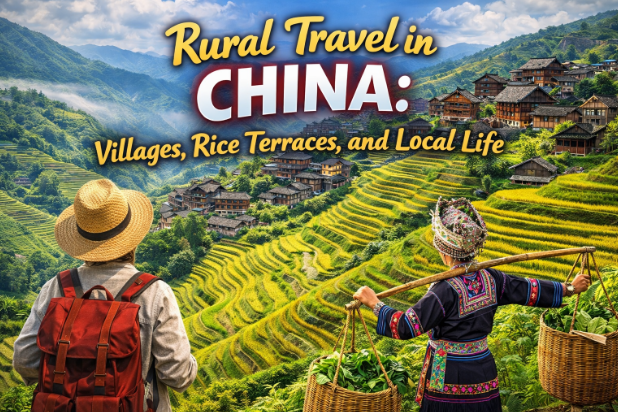
While China’s megacities often dominate travel itineraries, the country’s true soul lives in its countryside. Rural travel in China offers an entirely different rhythm of life—one shaped by centuries-old traditions, farming cycles, and close-knit communities. From mist-covered rice terraces to quiet mountain villages, these regions provide travellers with authentic cultural encounters and breathtaking landscapes that feel far removed from urban intensity.
Exploring rural China allows visitors to slow down, observe daily life, and connect with local customs that have remained largely unchanged for generations. For those seeking meaningful, immersive travel, the countryside reveals stories that city skylines cannot.
Traditional Villages: Preserving History and Heritage
China is home to thousands of historic villages, many of which date back hundreds of years. Places like Hongcun and Xidi in Anhui Province are famous for their well-preserved architecture, white-walled houses, stone bridges, and ancestral halls. These villages were built according to feng shui principles, reflecting a deep connection between community planning and nature.
In southern China, ethnic minority villages such as those of the Miao, Dong, and Zhuang peoples offer a rich cultural tapestry. Wooden stilt houses, handwoven textiles, and traditional music performances give visitors insight into unique identities that coexist within modern China. Unlike museum displays, these villages are living spaces where customs are practised daily, not staged for tourists.
Travellers often find that staying overnight in village guesthouses provides the most authentic experience. Waking up to the sound of roosters, sharing meals with host families, and participating in daily chores create lasting memories rooted in human connection.
Rice Terraces: Landscapes Shaped by Generations
Among the most iconic sights of rural China are its vast rice terraces. These landscapes are not only visually stunning but also represent centuries of agricultural wisdom. The Longji Rice Terraces in Guangxi, often called the Dragon’s Backbone, cascade across mountainsides in elegant curves, changing colour with the seasons—from mirror-like pools in spring to golden waves in autumn.
In Yunnan Province, the Yuanyang Rice Terraces offer equally dramatic scenery. Built by the Hani people over 1,300 years ago, these terraces showcase sustainable farming practices that harmonise with natural water systems. Visiting during sunrise or sunset reveals layers of colour and mist that attract photographers and nature lovers from around the world.
Rice terraces are more than scenic attractions; they are working farms. Observing planting, harvesting, and irrigation provides travellers with a deeper appreciation for rural livelihoods and the labour behind every bowl of rice.
Experiencing Local Life and Traditions
Rural travel in China is deeply experiential. Daily life often revolves around agriculture, seasonal festivals, and communal gatherings. Travellers may encounter local markets where farmers sell fresh produce, handmade goods, and traditional snacks. These markets are social hubs, offering insight into regional flavours and customs.
Festivals play a major role in village life. Events such as harvest celebrations, lantern festivals, and ethnic ceremonies bring communities together through music, dance, and shared meals. Participating respectfully in these events allows visitors to witness traditions passed down through generations.
Food is another highlight of rural travel. Meals are often prepared using locally grown ingredients and traditional methods. From bamboo-cooked rice to handmade noodles and fermented vegetables, rural cuisine reflects both geography and history. Sharing food with locals becomes a bridge across cultures, even when language barriers exist.
Slow Travel and Sustainable Tourism
Rural China aligns perfectly with the principles of slow travel and sustainable tourism. Instead of rushing between landmarks, travellers are encouraged to spend more time in one place, reducing environmental impact and supporting local economies. Many villages now offer eco-friendly homestays and community-led tourism initiatives that prioritise cultural preservation.
Guided experiences, including farming activities, handicraft workshops, and village walks, are often organised by locals. Some travellers incorporate these experiences into curated itineraries such as Jing trips, which emphasise cultural immersion and off-the-beaten-path exploration rather than conventional sightseeing.
Responsible rural travel helps ensure that tourism benefits communities without disrupting traditional ways of life. Visitors are encouraged to respect local customs, dress modestly, and seek permission before photographing people or private homes.
Practical Tips for Rural Travel in China
Planning rural travel in China requires flexibility and preparation. Transportation options may be limited, so researching routes in advance is essential. High-speed trains connect major cities, but reaching villages often involves buses, taxis, or local drivers.
Language barriers can be more pronounced in rural areas, making basic Mandarin phrases or translation apps useful. Cash is still preferred in some villages, so carrying small amounts of local currency is advisable.
The best time to visit rural areas depends on the region and the experience sought. Spring and autumn generally offer pleasant weather and vibrant scenery, while summer showcases lush landscapes and winter provides quieter, more introspective journeys.
Why Rural China Leaves a Lasting Impression
Rural travel in China offers something increasingly rare in modern tourism: authenticity. The combination of natural beauty, cultural depth, and human connection creates experiences that resonate long after the journey ends. Villages, rice terraces, and local life reveal a China rooted in tradition yet quietly adapting to change.
For travellers seeking more than surface-level sightseeing, rural China provides a chance to understand the country through its people, landscapes, and rhythms of daily life—an unforgettable journey into the heart of one of the world’s oldest civilisations.