

The BBC’s rain mirages
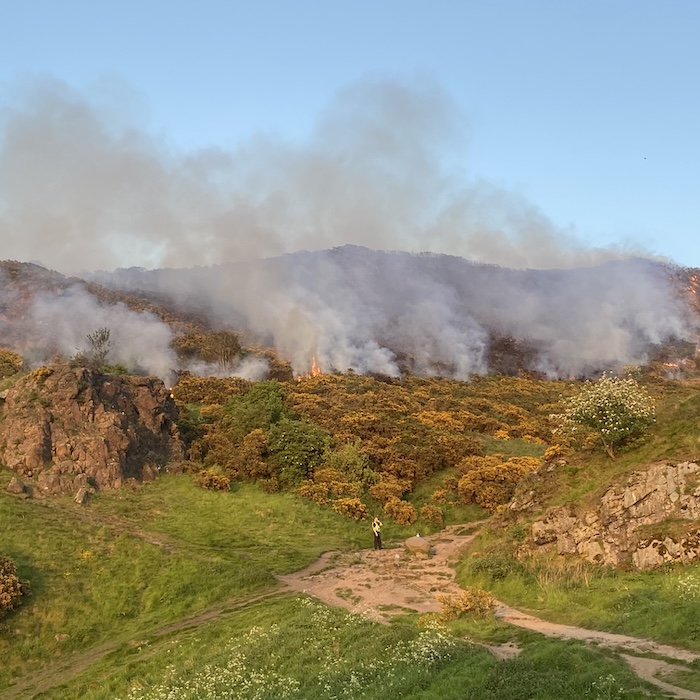 A wildfire at Arthur’s Seat, Edinburgh
 Here in Europe we’re in the middle of a disastrous hot summer. In the UK it has not been as severe as in France, where temperatures around 45ºC have been recorded and there are large wildfires blazing, as there are in Spain also. We have not seen the record temperatures we saw a few years ago — mid-30’s rather than reaching 40º. But we have seen four heatwaves since May where temperatures were in the mid-30s and more worryingly no rain to speak of since the second heatwave in June, and wildfires burning in the Cairngorms, a national park in Scotland, and in a heathland nature reserve in Suffolk. Typically in the UK, a summer heatwave meant a few warm days followed by a thunderstorm and torrential rain; these often occurred around the time of the Wimbledon tennis championships, and matches having to be delayed or suspended because of rain was a common occurrence (on one well-known occasion, Cliff Richard gave an impromptu solo performance when play stopped). What’s more aggravating about this summer’s weather is the poor quality of weather forecasts, particularly from the BBC, and in particular, forecasts of days of rain that simply never comes.
Last week, the BBC’s weather app was forecasting several days of rain for next week, starting from 4th of August. I took screenshots of it at work, near Hounslow (I live in New Malden, a few miles to the south-east of there). On the 27th (Monday), the forecast was of six solid days of rain starting from the 4th (Tuesday).
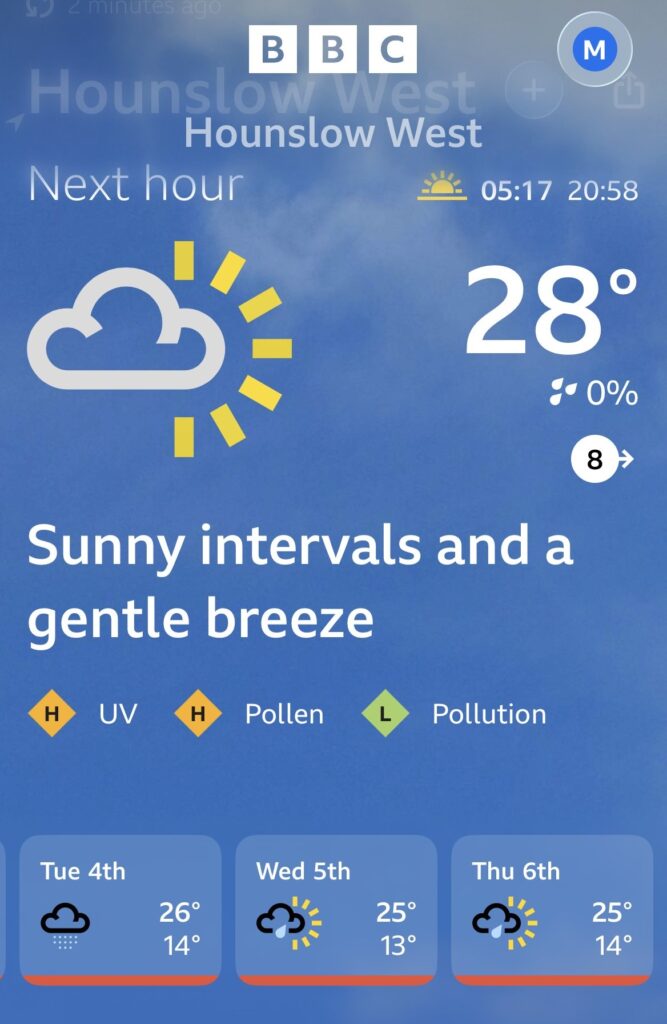
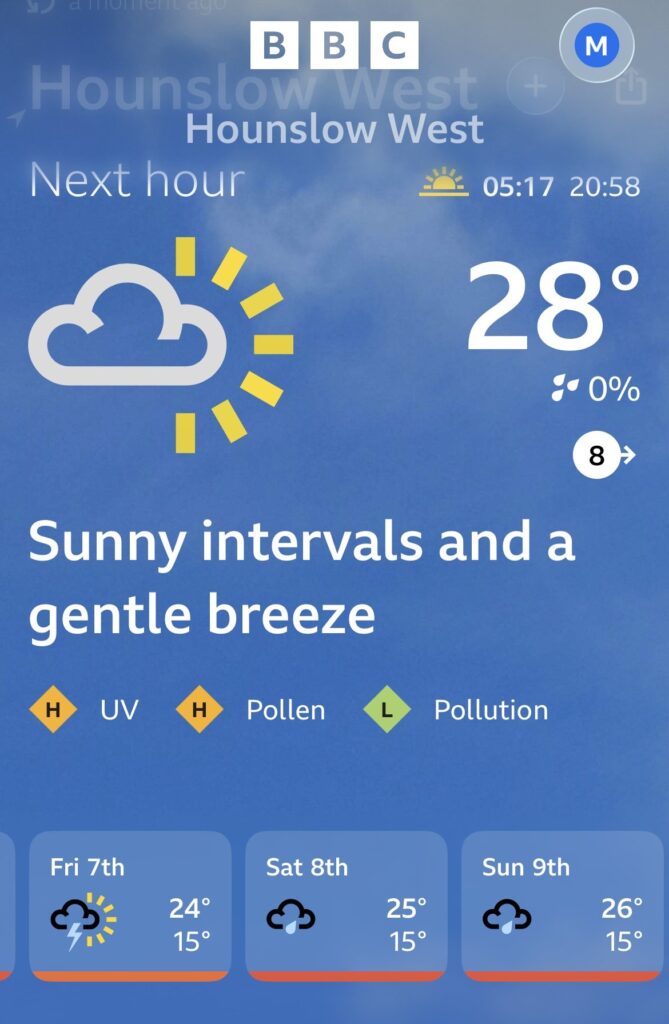
48 hours later, the drizzly Tuesday and wet Wednesday remained, but after that it would be dry until Sunday.
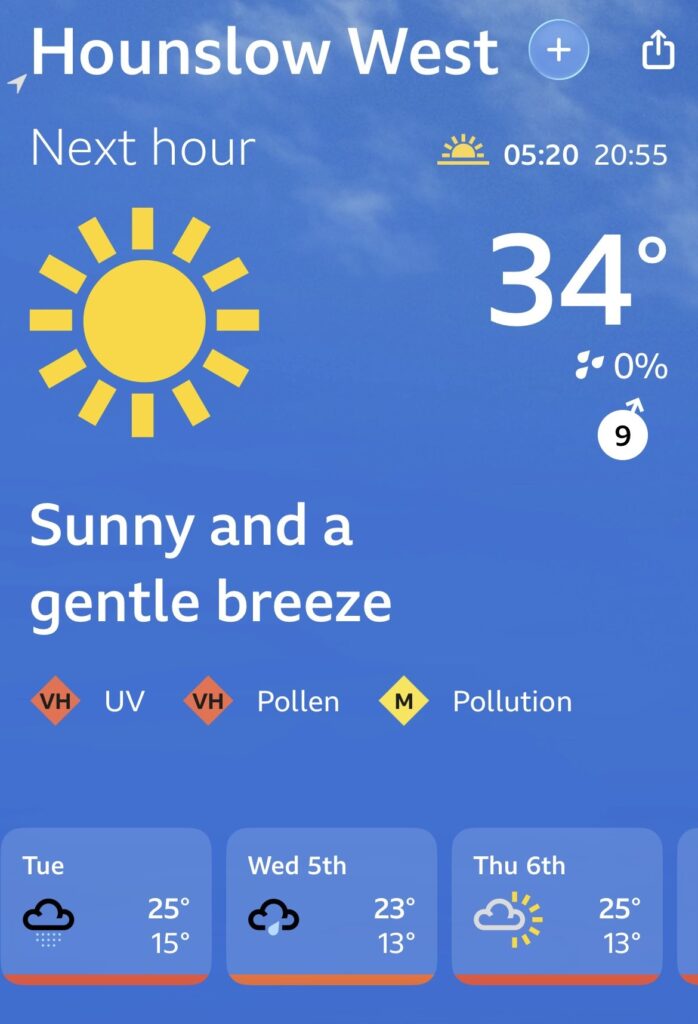
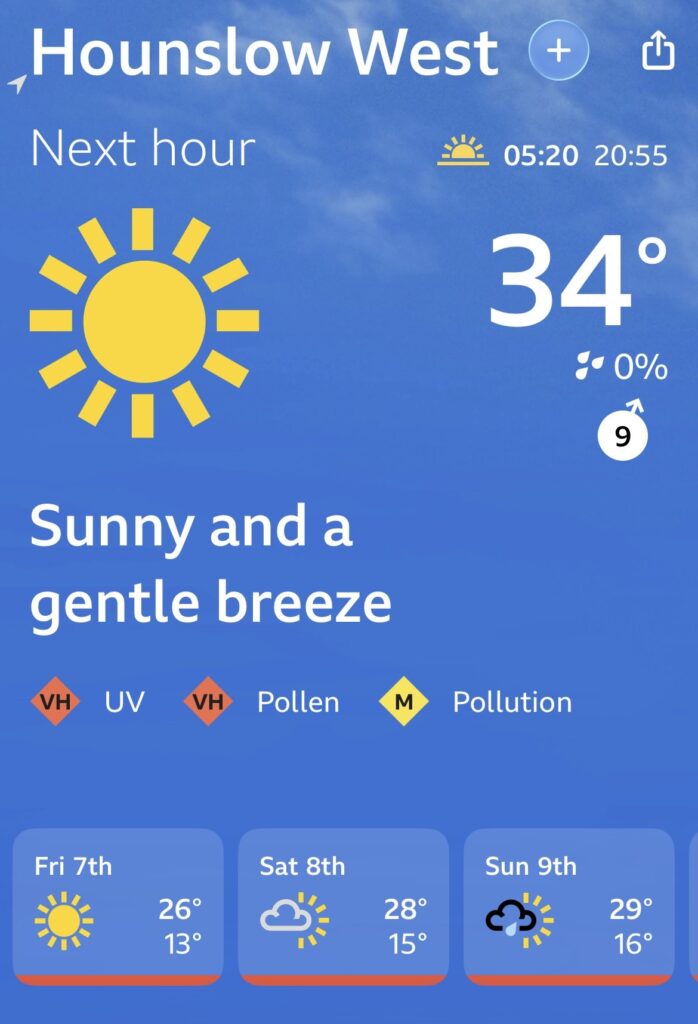
As of this morning, all six days are forecast to be dry.
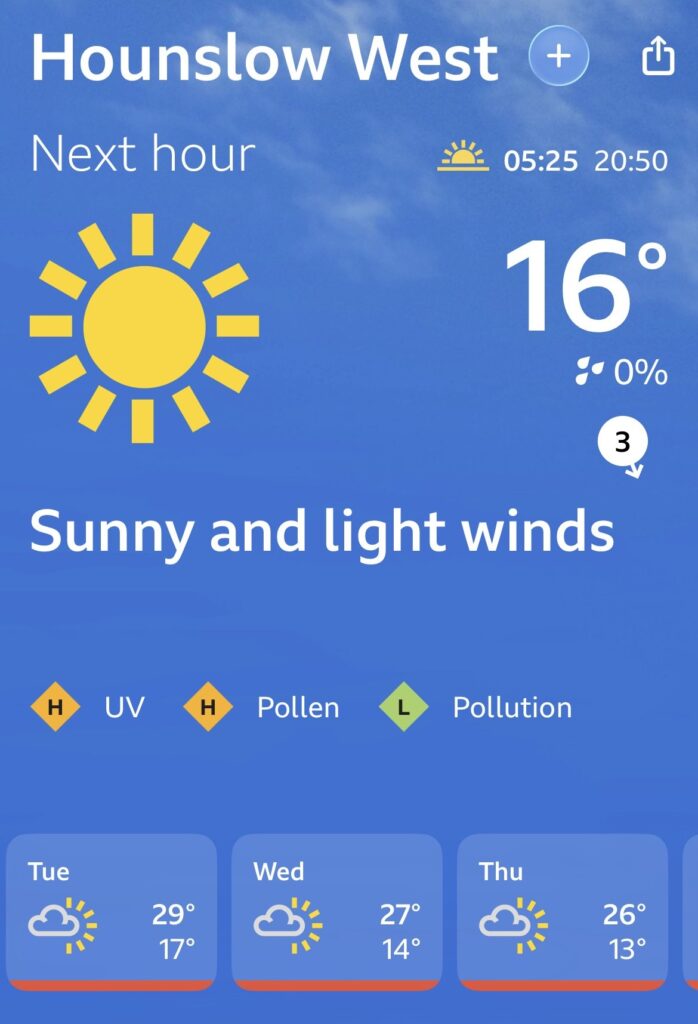
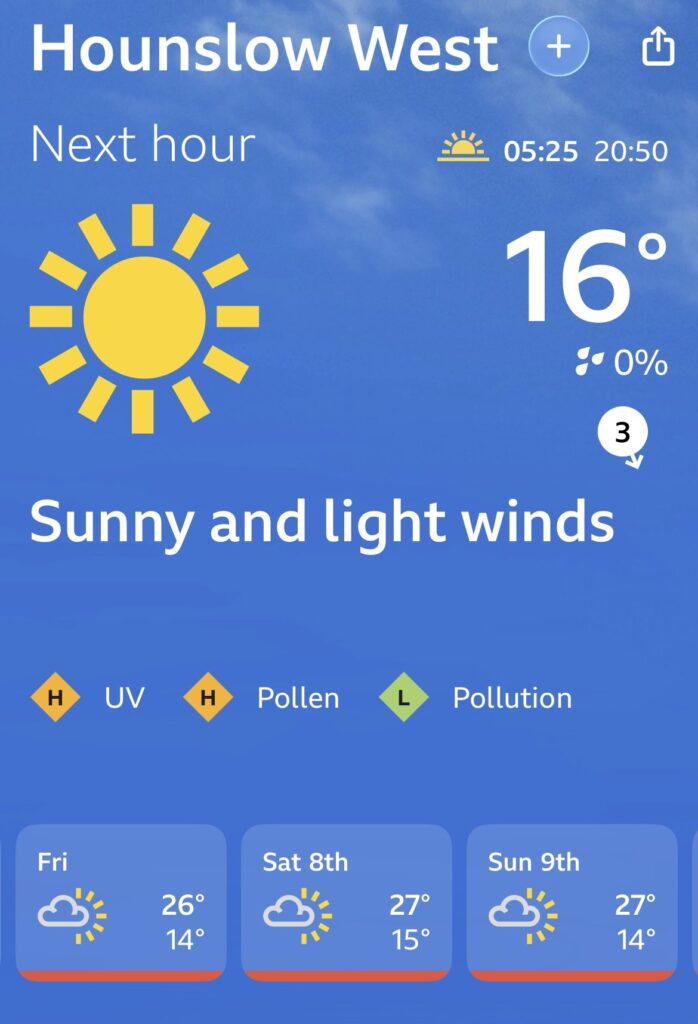
The detailed forecasts show between 10 and 30% of rain on Tuesday, Wednesday, Friday and Saturday but this could mean the odd shower here and there or indeed nothing. This has happened three or four times this summer: forecasts of several days of rain for a week or so in advance that evaporates in the days leading up to the days in question; sometimes there is a brief shower here and there but more often it just means a cloudy or slightly cooler day. (Earlier this week, we had some dramatic clouds and a few places got rain on days that were forecast to be dry.) I have noticed it here and there the past few years, but it’s most noticeable during a long dry summer and it also happened several times during the 2018 dry spell. My suspicion is that weather forecasts are based on outdated models that rely on data from the climate of the past. As anyone can see, the climate of 2026 is not that of 2016, let alone the decade or century before. It’s a different beast entirely.
Between 2018 and 2025, the BBC relied on a Dutch private forecast agency, MeteoGroup, for its forecast data; last July they announced that they were reviving their partnership with the Met Office, which they had been using before 2018, though their website still gives MeteoGroup and not the Met Office as a source. The Met (meteorological) Office has a weather forecast page of its own (MeteoGroup, now owned by the US company DTN, does not), and I looked at their forecast for the same days. They only have a detailed seven-day forecast; forecasts for further ahead than that are in a drop-down box and are in much more general terms about the whole of the UK, not a specific area. Their forecast for the ten days beginning 5th August reads:
A generally rather changeable period looks likely, with many places likely to see some much needed rain or showers at times but also some more sunshine. Initially, some rain or showers will affect many parts, this heavy and possibly thundery in places. After a drier, brighter few days, further changeable or unsettled conditions may develop as we head towards mid-August. This may be due to frontal systems moving in from the Atlantic or thundery plumes moving north from the continent or a combination of both. Temperatures will likely be a little above average overall, and there is the potential for some very warm or hot and humid spells, especially in the south, although perhaps not the heat we have seen in recent weeks.
This is a far cry from a purported detailed, localised forecast for a week or more in advance, which is what is on the BBC’s weather page and app with no indication that it’s an extrapolation from a very general Met Office forecast that is peppered with likelys and maybes. The BBC must stop doing this; not only does it give people false hope, it also makes it less likely that they will use water carefully as they believe the drought will be ending very soon. For a supposed public service broadcaster, this is the opposite of public service.
Image source: Pretzelles, via Wikimedia. Licensed under the Creative Commons Attribution-ShareAlike (BY-SA) 4.0 licence.
 Ann Widdecombe, European Parliament, 2019
 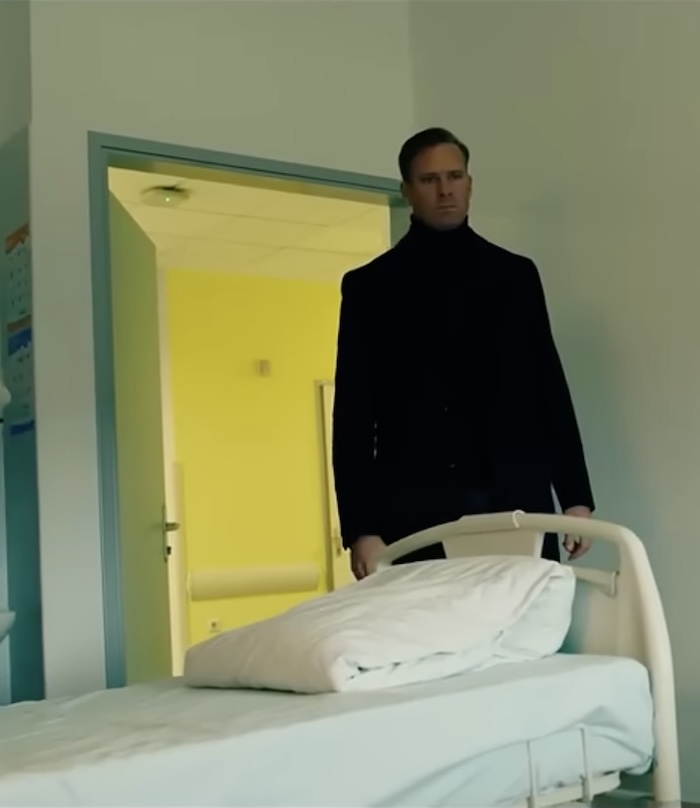 Michael Sanders (Armie Hammer) walks into a hospital room to “talk sense” into a rape victim
 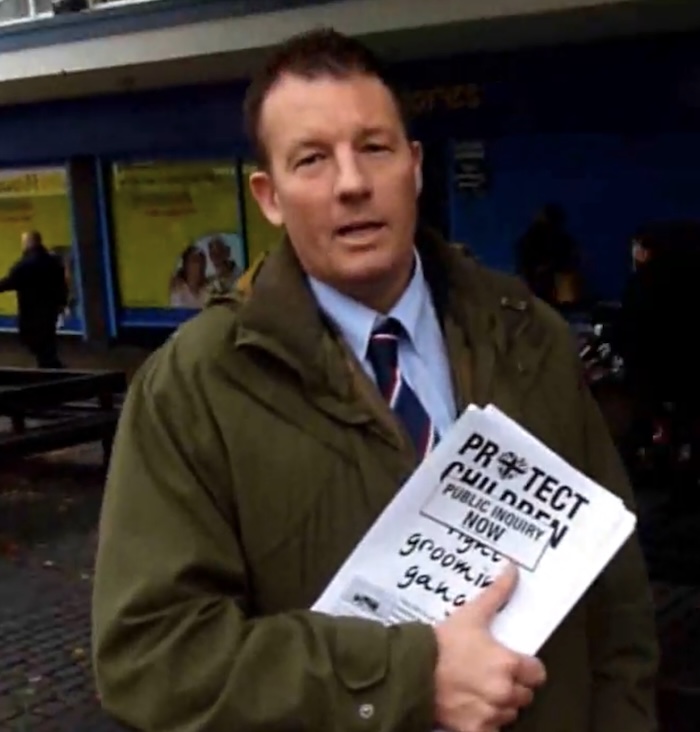 BNP canvassers in Burnley, 2012
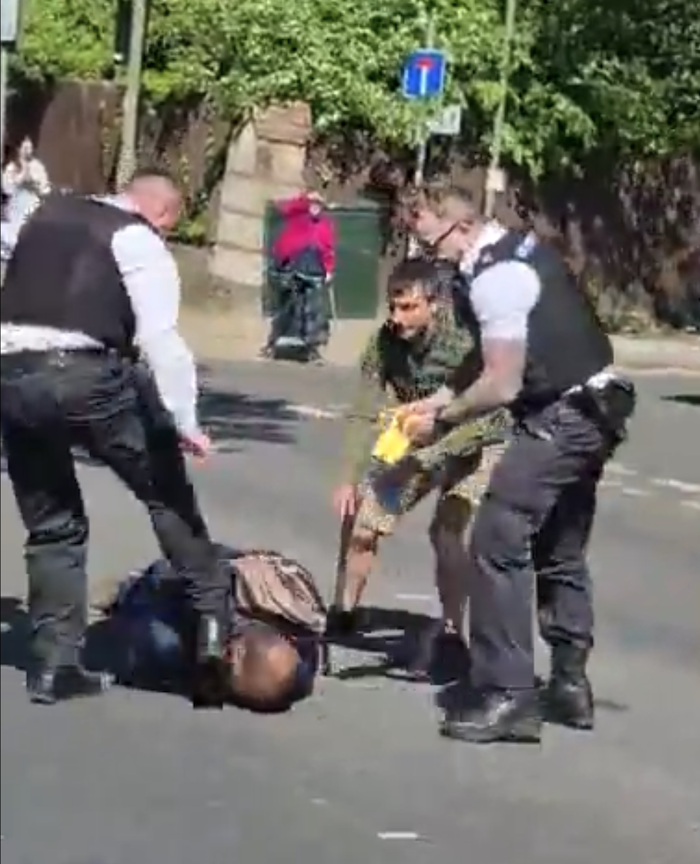 The arrest of the suspect in the Golders Green and Great Dover Street stabbings.
 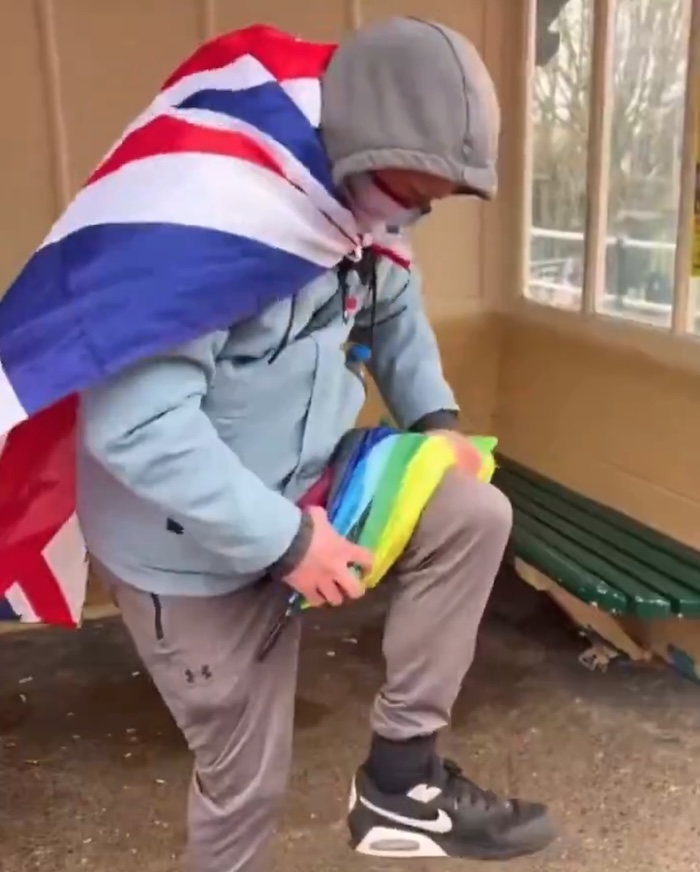 Skegness: anti-immigrant protester destroys a rainbow umbrella
 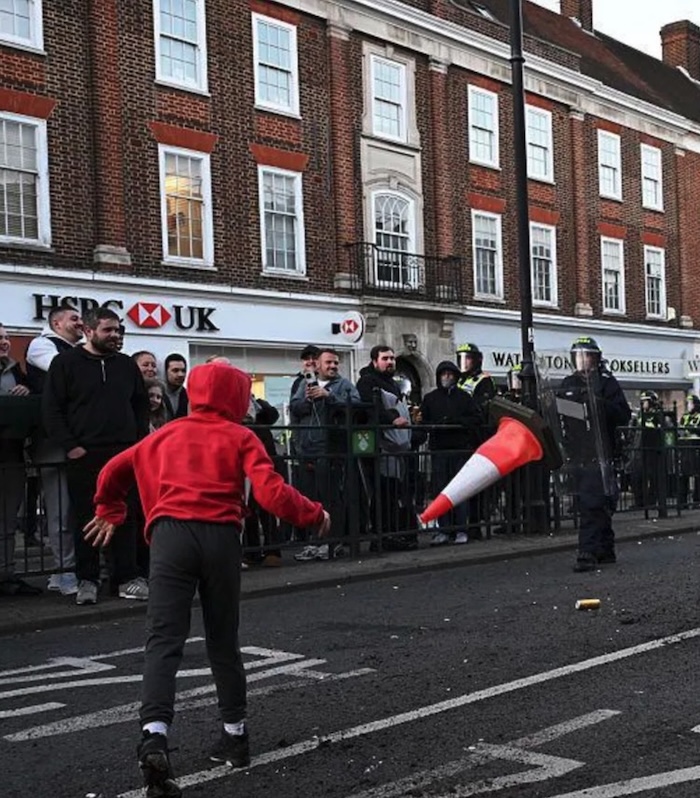 A boy throws a missile at police during Wednesday’s Epsom ‘protest’

